Domestic violence is something a lot of us have heard of, some of us have witnessed, and some of us have survived.
October is Domestic Violence Awareness Month.
As an anti-sexual violence advocate, I would like to do my part in educating the public about this very stigmatized issue that too many people have to go through on a daily basis.
Am I in an Abusive Relationship?
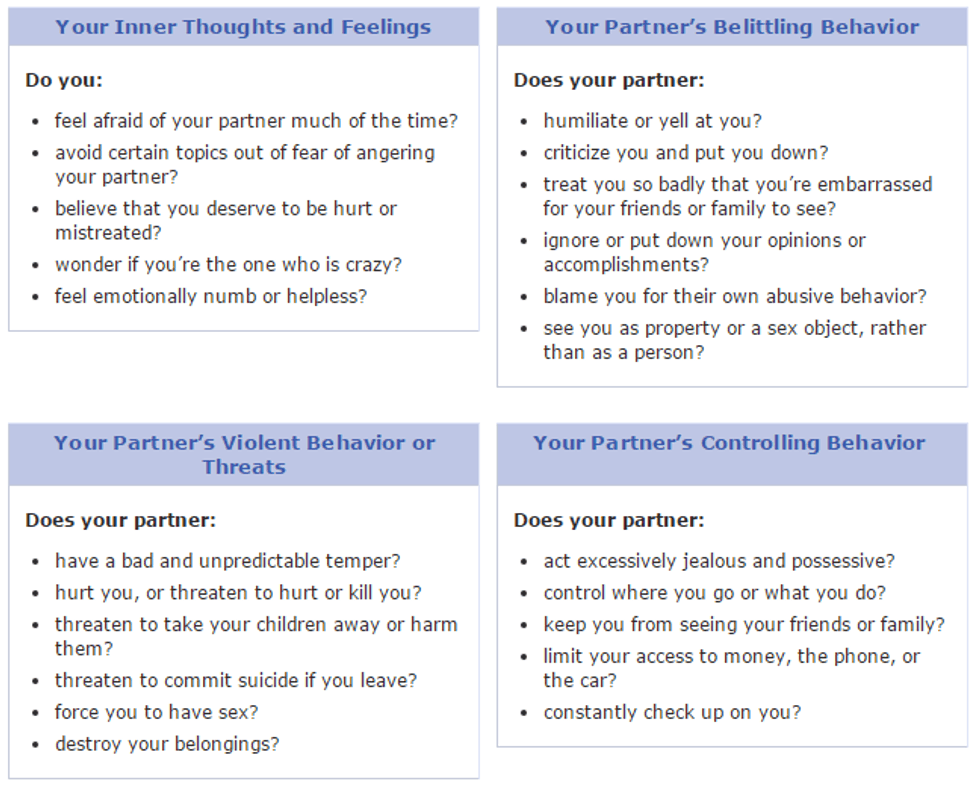
Domestic abuse is a pattern of behavior used to intimidate, shame, and manipulate someone. In an abusive relationship, the toxic partner will want to have complete control over their victim. Relationships will partners such as these frequently don't begin this unhealthy--over time, possessive tendencies appear, but at this point the emotional connection has developed. Helpguide.org provides the following signs to spotting an abusive relationship:
Is It Still Abuse If They Don't Physically Hurt Me?
Yes--emotional abuse is still abuse, and no one deserves to be treated badly by someone they trust. Emotional abuse is often verbal abuse, which can be yelling, name-calling, blaming, and shaming. Other forms of emotional abuse are threats of violence, isolation, intimidation, and controlling behavior, especially if their partner does not obey them. It's important to recognize that emotional abuse is just as damaging as physical abuse is, and that survivors of emotional abuse be recognized for their strength.
Why Do Survivors Go Back to Abusive Partners / Why Don't They Just Leave?
Before working with the Rape, Abuse, & Incest National Network (RAINN), I did not quite understand this concept to the full extent, as most people do not. When someone leaves a violent relationship, they are inherently taking control, which threatens the abuser's power and could cause very dangerous retaliation. Most people in toxic relationships wish they could get out of them but fear that if they try to, their abuser will follow through on threats they have made in the past.
Who Is at Risk for Falling Victim to an Abusive Partner?
Domestic violence does not discriminate. People of all races, incomes, sexual orientations, genders, etc. can be victimized.
What If My Partner Only Hurt Me Once, and Then Felt Extremely Bad About It?
The myth that abusers cannot control their actions needs to be destroyed.
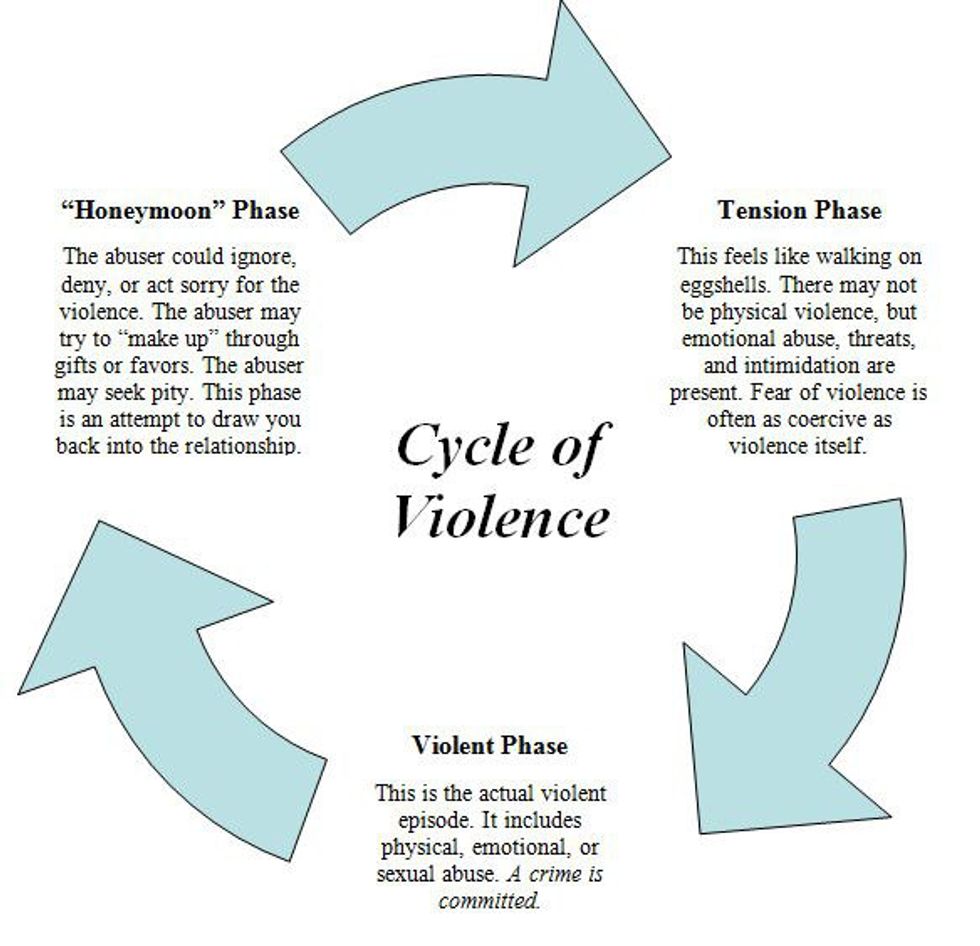
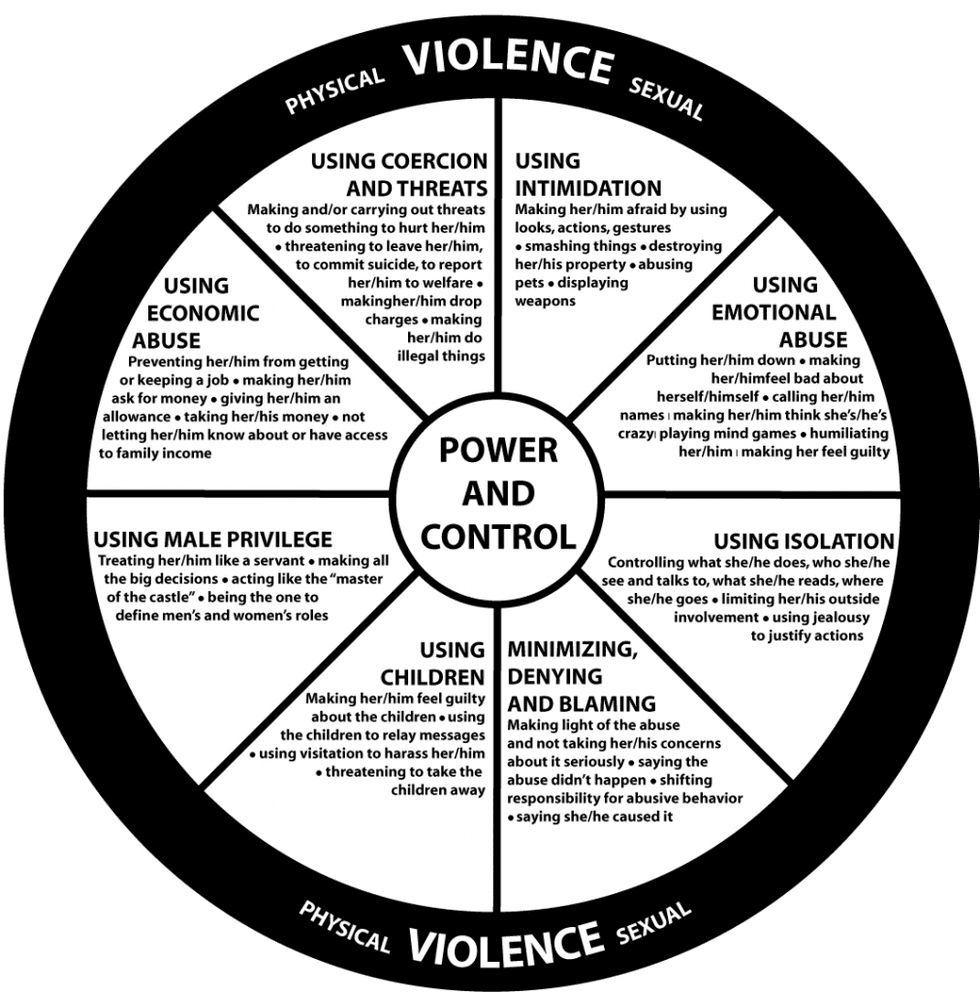
Abusers are very deliberate about what they are doing and when they are doing it-- just because it's the first time, does not mean it will be the last. Unfortunately, abusers tend to follow a cycle of violence (on the left) in order to keep control over their partner.
Abusive partners also make conscious decisions about who to abuse, how to abuse them, and when and where to abuse them (in what setting). If you know someone who has told you about a partner who has been abusive towards them "just one time," try and get them help.
Statistics:
According to The National Center For Victims of Crime...
- 12 percent of violent crimes were committed by current / partners in 2012.
- Around half of abuse victims suffer physical injuries.
- In 2011, 61 percent of female homicide victims who knew their offenders had an intimate relationship with them previously.
- The lifetime prevalence of intimate partner violence is 32 percent for women, with 22 percent of women experiencing at least one especially severe act in their lifetime. The lifetime prevalence of intimate partner violence is 28 percent for men, with 14 percent experiencing at least one especially severe act in their lifetime.
- In 2013, 11 percent percent of high school students reported being physically hurt on purpose by a boyfriend or girlfriend in the 12 months before being surveyed. Of those who reported, 13 percent were female and 8 percent percent were male.
- There was an increase of arrests of abusive partners in LGBT intimate partner violence cases from 28 percent percent in 2011 to 44 percent in 2012.
According to The National Domestic Violence Hotline...
- You are most vulnerable to an abusive partner between the ages of 18 and 34.
- Intimate partner violence affects more than 12 million people each year.
How Can I Get Help?
Calling / chatting on a hotline.
Going to a hotline is a big step. These hotlines will help you feel comfortable and do everything they can to help.
The National Domestic Violence Hotline
The Rape, Abuse, & Incest National Network (RAINN)
Anti-Violence Project (for those who are a part of the LGBT+ community)
Making a safety plan.
This step is frequently overlooked. It's good to have a plan in place if something happens, or if you're waiting for a good time to leave. These websites outline good ways to build your own personal plan.
For more resources and information, the following sites are great places to explore.
The National Coalition Against Domestic Violence
Awareness Transformation Hope (for those with disabilities)