With the rise of industry shall come the rise of oceans that can dissolve steel.
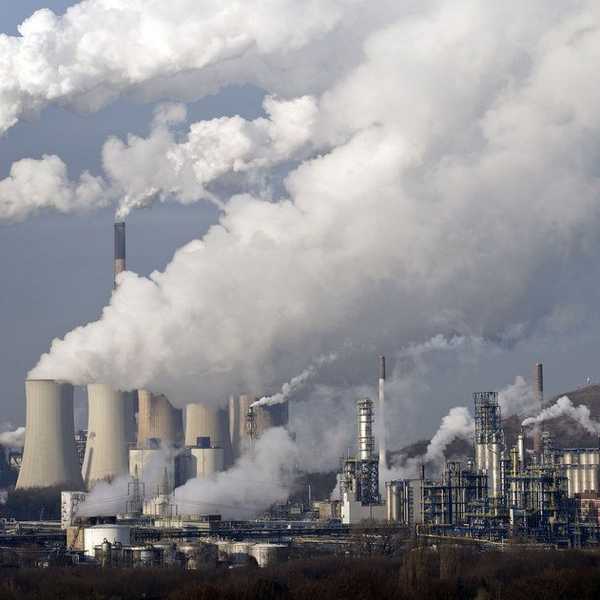
Just kidding. But seriously, deadly oceans should be on the public radar as they are largely affected by human activities. Industry and a growing population have increased the demand to provide enough electricity, food, and resources for people. An industrialized community has high demands and produces high CO2 emissions.
CO2 emissions. The number one topic that comes up when we discuss pollution. Why are CO2 emissions important, really? Well, CO2 is carbon dioxide—two oxygen atoms and a carbon atom. It traps heat when in the atmosphere, and is also absorbed into water, which will become clear soon.
NASA describes CO2 in context of The Carbon Cycle (Yes, analogous to the water cycle!) where carbon exists in different compounds. Part of this cycle is when carbon is exchanged between the air and ocean in the form of CO2 and, carbonate, and bicarbonate.
Extensive studies have been put forth to understand this exchange, and in 2010 The National Academic Press released a comprehensive document detailing what is changing the ocean, why it is changing, and potential solutions to these consequences. In this paper is a description of the process of CO2 exchange. When we release CO2 into the air by burning fossil fuels we upset the carbon cycle. As CO2 enters our oceans, it accelerates the production of carbonic acid as well as bicarbonate and reduces the availability carbonate.
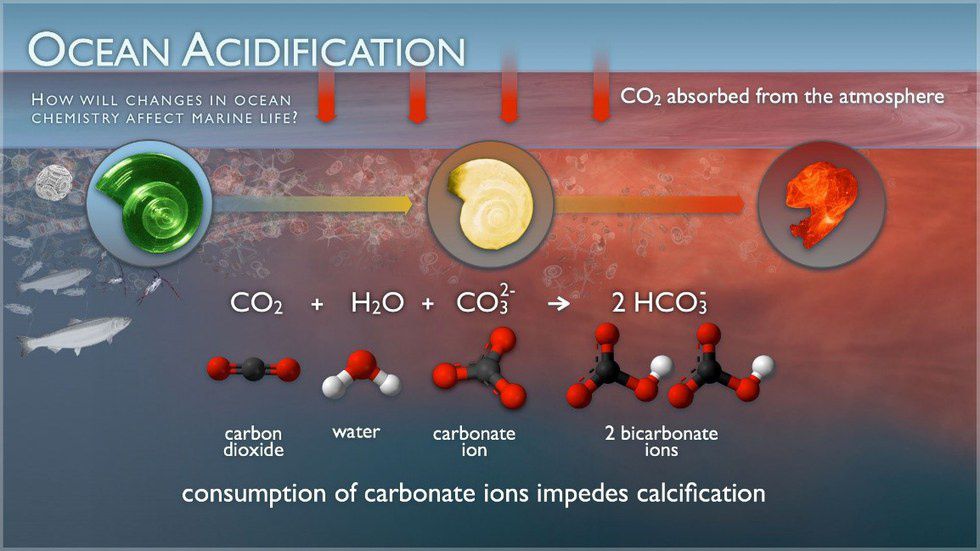
For the chemistry kids out there, think about Le Chatliers Principle. Add some of the reactant, and to reach equilibrium, the equation progresses forward towards the products.
So, what?
You know those cute little-shelled animals, like the Nautilus, or clams?
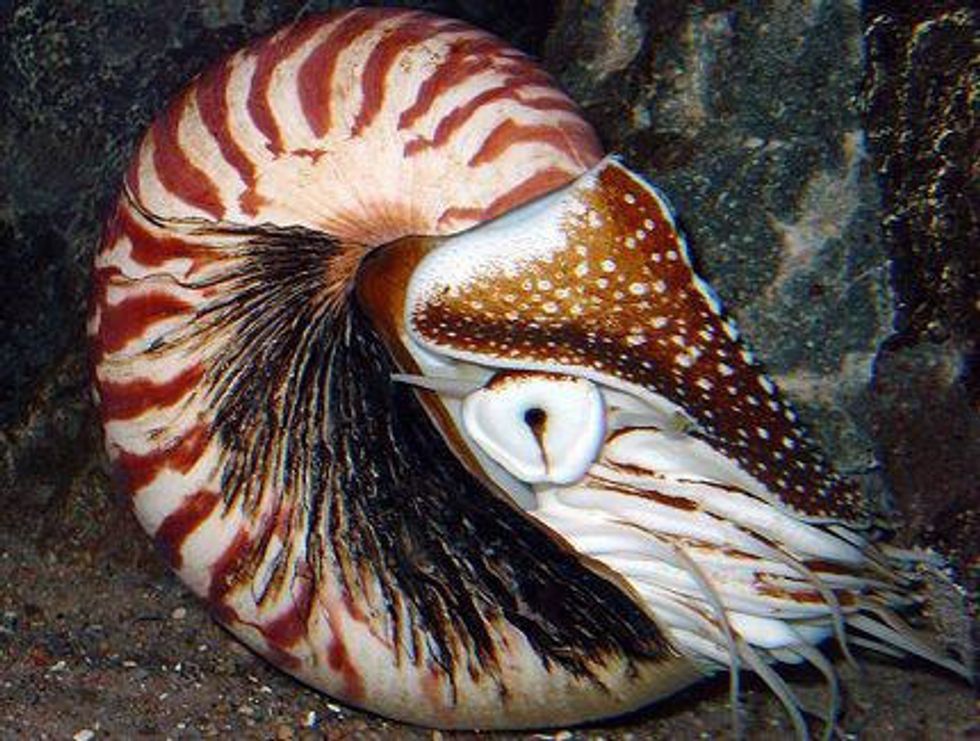
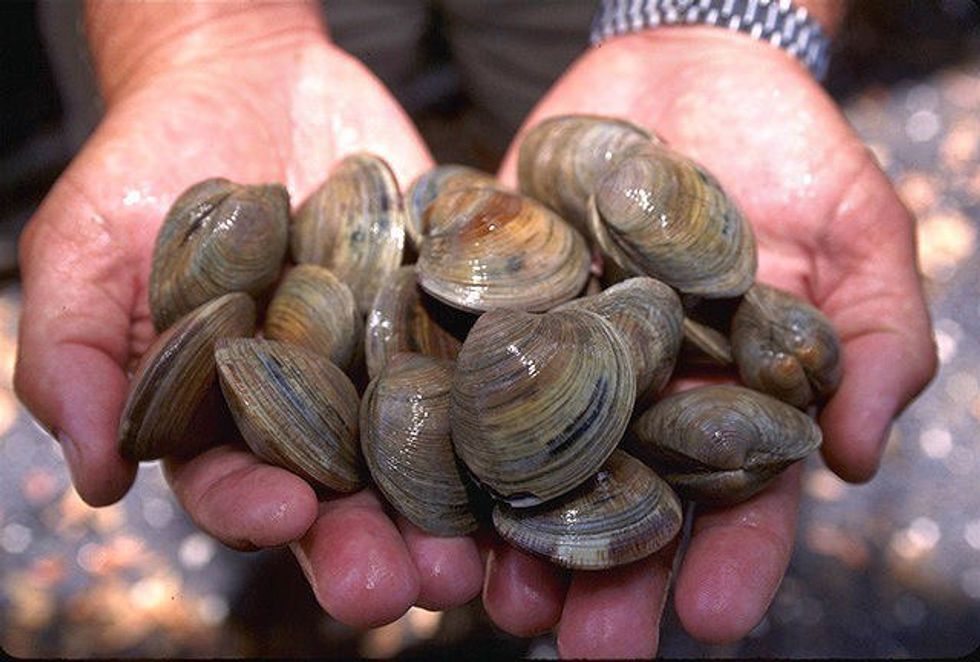
Maybe not so cute. Maybe a Nautilus looks a little like Cthulu’s offspring. They are still important, and they require the availability of carbonate to form their shells. It’s really, really important.
According to Helen Findlay of Plymouth Marine Laboratory in Massachusetts, the little animals will be the most impacted creatures by decreasing availability of carbonate and decreasing pH.Oh, yes, the pH of the ocean is also decreasing. As in, it is becoming acidic.
While the effects of increasing acidity and the effects they have on shelled organisms and other ocean life is complex, it is clear that large CO2 emissions are causing a negative impact.
The most often reported issue is that of coral reefs either completely dying, or failing to grow as efficiently when compared to a pre-industrialized age of growth. More recently, measurements made between 1990 and 2005 indicated that the Great Barrier Reef growth has decreased by about 14 percent, according to The National Academic Press Committee.
Many microscopic life forms are the base of the ocean food chain, and guess what? They, too, are negatively affected by ocean acidification caused by CO2 dissolving into ocean waters. Many people already understand the impact that this will have on ocean life.
As phytoplankton and zooplankton are a food source of the many of thousands of species of the oceans, their well-being directly impacts the success of those that feed on them. And the animals that feed on plankton feeders (That includes us humans) also depend on the well-being of these tiny free floaters.
Imagine yanking out the bottom brick in a game of Jenga. Or how about we simply karate chop the whole bottom half of the Jenga tower.

The result is not pretty, and will probably ruin the game for everyone. Phytoplankton and other microscopic life forms are not a good brick to pull out, and would have disastrous effects upon ocean life.
Now, this has not happened yet and like many people, I am projecting something that will happen in a hard to predict amount of time. Estimates vary and there are dozens upon dozens of factors that are interrelated with CO2 emissions that must be accounted for. But we are seeing the impact, and just because we do not live in the ocean, does not mean we are free from its state of ruin. Upon the shoulders of our five oceans rests magnificently diverse fauna, the livelihood of thousands of fishing communities, and the economy of many countries.
Beyond melting polar ice caps and rising ocean levels (also interconnected with increased CO2 levels in the atmosphere), we must worry about how the oceans are going to start reflecting the amount of pollution we are putting into it.