Last week, the United States suffered two mass shootings. The first occurred in Colorado on Friday when Robert Dear opened fire on a Planned Parenthood Clinic killing three and wounding nine. The second happened on Wednesday afternoon when married couple Syed Rizwan Farook and Tashfeen Malik killed 14 people at a social services center in San Bernadino, California.
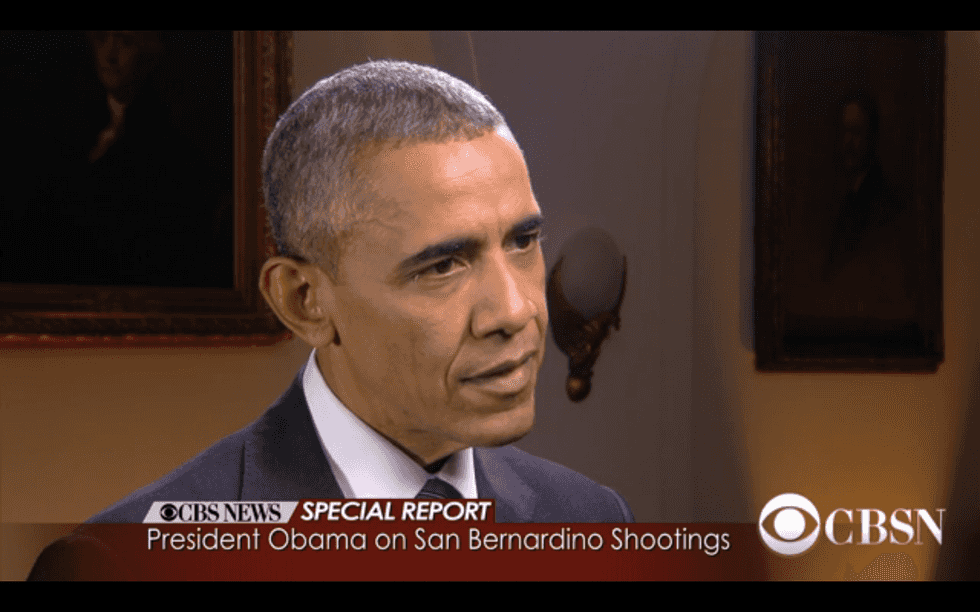
The response from the left has been biting. In an interview with CBS News on Wednesday evening, President Obama stated, "The one thing we do know is that we have a pattern now of mass shootings in this country that has no parallel anywhere else in the world," the President said. "We should never that think this is something that just happens in the ordinary course of events because it doesn't happen with the same frequency in other countries."
Others, like Connecticut Senator Chris Murphy, have hearkened back to the address the President gave in response to the Oregon shooting. Restating that "thoughts and prayers" are simply not enough to stop these shootings from happening.
Ezra Klein, perhaps the face of millennial journalism and Vox’s editor-in-chief, wrote a scathing article Tuesday morning criticizing the country’s seeming desire to “do nothing” in the face of repeated mass shootings. Klein went on to point out that the United States’ response to 9/11 was “sweeping,” noting that the 2,996 people killed that day represent just 1/11th the number of Americans killed by guns each year in the US. A few days later, on Saturday, the New York Times published an editorial on its front page (for the first time since 1920), criticizing opponents of gun control.
According to the Washington Post, in the past 334 days (all of the 2015 calendar year), 351 mass shootings have occurred, with a mass shooting defined as 4+ victims, including the shooter. For those of you who aren’t great at math, that’s more than one mass shooting per day. Doesn’t something seem wrong about that?
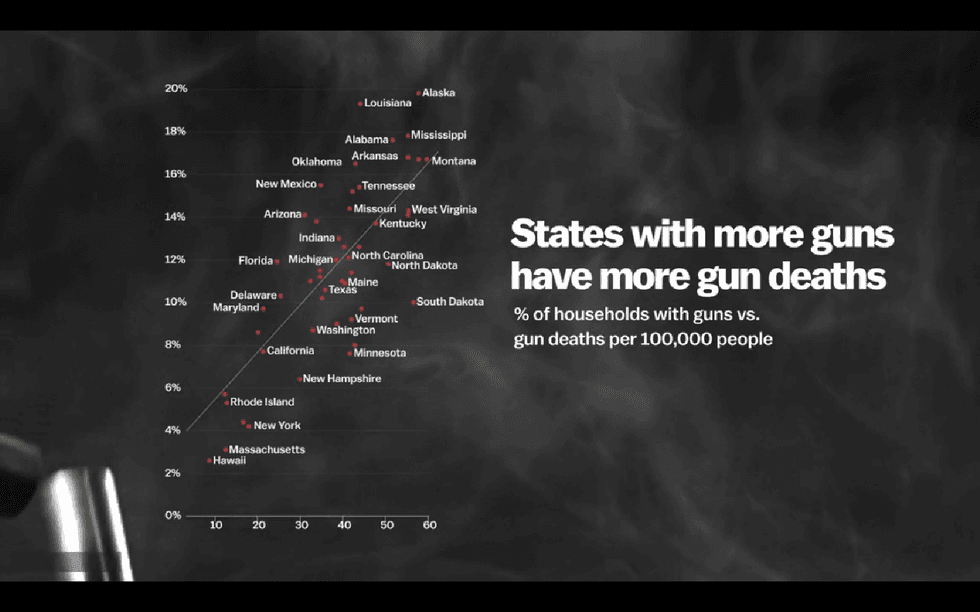
It seems like the solution to the gun problem in the United States is fewer guns for private citizens. According to a UNODOC Arms Survey, Americans represent five percent of the world’s population, but own 45 percent of the world’s guns. A CDC report also determined that states with more guns, also have more gun-related deaths.
Unfortunately, because Republicans control both the House and the Senate, a gun reform bill reducing the amount of privately owned guns in the United States will never happen. The second amendment also makes reducing the amount of privately owned guns difficult.
On Thursday, Senate Republicans (with the exception of Illinois’ Mark Kirk) voted against a bill that would have prevented people on the FBI’s terrorist watch list from purchasing guns. That same day, Senate Republicans, among them Ted Cruz, Marco Rubio, Rand Paul and Lindsey Graham, all voted against a bill intended to expand background checks to gun show and online firearms sales. The bill was designed to screen out convicted felons and the mentally ill.
One question begs asking: Could President Obama generate gun reform from the White House in the form of an executive action?
Sadly, no.
While executive action proved crucial to immigration reform last year, executive action related to gun reform seems unlikely to go beyond the expansion of background checks. Even if the President issued an executive action expanding background checks, it wouldn't reduce the amount of privately owned guns in the United States.
Currently, the White House is working on policy aimed at expanding the definition of what qualifies someone as a "high volume" dealer in an effort to enforce background checks on gun sales via online sites and gun shows. However, this won't do much, as the background check system failed to prevent shooters from obtaining guns in Sandy Hook, Charleston and San Bernadino.
Bans and effective legislation will only come when Republicans feel enough pressure from constituents to vote "yes" to gun reform.