
For many young people, college is a time of growth and discovery. It is, for most, the first time that a person is away from home for an extended period of time, and this necessarily exposes him or her to new lifestyles, beliefs, values, and ways of thinking. It is often said that college is where you become you. Or, at least, where you start that journey. The diversity of thought with which you are suddenly faced allows (or forces, depending on your outlook) you to reevaluate the beliefs that have been spoon-fed to you during the first 18 years of your life. You learn to think critically, and you often arrive at new conclusions on issues about which you previously thought your beliefs were steadfast.
Political issues are often the most widely discussed by these intellectually emancipated students. Discovering a political ideology different from one’s parents can instill in him/her a sense of independence and satisfaction. I encourage this process, and know that I have benefited from doing the same thing in my first two years as an undergraduate student. However, authentically arriving at a newfound set of political beliefs and values is difficult. If it were not difficult, it would not be rewarding. It is one thing to, after careful deliberation, arrive at your own political beliefs, and it is quite another to adopt the platform of a single political candidate who promises you the world.
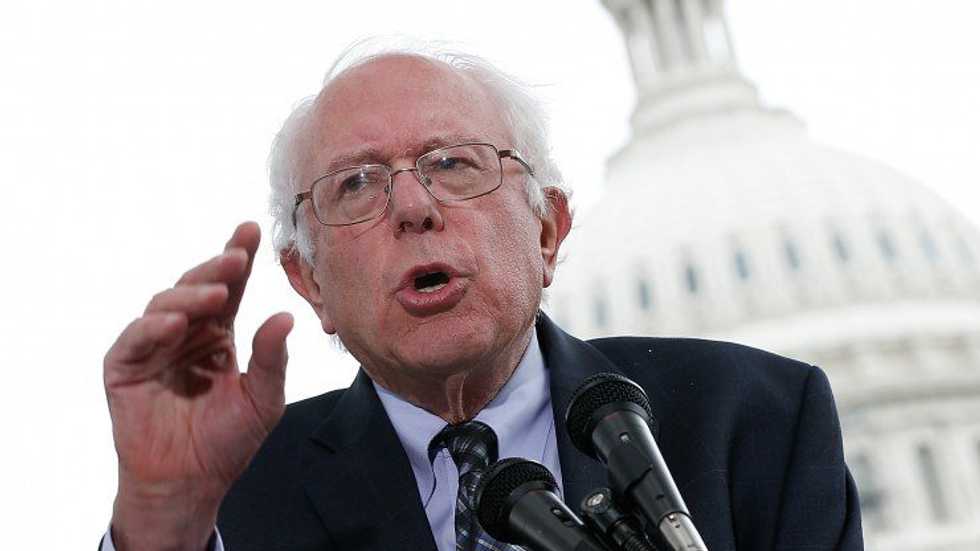
I have discussed the 2016 Presidential Election with many of my peers from both high school and college, and the individual candidate with the most support from people aged 18-21 (with whom I have spoken) is Bernie Sanders. In many ways, this is not surprising. Young people tend to be more liberal. They tend to think all issues can be solved with a quick fix—a simple solution. While time at university does help make the world more gray, to many college-age people, the world is still largely black and white. There exist simple solutions to simple problems, and that is that.
Simplicity in a platform is by no means exclusive to Sanders—all of the candidates’ platforms are purposefully vague and simple. Of course, one with knowledge of governmental and political processes knows how vague ideas can be implemented, but the technicalities do not garner attention (there is no room for buzz words with technicalities). What we have, then, is a handful of political candidates making vague and generic promises, with people flocking to the “big ideas” they like. But why is it that, as previously mentioned, so many young people flock to Bernie Sanders? After all, many of our generation (of various races, genders, and socioeconomic backgrounds) have declared the reign of “old, white men” to be over—yet many of these same people support the Senator from Vermont. The reason is extremely simple.
According to a recently published article by TIME, 70% of students at Ohio State University claimed to be worried about finances. Of the 19,000 students surveyed, “six in 10 were worried about tuition costs, and half stressed about having enough to cover day-to-day expenses.” Being a large, public school, I believe it is safe to assume that the concerns of students at Ohio State are largely representative of the concerns of many/most American students. The financial burden on students today is obscene. Many college students, upon graduation, will be grossly in debt. It makes sense that these are the students’ primary concerns. It is with their perceived solution to this problem that I take issue.
Recall the observation previously made that candidates’ platforms are, perhaps by necessity, vague. Recall, too, that for many college students, the presidential election in which they are voting is their first, and that many of these voters are working out their political beliefs. What do I think is right? What works best for me? What change would I like to see? These are often the questions asked by young people. While college fosters intellectual development, it does not immediately grant it to all students. Seeing the world beyond oneself is difficult, and it takes time to learn how to do so (and it is, indeed, a skill to be learned). Consequently, in the minds of college students, the problems facing young people are the problems plaguing the country or even the world.
Bearing in mind the concerns of college students reported in the aforementioned article, one can see easily and quickly why a young person in college would support Bernie Sanders. Two of Sanders’ platform points directly answer these concerns, and are “a proposed national $15 per hour minimum wage” (though he does not practice what he preaches when it comes to paying his campaign interns) and free public college for all. The former point addresses the day-to-day financial concerns of college students. Depending on the state, a $15 minimum wage is almost double what the earners are currently making. Debt, too, would no longer be an issue for all college students attending public universities. There you have it: two of the greatest worries of young people tackled by a Bernie Sanders administration.
The young people voting for Sanders seem to be neglecting a few things, however, and most of these can be expressed in noting the fact that we are not young forever. We are not students forever. The issues that matter most to us now will not matter most to us in a decade or in three. Today, you are a student. Tomorrow, you will be a taxpayer. As a taxpayer, you will fund the government, which, under Sanders, will fund the free public education you received earlier in life. You will fund the federally mandated $15 minimum wage (which, when we are in our 40s and 50s, may be even higher). Beyond these, there exists a collection of other government programs advocated for by Bernie Sanders that will invariably need funding. It is easy to promise unyielding support in spite of consequences when those consequences are so far removed from the present (being the animals we are, we are not wired to contemplate the distant future, especially in financial matters—it is a hard thing to do). Perhaps I am a pessimist, but I fear that many of Bernie Sanders’ supporters are summer soldiers. They want the promise of free education and higher minimum wages because these problems face them now, but what happens when these people are no longer occupying the minimum wage jobs, and instead have to subsidize them? Will they support it then? Some will, and I applaud these people, as contradictions are the most dangerous things a nation can allow. My faith in the majority of the Bernie 2016 is not so strong, however.
Winston Churchill is widely credited with saying, “if you’re not a liberal when you’re 25, you have no heart. If you’re not a conservative by the time you’re 35, you have no brain.” There exists debate as to whether Churchill was the one to say this (history suggests he was not), but the message is what is important. I will (hopefully) be over 35 for a greater proportion of my life than I will be under 25, and this is worth accounting for. My purpose here is not to dissuade people from voting for Bernie Sanders. It is, rather, to urge people to know what they are voting for before they cast their ballot. The issues you face today are not necessarily those you will face tomorrow.