
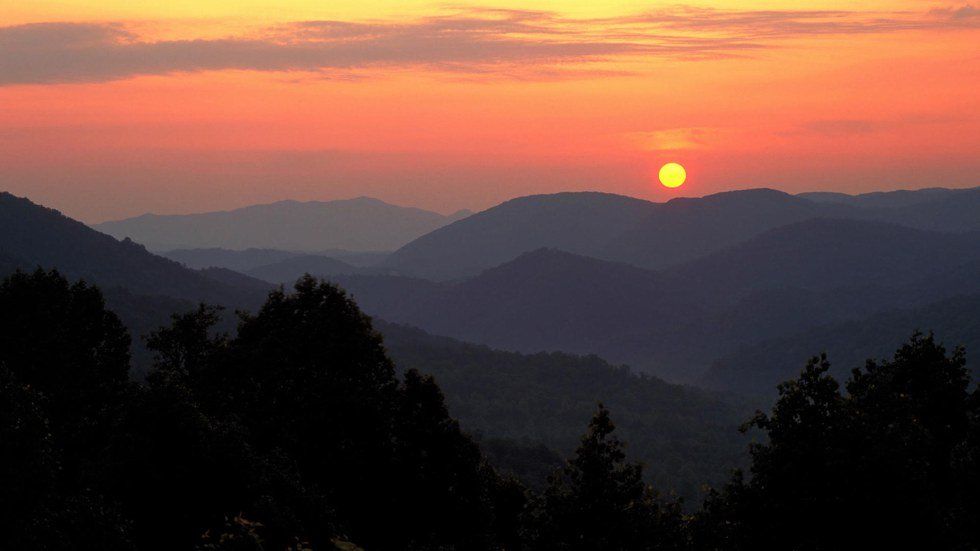
The people of southern Appalachia are among some of the most diligent and enduring people to ever grace God’s green earth -- and the fact that I should find myself so lucky to count myself amongst their ranks is truly a blessing beyond any human comprehension. I was born in Johnson City, and from that moment I have had the good company of these mountains and they continue to be where I call home.
My fellow Appalachian Americans and I are simply the current generation in a long running line of mountain folk who have found themselves in this crazy mess we call the world; the difference between this current generation and our predecessors, however, is that we find ourselves in a world which we cannot turn away from. For generations the people of Appalachia have had the ability to isolate themselves relatively from the outside world, creating an almost lost tribe feeling for the people of Appalachia and to those who viewed us from the outside. I would like to tell you about our story and why you should be proud to call yourself an Appalachian American as well.
We are, for the most part, the descendants of Scots-Irishmen who escaped from generations of war with the crown only to find themselves locked in a new conflict with the inhabitants of their new prospective home. After years of conflict with Native Americans, the Scots-Irish of Southern Appalachia found that they had adapted to their new landscape and settled down. Independence swept through the original 13 colonies of Great Britain; the people now clamored for their freedom from the very same crown that the Scots-Irish were all too familiar with. The Scots-Irish however had already fought the Brits and had even declared their own independence in 1772, a full four years before the Declaration of Independence, with the Watauga Association.
As the war for independence raged, the Appalachian folk remained relatively outside of the conflict until the conflict came to them -- as it would happen again in the future many times. British troops came to the eastern Carolinas to recruit forces and reinforce the flanks of the central British army. The British boastfully advised the Appalachian Americans that they should lay down their arms or face the consequences. The people responded to their threats and aggression by pursuing British forces across the foothills of the Carolinas until finally the conflict came to a head in the hills of South Carolina at the Battle of Kings Mountain (oh the irony), where British loyalists suffered a tremendous defeat that arguably changed the course of the revolution. In the wake of the Revolutionary War, the people of Appalachia attempted to create a state for themselves. Territory ceded from North Carolina, in what would later become northeast Tennessee, declared itself as the State of Franklin. This pseudo-state only lasted for four years until it was reabsorbed into North Carolina and later became Tennessee. Even so, the State of Franklin stands symbolically as a distinguishing part of Appalachian history, not bound to any forces in Raleigh or Nashville.
The Appalachian folk would remain rather isolated from the rest of the country going forward. During the Civil War, many in Appalachia opted to either remain neutral or even stay with the Union. Southern plantation owners held dominion over political power in the most of the south, but Appalachia had very low slave population and very little need to be loyal to forces they saw as destructive. West Virginia sought independence from the rest of Virginia over this matter when it opted to remain with the Union. After the war ended life once again returned to normal in the Appalachian Mountains as the hill folk once again turned inward.
The era of Appalachian separation would soon come to an end, however, with the explosion of the Industrial Revolution and the sudden demand for Appalachian coal. Industries poured into the long isolated mountains and with them came foreign ideas, foreign customs and foreign people as well. By any measure of the time, this was an invasion -- and an invasion of immense proportions. Railroads were laid down, power lines went up, and man moved earth that hadn’t seen the light of day in over a billion years. Soon the simple mountain folk found new opportunities in coal mines and railroad tracks that promised to take them further than any of their ancestors had come in generations.
The largest battle in United States history since the Civil War was fought between coal miners who wanted to unionize and the coal companies who employed them. The Battle of Blair Mountain saw over a hundred deaths and almost a thousand arrests after the fighting got so out of hand that the military had to be called in. Suddenly, Appalachian folk who had never even seen an airplane in their entire life were having bombs dropped on them from planes overhead.
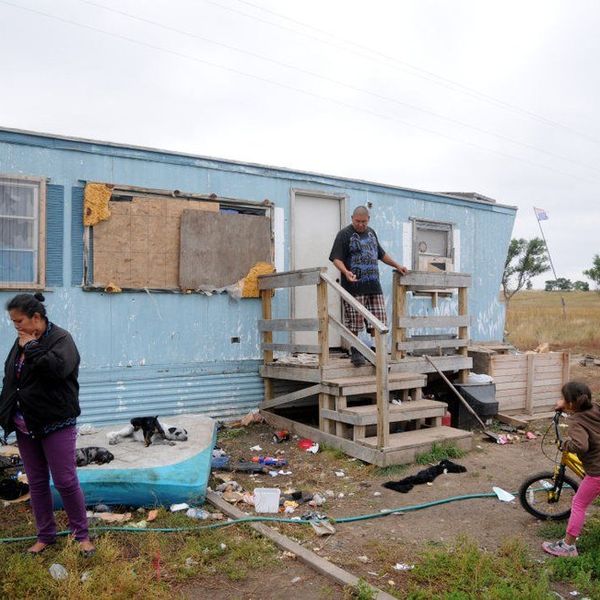
The era of coal and the economic progress that it brought still shapes Appalachia today. During the Great Depression, some of the hardest hit people in the country were Appalachian Americans. Poverty and hardship reigned in Appalachia. President Franklin D. Roosevelt, as a part of his effort to pull the country from the Depression, created the Tennessee Valley Authority, which was tasked with generating hydroelectric power in the Tennessee Valley. This is arguably one of the, if not the most, transformative parts of Appalachian history. With the TVA, many parts of Appalachia were finally pulled directly from the 19th century into the 20th, but in the process a lot of the inhabitants of Appalachia lost their homes and ways of life.
Since these days long since passed, Appalachia is still trying to find itself in a world that suddenly got a lot smaller. Poverty and development are still issues that face the Appalachian region and will continue to do so, but these problems pale in comparison to the strength and tenacity showed by the hill folk of Appalachia. Our determination was won wars, railed against tyrants and corruption, fought battles -- and even moved mountains. We are the inventors of great genres of music, world class cuisines and even one of the most popular sports of all times. We’re rebellious, exciting, and we love to raise hell. We’re farmers and soldiers, writers and scientists, explorers and teachers. We’ve produced some of the greatest folk tales to ever grace the ear and we have shaped American history and culture in a way that is incomparable. So the next time someone asks you if you’re southern, you can tell them with pride and confidence, “No I’m not. I am a proud Appalachian American.”