
I Am Not My Hair
I am not my hair. I know, it’s an interesting statement in a society that is built on image and the media’s impression of you, but I am not my hair.
Why do I say this? I recently visited my grandmother. The moment that she saw me she commented on my hair. She has seen it before but, somehow, forgets that I actually have this particular hairstyle every time that I visit.
I have an undercut. I absolutely adore it and I shape it up myself. I’ve had it for about 9 months. It started out as just a shorn nape that, about five months later, stretched to my sides. My family detested me getting a bob my senior year, so obviously they hate the new hair. You know the stares, the whispers, the way that your family files the new you under “College Experience” so that they can rave about it later when you’ve “finally come to your sense."
I took her comments about it lightly until she asked me, “Do you love me?” I thought to myself “oh no, what is about to happen?” I obviously I said yes, I actually do love my grandmother. She then proceeded to try (emphasis on try) to persuade me to grow my hair out. It rubbed me the wrong way at first but I shrugged it off; I’m used to people trying to control me. But then she repeated herself over and over. She peppered the hours of our visit with disdainful looks and constantly repeating her previous sentiments.
“Women’s hair should be long”
“Don’t you love me?”
“You have pretty hair. I don’t know why you want to cut it!”
“You love me, don’t you?
“I want to see you with all of your hair on your head!”
If that piece of dialogue makes you roll your eyes then you’re not alone. I definitely did the same. My hair is a major point of pride. It represents my success in getting over an emotionally unhealthy relationship, my independence. It represents my health; as a young Black girl I used to sit on the floor, usually on a pillow, while my mother mixed horrible chemicals in a small plastic tub with plastic gloves on. Relaxers are horrible, they compromise the strength of the hair shaft and the health of your hair and scalp. They leave chemical burns, they can even discolor your skin.
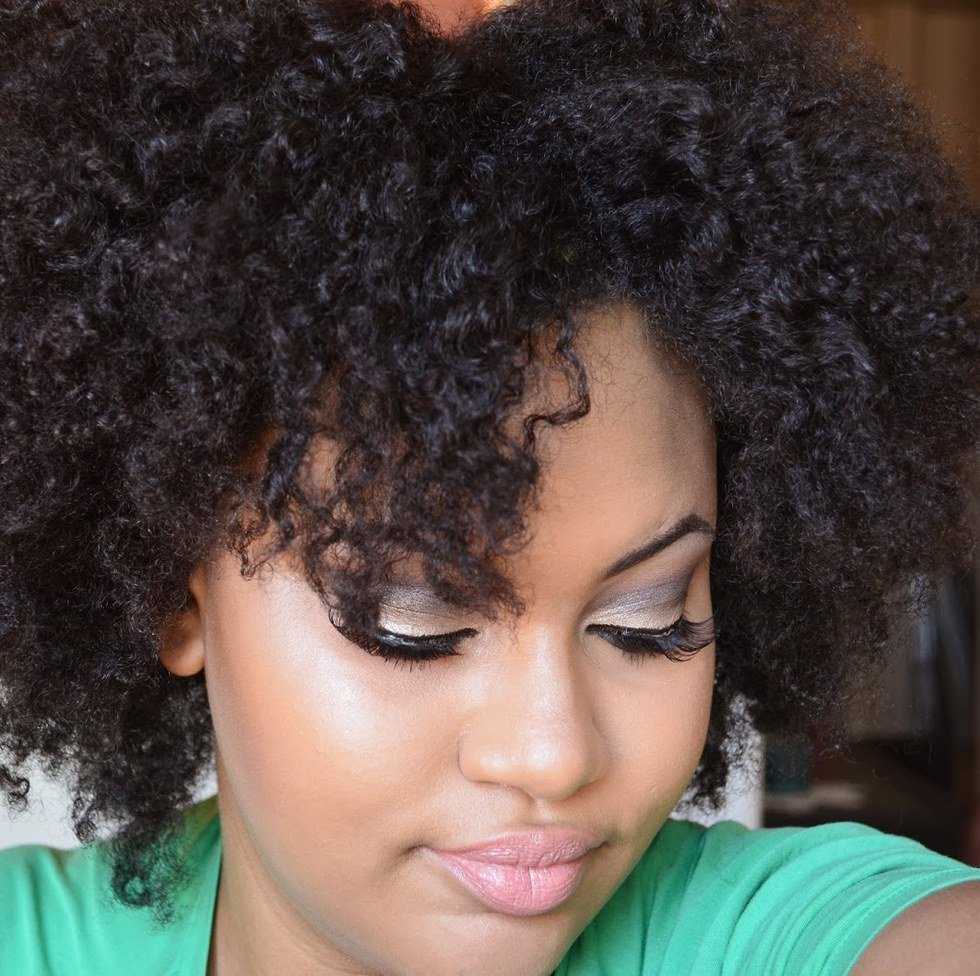
My hair healthy is very important to me. Where my hair was once limp and lifeless, there are coils and curls for days. I have so much volume that my hair defies gravity. Where my hair was once thin and would shed constantly, so much so that my mother would ask me if I was raking my hair because it used to fall out everywhere. Now my hair is thick and full.
I never let anyone touch my hair, it never got wet, I wasn’t proud of it at all. I never even knew how to take care of it. Now someone can scratch my scalp and put me to sleep, feel my soft hair and see how it fluffs up like the clouds you project your daydreams on. Now my hair can be soaking wet and I’m happy, grateful for the moisture that only Mother Nature can give me. Now, I wear my hair like a glorious crown. A crown that I can braid, twist, cornrow, shave, color and cover with magnificent bundles. Now I am free.
But my grandmother doesn’t’ see that. She sees an alternative. She sees a sort of masculinity in the absence of those strands. She sees different… and she doesn’t like it. By this time, it’s been about two or so hours and I am dying to get back home. Sure, my parents don’t like my hair. They miss when I would spend hours downstairs hot combing my roots. They miss when I would straighten it or run to them to tell them how much length I’d retained.
But they don’t matter. Their opinions on what I look like don’t matter. I’m living this life for myself. I’m finding out who I am, and I’m liking that person. I’m liking the clothes I wear, the piercings on my body, the tattoos that will eventually be emblazoned on my skin. I’m liking this new me. This me where my feminism determines my friends. Where I stick up for myself. Where I don’t allow myself to stay in uncomfortable or unhealthy situations. I like this new me that can see things for what they are.
I am not my hair. I am myself. I am Shawnessy. I’m like so many other college students, just trying to find out who I am beneath the layers of societal conditioning and expectations of behavior. I like me, and I hope you like you too.