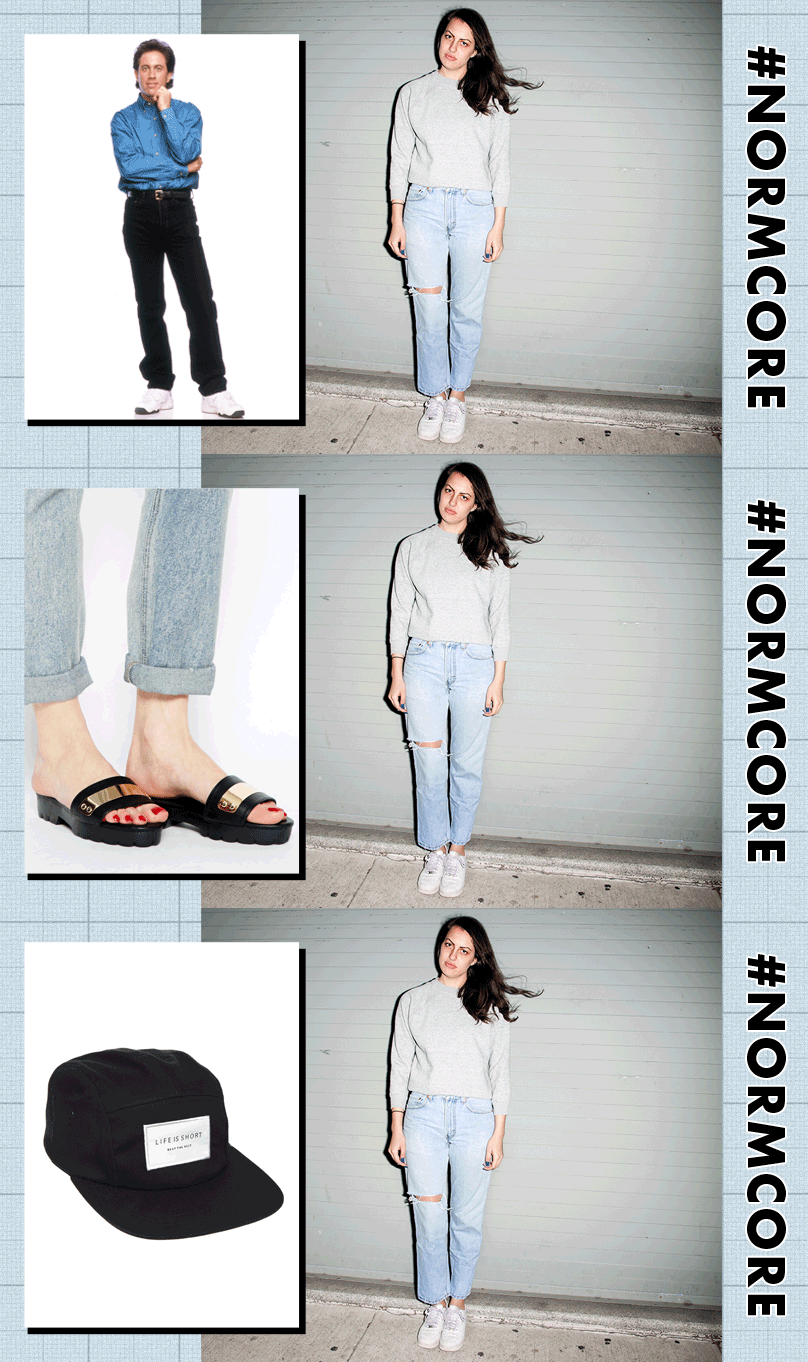
Before I had even arrived to New Zealand for my semester abroad, I had spent considerable time wondering what the style of dress would potentially be like in a place over 8,000 miles away from my home in Atlanta, Georgia. I had formed several theories about potential local trends, but none of my ideas came close to what I saw in the days after stepping off the plane in Wellington. People of all ages, genders, and races, wearing ill-fitting, simplistic, dare I say unattractive, articles of clothing.
I had heard that Wellington was considered an extremely “hipster” city, populated by bold, trendy, individualistic people. But, what happens when hipster becomes average? Becomes ordinary? Becomes “basic”? It seems that any hipster’s nightmare would be to blend in with the rest of society. In response to a vast majority of city members following the once-unique, hipster trends, a new, anti-hipster style of dress was born: normcore. Normcore is defined as a bland anti-style; a subculture based on conscious artificial adoption of things that are in widespread use, proven to be acceptable; a style that is based on being normal rather than standing out. If you are having trouble creating a mental image of normcore, imagine how the average father dressed in the mid-to-late 1990’s: practical, economical, and socially acceptable. This is the image of normcore.
Normcore has spread like wildfire in Wellington. For the city’s substantial university-aged population, this trend is more easily followed than styles of the past, mainly because of normcore’s cost-effective nature. Individuals are now willing to boast about the fact that their clothing was purchased from an “op shop,” or thrift store, since finds such as these just add to the success of a normcore wardrobe. In the first week of moving into my new flat, I was offered on three separate occasions to go “op shopping.” Since then, I have given it a few tries. The recently risen issue is that, in result, of thrift store finds being what people desire most, the prices have risen significantly: a simple example of supply and demand. It is hard for me, personally, to justify buying an already-used t-shirt for almost thirty dollars - a price that is likely far more expensive than its original retail price.
I find that I now live in a land where dressing down is the new dressing up. It does not sound like something to complain about, but it does create a sort of melancholy atmosphere when everyone surrounding me, everyone walking down the street, everyone attending my university lectures, is blanketed with the grey, white, and black simplistic clothing. It seems that the trend has somewhat lessened the individuality and creativity of a young population. I have found that one tactic people tend to employ when hoping to differentiate themselves from the simple cuts and monochromatic colors worn by most, is by increasing the sack-like, worn out appearance of their clothes. This is a look that I would have probably considered undesirable, or even ugly, in the past. Hence, it seems appropriate that one of the most popular trendy brands of the country is called “I Love Ugly.”
I am sure that this trend does not solely exist in New Zealand. However, I can safely say that it definitely did not exist, at least not to the extent as in New Zealand, in Atlanta prior to my leaving the United States. Due to the trend’s ease, comfort, and budget-friendly nature, it would be a shock to me if this trend were not to continue spreading across the globe and throughout the United States.