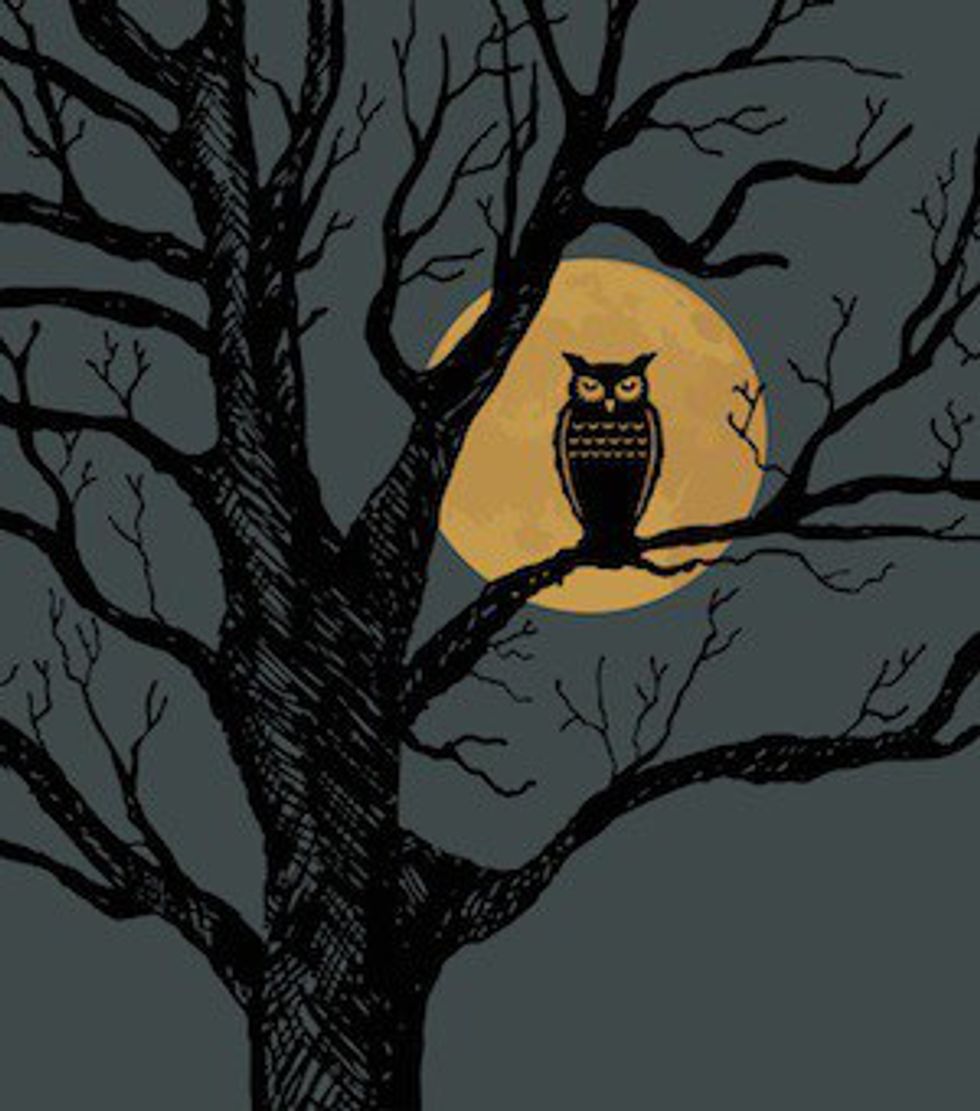

When do people normally do their best thinking? Responses to this question would probably be split primarily between “in the shower” and “in bed at night.” For those nocturnal creatures like myself, it is safe to say that we’d undoubtedly side with the latter. In the hours of twilight, the moon certainly has a pull on more than the ocean’s tides. While the sun may have the power to make one feel as though the world is revolving around them, the moon allows one to feel as though they are floating high above the world, or just as many times being crushed beneath its weight.
There’s something about the night that lends to a more profound reflection. This perhaps lies in the isolation provided by the darkness, for it is the only occasion where we as humans accept solitude. Throughout the day, thought materializes itself in spurts and phases, stimulated and influenced by our setting and an active, conscious awareness of the action of thinking itself. The period of loneliness that comes with the duration of nightfall leaves us for once completely vulnerable to our minds and emotions. We are left without escape from an inevitable subconscious examination and at the mercy of the all-embracing and potent impact of our own feelings.
This inescapable reflection allows for the deepest kind of introspection, as the night lacks the external diversion of the day. While in the morning we may awake hopeful to begin anew with days past left behind, a mind at dusk absorbs our pasts and crafts our dreams for the future. There is no time we better know ourselves than during the hours in which the sun is hiding itself from us.
So, it makes sense that many have claimed the “night owls” to be the more intelligent breed, despite early risers being habitually known for accomplishing more with their time. The deviation from the traditional circadian rhythm of our ancestors is believed by scientists to be a sign of evolution and while a significant fact in itself, it only skirts around the real beauty of being a night owl. Perhaps owls demonstrate higher levels of intellect or creativity, perhaps they possess a greater ability to function on less sleep, and perhaps for these reasons procrastination has a lesser effect on them. Their true beauty, however, lies in their capacity to know themselves profoundly, to not fear intense self-reflection but embrace it regularly.
Now, I am by no means suggesting that “early birds” attempt to permanently change their ways. Believe me, being a night owl certainly begets its own series of issues, particularly in a society primarily catered to a diurnal population. Still, there is value in the endeavor and it definitely merits the occasional effort. Even if it’s only "every once in a blue moon,” allowing one’s mind to drift into a contemplative, reflective state in the hours when all others lays sleeping may reveal much more about the self than one could have expected.