
When most people think of museums, they think of buildings filled with ancient artifacts that retell various points of history and science. Often, museums house stories and objects of history’s past, but the Newseum in Washington D.C. is different. A soaring 250,000-square-foot space, the Newseum offers visitors an in depth look into the field of news and journalism, a career path often overlooked.
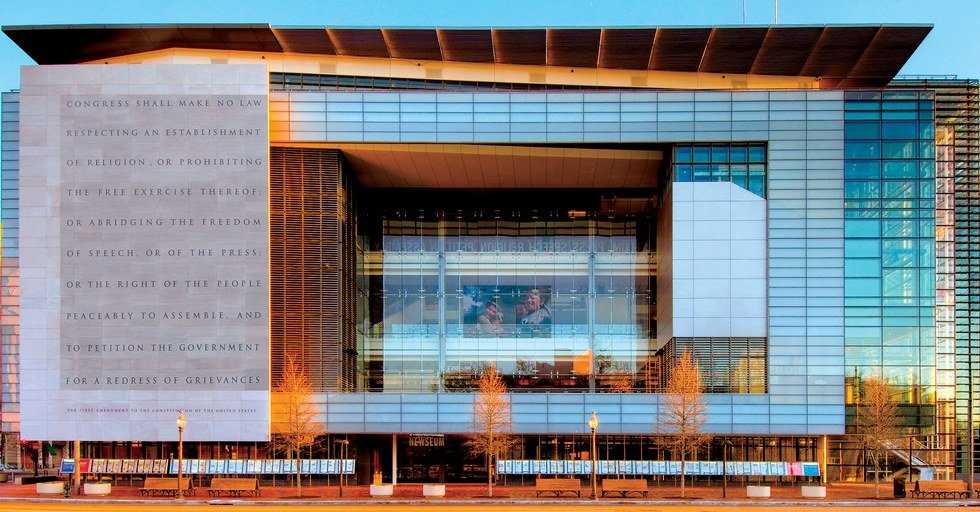
With seven floors full of numerous exhibits, the Newseum is a fusion of journalism and history, two complementary areas in which one impacts the other. In addition, the museum’s overall premise centers around the importance and value of the First Amendment freedoms — speech, religion, press, assembly and petition. It is these rights, as the Newseum emphasizes, that allow citizens in the United States to hold a voice and journalists to provide an avenue for their stories. The museum even has the 45 words of the First Amendment engraved on the front of the building itself, and the Cox First Amendment Gallery showcases just how these rights are exercised, and sometimes smothered, by those in power.
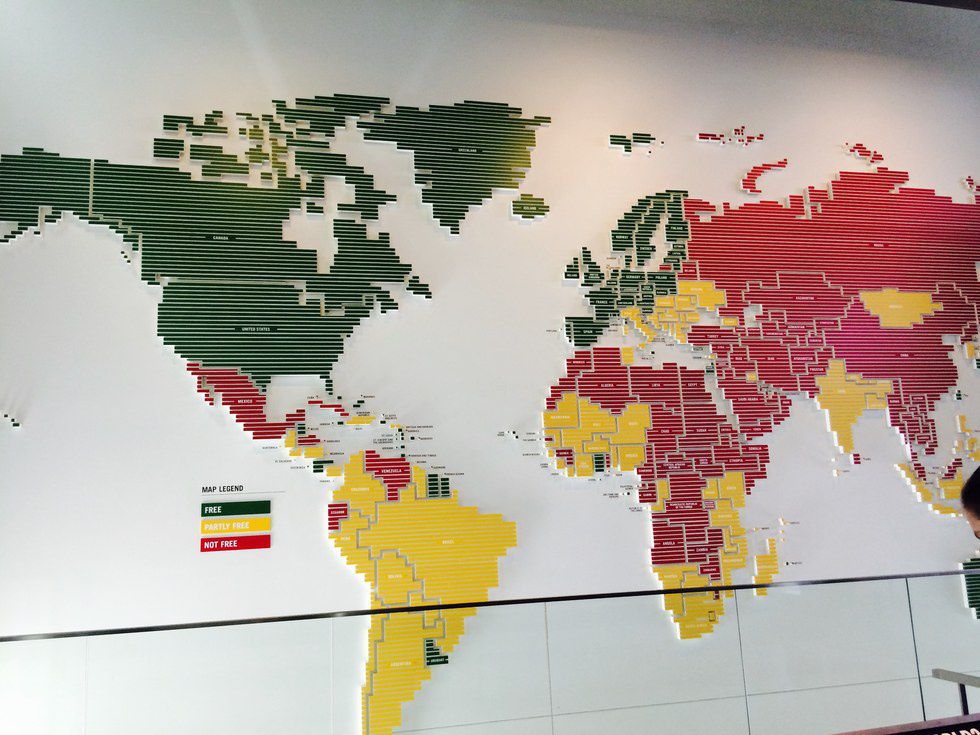
The Time Warner World News presents a world map color coded by the level of press freedoms given to journalists in countries throughout the world. Many governments often place restrictions on the press, creating a perilous environment for reporters who wish to expose corruption within their nation. This exhibit showcases the various dangers journalists face on the path to simply do their job and further emphasizes the importance of a free press.
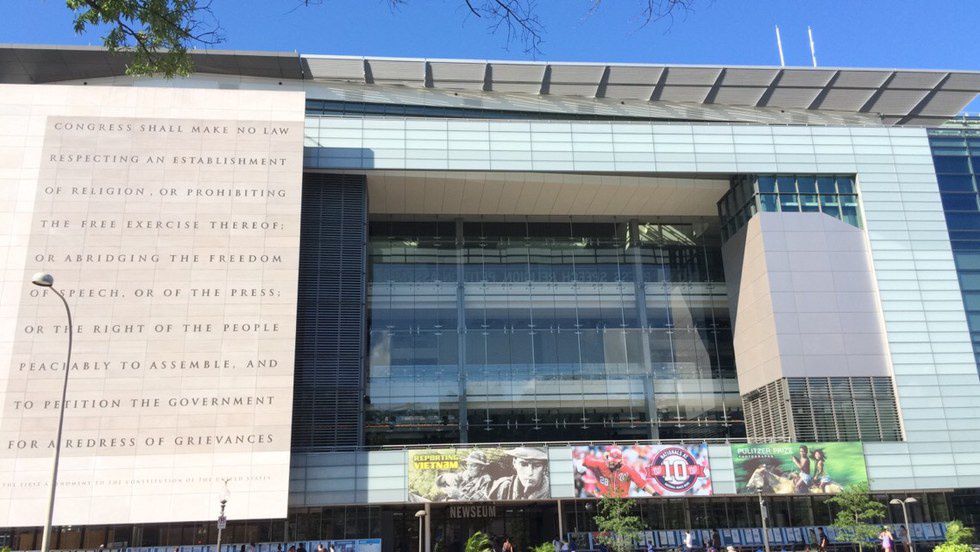
The Newseum shines light on all paths within the broad field of journalism, from photojournalism to print to broadcast to new media. The Pulitzer Prize Photographs Gallery showcases all photos awarded with the Pulitzer Prize ever since its inception in 1942, in addition to testimonies from the photographers who snapped the iconic photos themselves. The photographs are moving, heartwarming and heartbreaking, showcasing the power of a simple snapshot to capture stories of heroism, joy and tragedy. Other exhibits, such as the Broadcast Exhibit, are interactive and give visitors the chance to star in their very own television broadcast segment.
Visitors are not only exposed to the field of journalism, but are also taken through national and international events in which the dedication of reporters helped tell the stories of these impactful, albeit dangerous, events. Exhibits such as the 9/11 Gallery offers a detailed minute-by-minute timeline of the terrorist attacks at the Twin Towers at the World Trade Center, the Pentagon and Shanksville, Pennsylvania. This exhibit also features a mini-movie documenting the very reporters who were on the grounds at the World Trade Center as these events unfolded, risking their lives to tell the world of the devastation and tragedy unfolding before them. It is because of the bravery and heroism of these reporters that the events on September 9, 2011 were broadcasted live to men, women and children across the United States. The stories of these reporters showcases the risk journalists take to serve the public and provide them with real-time news they would not otherwise be aware of if not for their dedication to their craft. Other exhibits similar to this are Reporting Vietnam, "Blood and Ink," and President Lincoln is Dead.
In line with emphasizing the importance of a free press, the Newseum pays tribute to journalist who have lost their lives performing their job. The moving Journalists Memorial features a soaring glass wall engraved with the names of journalists around the world who have died because of topics they chose to report on. Despite the evident dangers they knew was awaiting them, these heroes chose to move forward with the assignment because they felt it was the public's right to know and their duty to report.
For the journalist visiting the Newseum, its exhibits provided a sense of comfort and affirmation. The testimonies given by fellow reporters display the strong work ethic, perseverance and dedication necessary to reveal the truth and provide a public service. Throughout the Newseum’s six floors, many of its walls are engraved with quotes such as the ones below, cementing the importance of the freedoms given by the First Amendment and the protection it gives to journalists and reporters to do their job.
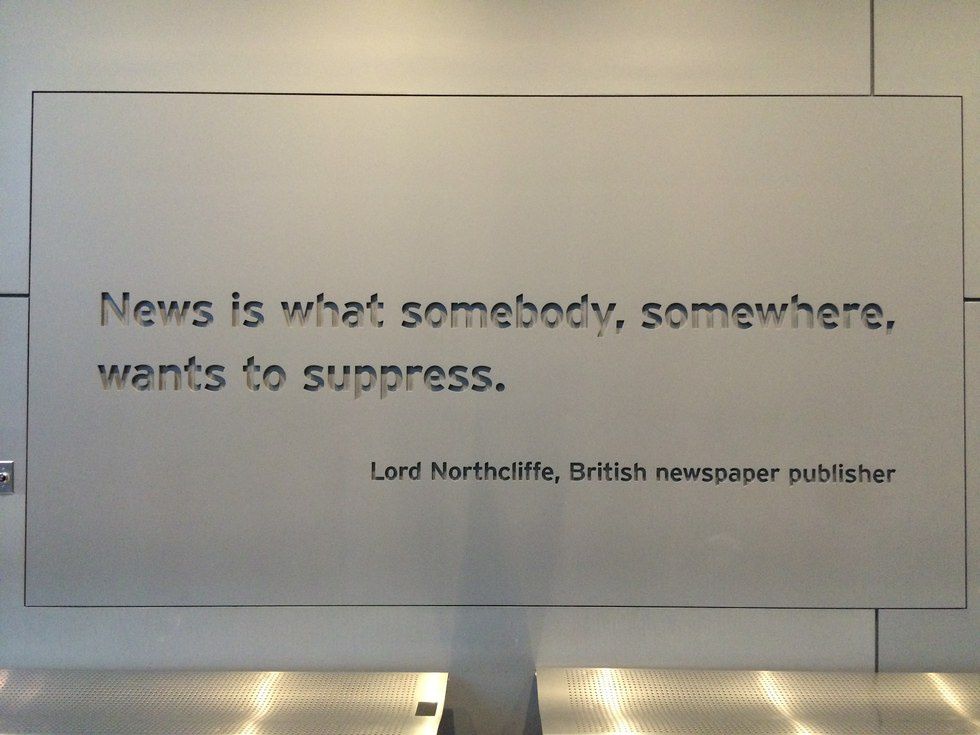
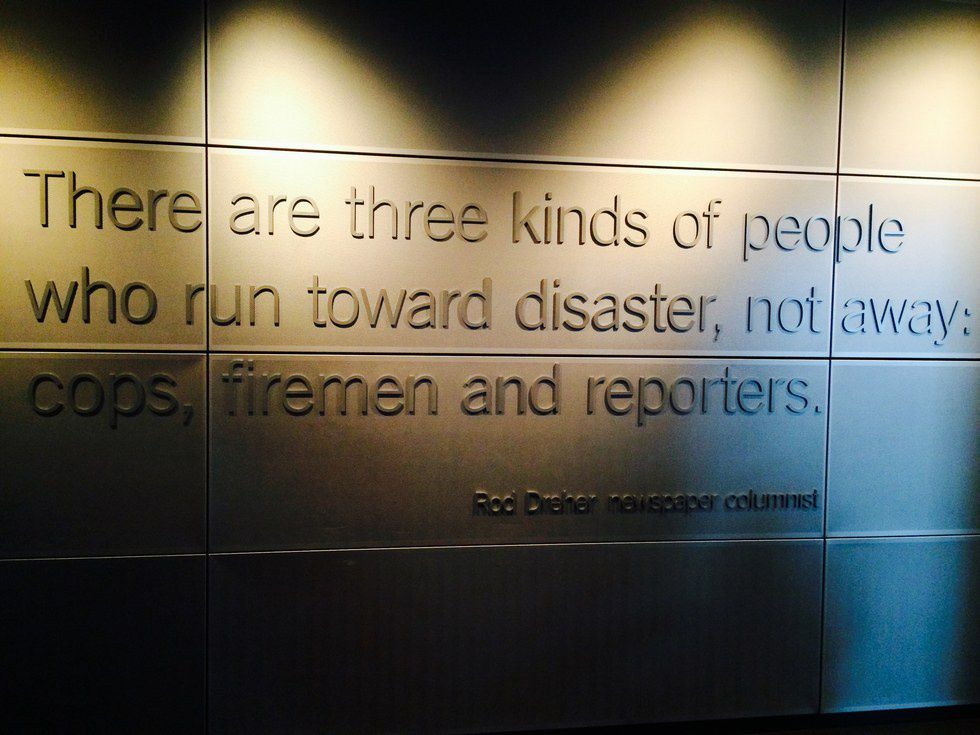
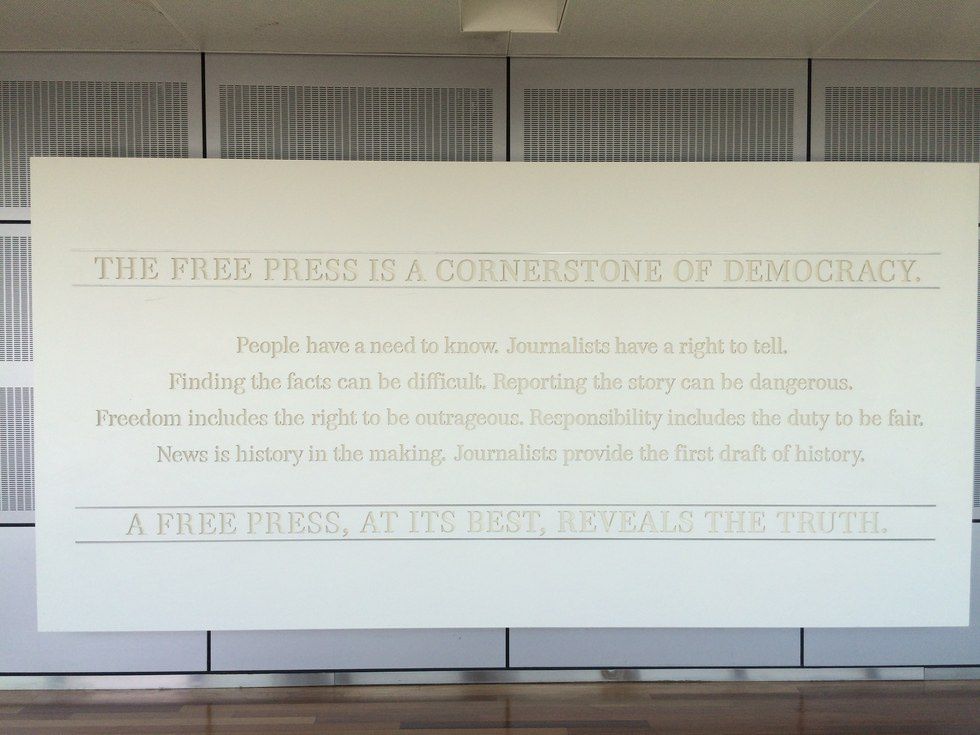
In addition to its moving and informative exhibits, the Newseum provides something even more valuable to the young college journalist. These students may sometimes face backhanded comments about the journalism field and are often told it is a dying profession. But the Newseum negates all those claims by reassuring them that it is the journalist who is given the duty of telling a story, informing the public and writing the first rough drafts of history.