
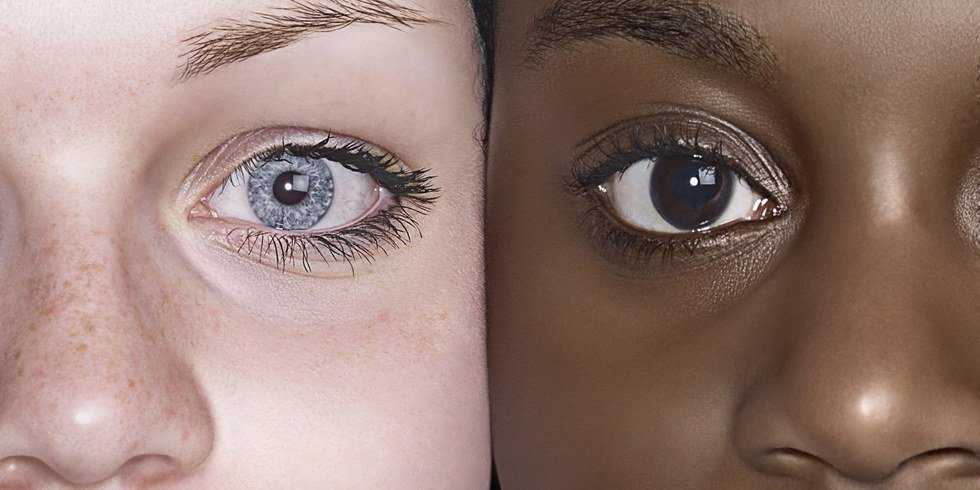
We are living in a diverse world- there are 7.4 billion people walking the same Earth as you. These people have such a wide variety of lives from their eye colors and their hair textures to their families and their consciousness. They view the world through different lenses of science, religion, and spirituality. This is the nature of our world; a wide network of human experience, ensuring that no two people are the same. Unfortunately, with all of the variation in human kind, there is also a network of hatred, discrimination, and oppression that is still in desperate need of reform.
In my Intro to Linguistic Anthropology class at Western Washington University, we discussed the idea of frames. The Anthropology of Language: An Introduction to Linguistic Anthropology by Harriet Joseph Ottenheimer defines a frame as "similar to the idea of worldview; created by words, frames can invoke metaphors, grouping ideas into commonly used phrases and influencing the way we experience things."
In simpler terms, a frame is the backdrop of every moment of your life. Your frame is composed of your ethics, your ideologies, your values, your faith, your culture, and your experiences. Every exposure to media, every late-night parental lecture, every moment in a pew, and every scolding from your kindergarten teacher builds upon your frame. Any interaction, at any time, could affect your frame. This frame, in turn, affects how you think, how you act, and what you say.
The nation we belong to has a lot to do with our frame. For Americans, our freedoms, our right to vote, and the idea that all men are created equal are essential to our frames of mind. However, equality hasn't really been America's forte since Thomas Jefferson made the original statement. The man himself returned home to his enslaved Africans after the signing of the Constitution, and they weren't freed until 1863. The Civil Rights Act was passed in 1964-101 years later- to outlaw discrimination of those slave's descendants. Women didn't have the right to vote until 1920. Same sex marriage wasn't legal until 2015. According to transgenderlaw.org, 37% of the LGBTQ+ community are living in one of the 24 states with negative gender identity policies. This means that in almost half of America's supposedly wonderful United States, transgender people can be discriminated against without any higher legal power taking action.
Also, if you click here, you can see the names, faces, and stories of the 102 unarmed black people killed by police officers in 2015. 97% of the officers involved in these killings were not charged with a crime (mappingpoiceviolence.org, 2015).
Now, it's easy to be mad about this. In fact, you should be mad about it. Equality is supposed to be the basic principle of our country, and never once in this country's history has it been true. It wasn't true when Jefferson said it, and it's not true now. Racism, sexism, classism, homophobia, and transphobia are rampant. Discrimination and oppression of all forms are seen everywhere. Our Republican nominee, who has a significant chance of being the President of the United States, has been the face of sexism, racism, and so many different types of discrimination that I can't even be bothered to list all of them. It's sick. You should be mad.
I often wonder how this is even possible. How is it that so many people in the population are still so discriminatory? How is it possible that Donald Trump is the Republican nominee? Why is is that after all this time, men (and women, Mr. Jefferson) still aren't created equal?
In reality, it boils down to our frames- our backdrop. Those things said in the late-night lectures and in the pews and in the media have layered upon each other ten-fold, forming into a set of ideologies that we aren't even completely aware of. People, including the most liberal, have subconscious and implicit biases against people of different race, gender, sexual orientations, etc. Most people who say bigoted things don't look at themselves as bigoted. They're just operating within their frames, speaking on what they know. It's subconscious, and they fail to see the discrimination. In fact, you probably have biases that you don't even know about that can cause oppression towards others. Don't believe me? Go to Project Implicit.
This being said, discrimination should not be excused. It's still a terrible aspect of American culture and the world as a whole that affects the lives of millions of people. Not only does discrimination leave emotional scars on our hearts, but it also puts lives in danger. The sheer amount of deaths in the last century or even the last decade- due to hatred is astronomical.
It is easy to hate the mouths from which hatred comes, but the bigger problem lies in the society that put the thought there in the first place. To fix the world we live in, we must stop pointing fingers at people who are subject to the problem; we are all subject to the problem. Instead, we must educate people about their frames. The only way to rise above your frame is to acknowledge that it's there, to understand how that affects us, and to decide that you don't want to be under its spell anymore.
References
Ottenheimer, Harriet. The Anthropology of Language: An Introduction to Linguistic Anthropology. Southbank, Victoria, Australia: Thomson, Wadsworth, 2006. Print.
"National Equality Map | Transgender Law Center." Transgender Law Center. N.p., 26 Sept. 2016. Web. 01 Oct. 2016.
"Police Have Killed at Least 217 Black People in the U.S. in 2016." Mapping Police Violence. Accessed October 01, 2016. http://mappingpoliceviolence.org/.