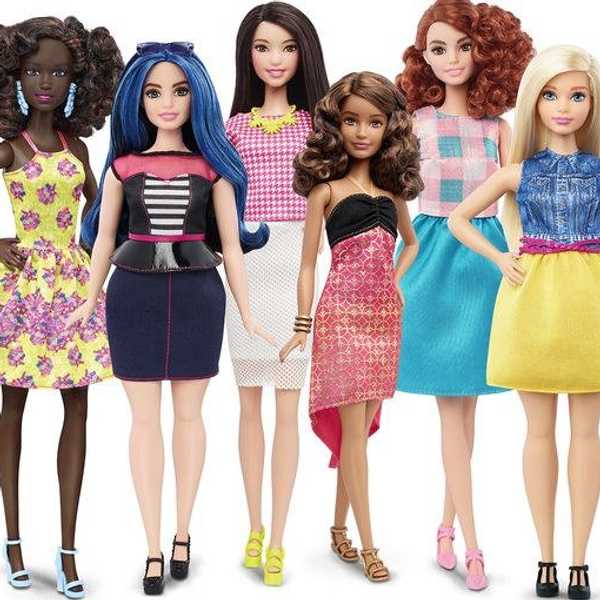
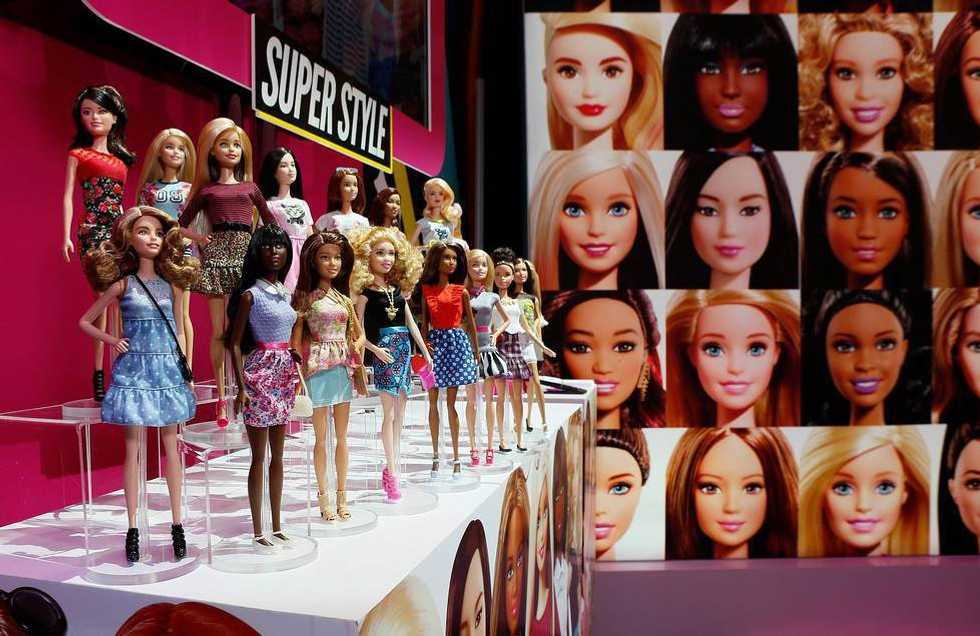
According to the New York Times, “On Thursday, Mattel unveiled curvy, petite, and tall versions of its iconic fashion doll whose unrealistically thin shape has attracted criticism for decades.”
Glamour sat down with Barbie Design VP Kim Culmone to ask some questions on the new line of Barbie dolls. “We’re starting with between 33 and 50 varieties of the new dolls. When you think about all the four body types, with the 18 skin tones and 22 different eye colors and 24 hairstyles, the combinations are seemingly endless,” said Culmone.
I think this is a long time coming for Mattel because Barbie is such a household name for the company and it is the main product they are known for. I believe the diversity in the doll’s physical appearance will only help young girls to find a doll that looks like them. A similar doll line that is also well known is American Girl dolls. Growing up, I had an American Girl doll that looked like me. I liked the process of customizing the doll to her hair, clothes, and even interests. The only problem with American Girl dolls was the price; they were quite expensive. Granted, you get the whole experience, but most girls don’t have multiple dolls due to the price. Barbies are less expensive due to the lack of customization, but is it worth it for parents to fork over the extra bucks to give their child a doll that is a better representation of themselves? I would think so. However, Barbie is such a trademark in the doll industry that it is important that they are embracing the body of young girls today.
From the same New York Times article, assistant professor of psychiatry at Columbia University Medical Center, Dr. Kelli Harding, says, “I think as a woman it’s about time, and as a physician, I strongly support that. For a little girl, it’s important to have diversity in what they’re playing with.”
I agree, there are a lot of body image insecurities young girls have due to the media. Last year, my project’s topic was young girls' body image in the media, and my partner and I explained how the image of young girls are depicted through the male gaze and how girls have unrealistic versions of themselves printed everywhere. All media outlets are guilty of this. Magazines, television, film, music, toys and video games all are guilty of misrepresenting an unobtainable body image for young girls and even grown women. This body image can induce psychological problems for young girls who start to think how the media represents young girls and women that that is the only way they can be beautiful.
What Mattel is doing is very in retrospect to what is happening in the media with body image. Mattel is stepping in the right direction and young girls will be appreciative to what is to come. I hope this will ignite other forms of media to partake in such actions to resolve body imaging issues altogether in the media.