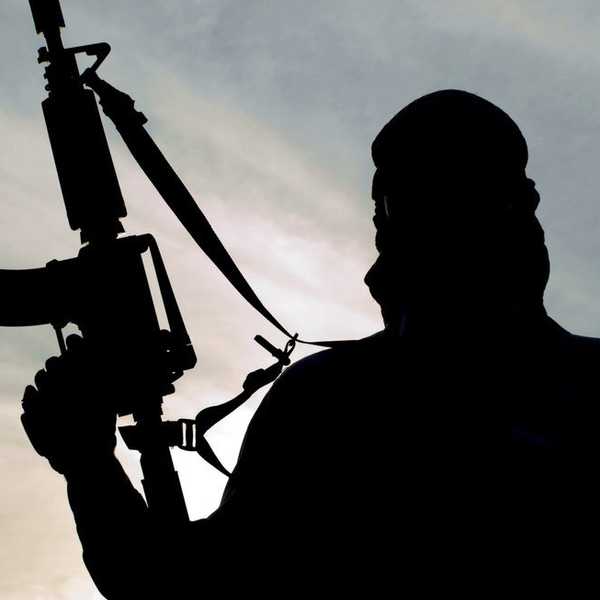


Most Americans were surprised in 2001 when terrorists allied with Al Qaeda, an extreme Islamic group, hijacked three planes and attacked key structures symbolizing American power and prosperity. However, for the intelligence community, warnings came flooding in about the lack of intelligence, protocol, and resources needed to prevent such attacks from happening months before the Twin Towers collapsed. In the chaos and confusion after the attacks, President Bush and his cronies launched a near 14-year crusade tearing apart the Middle East in a never ending quest to squelch anti-American insurgent and terrorist groups hiding in plain sight.
These groups Bush declared “evil” had been active for decades before, if not more. Many of the top commanders of the Taliban and Al Qaeda emerged out of the American-backed Mujahideen that countered the Soviets and their communist allies in Afghanistan in the 1980s. To many key national security officials in the Reagan administration, radical Islam was a better alternative to the evil, despicable communism that America had taken on as its heavyweight champion since the dick measuring contest of the Cold War as the two powers claimed parts of the whole globe as their personal dominions. After the Soviet Union collapsed in on itself in 1991, the Afghan communists faced a similar fate as the Mujahideen, propelled by American training and weapons, took over the country and enforced their intense radical interpretation of Islam, which slowly hardened into the Taliban regime ousted by an American invasion following the devastation of 9/11 and still fighting to reclaim their lost power.
In terms of the current problem of ISIS or the Islamic State in Iraq and Syria (more formally known as the Islamic State), the rise of the Taliban and Al Qaeda represents a clear systematic formula to the growth of radical terrorist groups. Similarly, thou not identically, ISIS emerged out of the fractious political and military climate created out of the American ousting of Saddam Hussein, the former dictator of the country. Without a centralized leadership able to govern the country, everything fell apart with different factions working to establish themselves as the power brokers of the country. Sunni, Kurdish, Shia all fought to remake Iraq in their own image, but all failed to establish dominance. Neither was the American-backed Coalition government able to enforce its authority over the chaotic country. Out of this myriad of civil strife and conflict, ISIS was able to monopolize intense discipline and a strict ideological framework to emerge as a key force.
When Syria began to pull itself apart as Bashar Al-Asad, the banal yet brutal dictator of the country, refused to step aside instead prompting large-scale sectarian war fueled by post-imperial divisions and power structures enforced both implicitly and explicitly by the West since the end of World War II, which has plagued large swarths of the Middle East since the fall of the Shah in Iran in 1979, ISIS used the power vacuum to stretch operations and come closer to its vision of a united Sunni Caliphate. Once again, an anemic reason from the West (historically ironically), which neither enforced Al-Asad’s position to ensure stability nor significantly helped the rebel’s chances to ensure democracy as a human right, allowed ISIS to take advantage of the situation and give the Russians an excuse to intervene in the conflict.
Last Tuesday’s bombing in Paris only further highlights the West’s inability to effectively put up an effective counter insurgency nor establish a clear catch all intelligence network to enforce authorities of such attacks. The attacks also reveal the power of ISIS to inspire new generations of terrorists to take up the mantle and do countless amounts of damage. No amount of bombs on Al Raqqa or Mosul will ever change that situation. In fact, deliberate and weak handed responses such as drone strikes will do nothing but cement ISIS’s reputation as martyrs for the world’s massively oppressed Muslim populations and further tear both Syria and Iraq apart by destroying infrastructure needed by innocent civilians trying to survive the bloodshed and may even drive them to radicalism.
Political figures across the globe have used the bombings as a clear indication of two things: justification of ineffective and destructive policies such as mass surveillance and drone strikes, and the incompatibility of Islamic and Judeo-Christian civilization owing to the formerly popular “Clash of Civilizations” thesis. Unfortunately, these resultants are manifesting themselves into public policy. In the US, Republicans are using the attacks to deny asylum to refugees fleeing the very people they have now become irrevocably associated with out of petty ignorance and racism. In France and other parts of Europe, drones and airstrikes are being used to “liquidate” ISIS strongholds with little results, pushing more people into the arms of anti-West terrorist groups out of survival.
There is an old adage in political science that one man’s terrorist is another’s freedom fighter. With ISIS, the imperial legacy of the West enforced through money, guns, and repression represent a tyrannical legacy that has hobbled the development of the Middle East. What could have been a wealthy stable part of the world, ended up emerging out of imperialism unstable and poor at the West’s beck and call? So, for those who wish to escape culpability by pretending that ISIS is Darth Vader level evil and that they represent the true pit of human decency, lest not forget the oppressive, extractive, and degrading imperial systems created, enforced, and beloved by the West that put much of the world’s Muslim population underneath the throttle of the boot of dictators and foreign companies. ISIS may be horrible and reprehensible, but someone had to make them that way in the first place.