



If you're anything like me, you spend a substantial amount of your life wishing that John Hughes directed your life. His genius has brought us some of the most amazing, timeless movies ever – the kind of films we can watch over and over again without getting bored of them.
My personal favorite has always been The Breakfast Club (1985). Other than the fact that John Bender was my angsty, rebellious adolescent crush, the story and message it tells resonate with me, making it so easy to re-watch at least three times in one week. I could talk about it for ages, but there are certain things about the movie that just really stick with me.
Disclaimer: There may be spoilers ahead, so I highly suggest bookmarking this until you've watched the movie!
The stereotypical students.
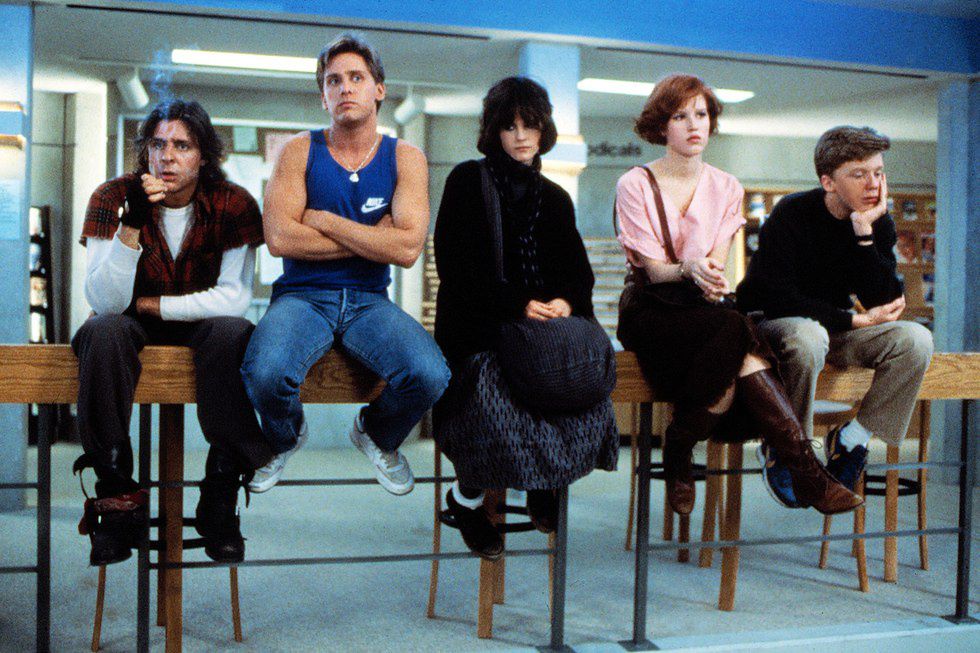
As Brian Johnson (the Brain) defined them in his essay to their principal, Mr. Vernon, each of the students in Saturday detention fit under some sort of high school stereotype. There was Andrew Clarke (the Athlete), Allison Reynolds (the Basket Case), Claire Standish (the Princess), and John Bender (the Criminal), each thrown under these classifications based on their actions and behaviors. Although cliques and groups were not as rigorous when I was in high school, I could understand why each of them fit under the stereotypes in which they were placed and how unfair it was for them to be seen only in a certain light. Ironically, their differences are what brought them together at the end.
The adult expectations.

Although this movie first came out in the 80s, the depiction of adult expectations still rings true today, more than 30 years later. Long story short, based on Bender's reputation at school, Mr. Vernon had nothing but dirt-poor expectations for him once he graduated (if he ever would). Not only did Vernon ignore understanding Bender's actions, he also did nothing to help get Bender on a better path for himself. A prime example was when he gave Bender detention for the next two months for petty comments. How could Vernon possibly expect nothing but failure from a student if he wasn't doing anything to guide him away from it? Sigh.
The hidden family truths.

Of course, it's understandable that the first thing you do when meeting new people isn't to spill your guts and secrets to them. However, being stuck together in a small library for eight hours can really make you open up. All five of the students break down their walls and barriers to show more layers to them than just the brain, the athlete, the basket case, the princess, and the criminal. At the end of the day, they all feel the same peer pressures, similar familial strains, and even possible romantic feelings. They laugh together, they cry together, and they learn more about each other and themselves in one detention session than in all the time spent together in high school.
The unexpected relationships.

Given the existence of cliques in high school, who would ever think that the most popular girl in school would ever fall for the burnout? News flash: it happens all the time. What I appreciate most about The Breakfast Club is that it reminds us that people are not labels. It doesn't matter what group you fall under in high school (or in life, in general) – the heart wants what it wants, and those feelings shouldn't be ignored simply because two people travel in different social circles. Love is love.
This is just a tiny glimpse into the wonderful cinematic masterpiece that is The Breakfast Club, so don't just take my word for it. I may think it's the greatest movie to exist, but you should go and see for yourself.

















