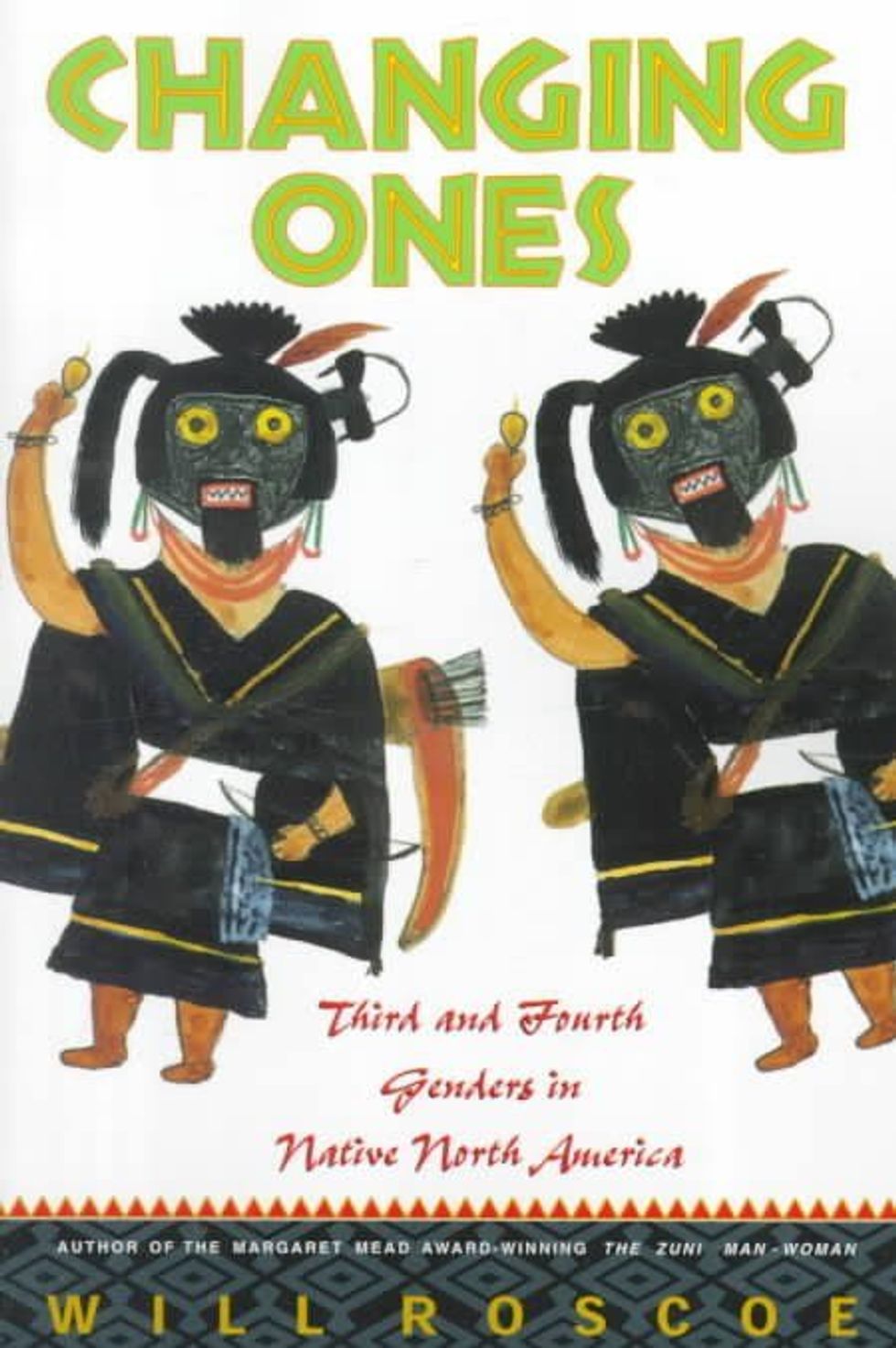
Many of you have probably have heard of the trans community. Others of you have probably heard of the Native North American term "Two-Spirit." Few of you might even have a general or simplified knowledge of what Two-Spirit is. Most of you don’t know, and are wondering, what is Two-Spirit? Others of you might inquire what are Native North American views and expressions on gender and sexuality? If not, at the very least you should seek and try to understand cultures that are not your own. A lot of gender and sexuality in Native North American culture is covered in William Roscoe's "Changing Ones."
"Two-Spirit" is the English translation of the Anishinabe/Ojibway term niizh mantoag. This has developed into a pantribal term in the 1990s that tries to cover the gender and sexual variations among all the different tribes across Northern America. It’s an oversimplification, but also an act on the part of Native American culture to combine and try to harmonize differing tribal beliefs because so few Native North Americans are still around. This is why Two-Spirit individuals is often used as an umbrella term for the Native North American queer community, while adding the spiritual relations of having such an identity. Others would argue that it in itself is an oversimplification, and try to argue that Two-Spirit has a lot of similarities but gay/lesbian is still just a “white man’s disease.”
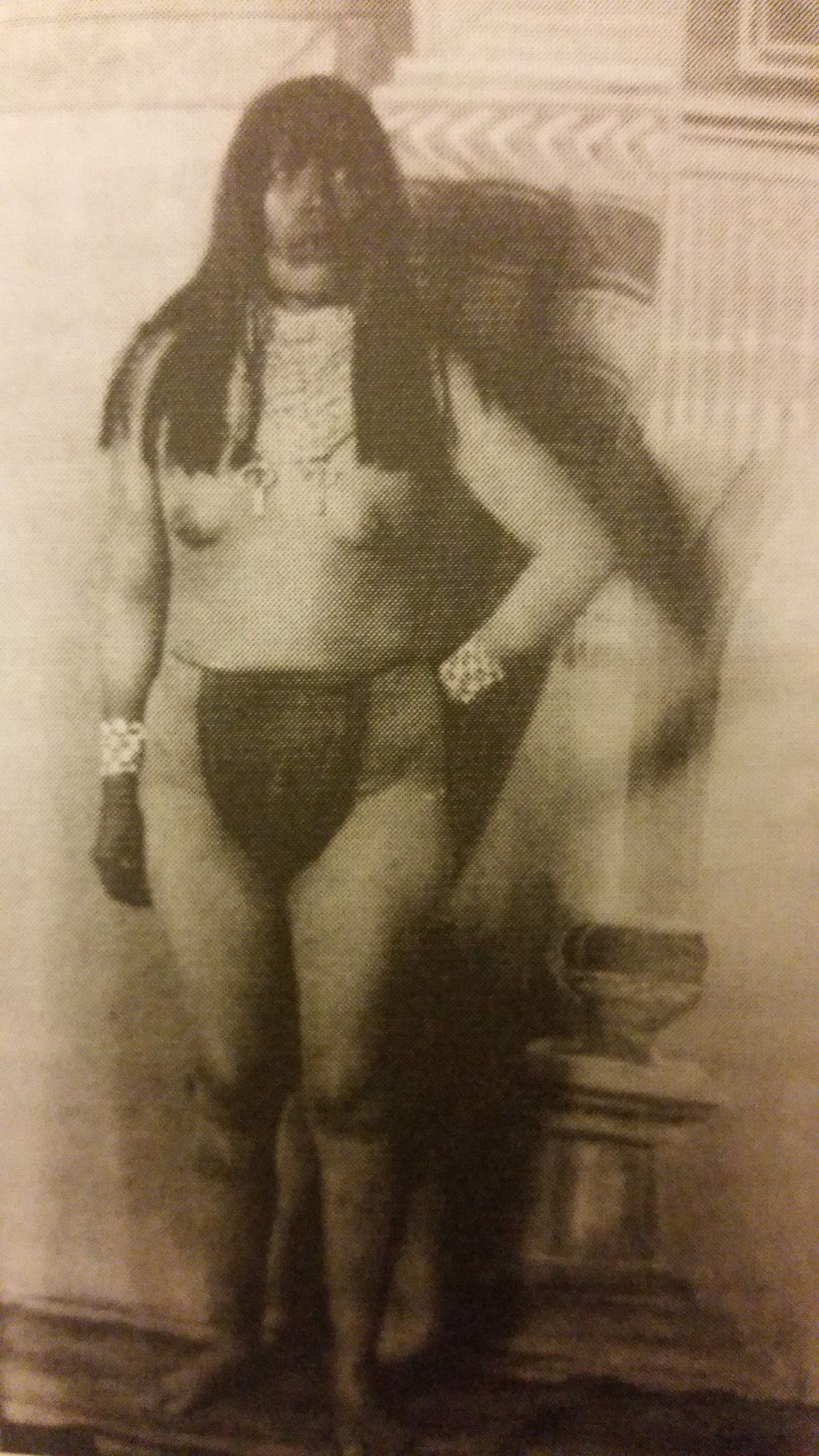
The answers to both those arguments are complicated, to say the least. Gender expression and sexuality varied from tribe to tribe. To understand this, one must realize that Native North Americans culturally didn’t interpret sex and gender as meaning the same thing. Sex was determined by your genitalia. Gender was your role in society. Gender wasn’t seen as a dichotomy as it is in western society. There was man and woman, but also there was a third, and sometimes a fourth gender. The third/fourth gender were males and females who didn’t fit the role of man or woman. Sometimes male/female Two-Spirit people were lumped together into one separate gender, while sometimes each had a separate word for each gender. Either way, this provided sexual and economic freedom to be or do whatever you want regardless of sexuality or genitalia.
In some tribes, sexuality and gender were separate identities, and in some they were codependent of each other. In either case it provided space and made use of people who had differing sexualities. According to Roscoe, the Crow’s third gender was called Bote. Bote was determined from whether or not a male/female preferred women’s/men’s work. Around puberty, certain visions of themselves as another gender or certain flowers confirmed their gender identity. Romantic and sexual relationships in the Crow were between Men and male Bote, women and female Bote or men and women. Premarital sex was common, and most men and women had sex with both Bote and each other. There were cases of not having sex with Bote, or only having sex with Bote, but either way that was seen as natural. Marriage was also common with these same relationships. Although deviations from this were looked down upon because having one that did housework, crafts, and arts, while the other did fighting, hunting and physical activities was seen as desirable. Bote’s couldn’t have relations with each other as they were shamans, and it would be religious blasphemy.
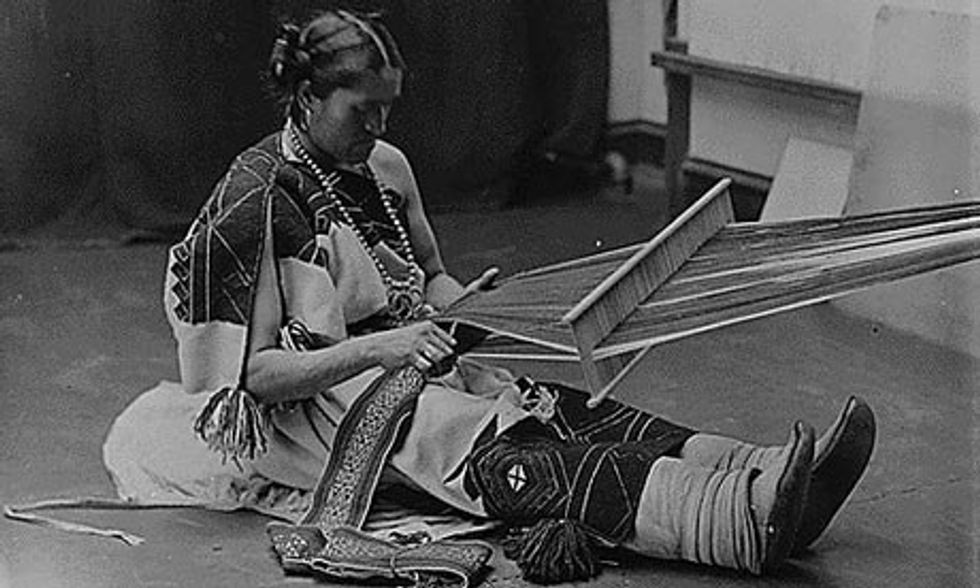
Roscoe points out that in the Navajo tribe, the Nedleehi were more influenced by sexuality. What determines whether or not you are Nedleehi is one or any combination of the following: having no interest or attraction of the opposite sex; if a male/female preferred women’s/men’s work; or if they were intersex. So being Nedleehi was a broader spectrum with the Navajos. Nedleehi could just have the sexuality aspect and not crossdress, or perform work of the opposite gender, or a mix of both. Relationships, sex, and marriages occurred more freely with the Navajos than the Crows. There were no limitations on who you could marry regardless of sex or gender. Nedleehis could marry Nedleehis. Worth noting, most tribes with Two-Spirits could not do this, and this was a rare case. So Nedleehi was a gender identity that either expressed sexuality or a role in society or both. And like the Crows and most other tribes, being Two-Spirit meant you were spiritually gifted and became a shaman.
In the plains in Central America, the Two-Spirit identity had less to do with role in society. Women and men were seen as archetypes each, and a female being a warrior, or a male being a craftsmen didn’t necessarily constitute a separate gender identity, and unlike most other tribes, these tribes didn’t attribute religious connections to separate gender identities. Pueblos and many neighboring tribes saw visions as a sign of death or bad luck, and such visions would have been signs of a separate gender identity in most other tribes. Also, Two-Spirits could be shamans in Central America but weren’t necessarily shamans, which could and often as likely to be filled with men or women. What constituted a separate gender identity was if one didn’t fit the man or woman archetypes. For instance, women had four archetypes: the manly hearted, the virtuous, the artistic, and the loose. This meant more social room to keep a same gender role, but if a female didn’t fit those archetypes, then they adopted the third or fourth gender roles.

Gender expression varied heavily across Northern America. But regardless, sex and gender were not seen as the same thing. If anyone has done gender studies or knows anything about the trans community, this line of thinking should sound familiar. Also, third and fourth were not seen as men or women. These were themselves separate genders, whether it was a mix of the two, androgyny, or a complete separate identity, which in itself refutes the argument that a relationship between a Two-Spirit and a non-Two-Spirit were imitations of heterosexuality. They were seen as same-sex relationships, with differing genders, because again, gender and sex were not the same thing in Native North American culture. Such viewpoints in itself was influential on modern Western queer culture, as imperialists wrote of “sodomy” and how it was expressed to justify their conquering and “civilizing” the Northern Native Americans and other cultures. They influenced from the beginning of modern Western society ways to help express and influence our queer culture, which can be seen in gender studies and with top/bottom and butch/femme dynamics in gay and lesbian culture. Even so, in some tribes like Cheyenne, Micmac, and Flathead they had specific words for homosexuality that were separate from gender identity. Showing that Western and Northern Native American homosexuality and gender expressions are interconnected, as Native Northern American helped form modern Western societies expression and acceptance of homosexuality and different genders, while Western society influences modern-day Native North American sexual and gender expression as they adapt to the modern Western queer community, harkens back to older Two-Spirit traditions.