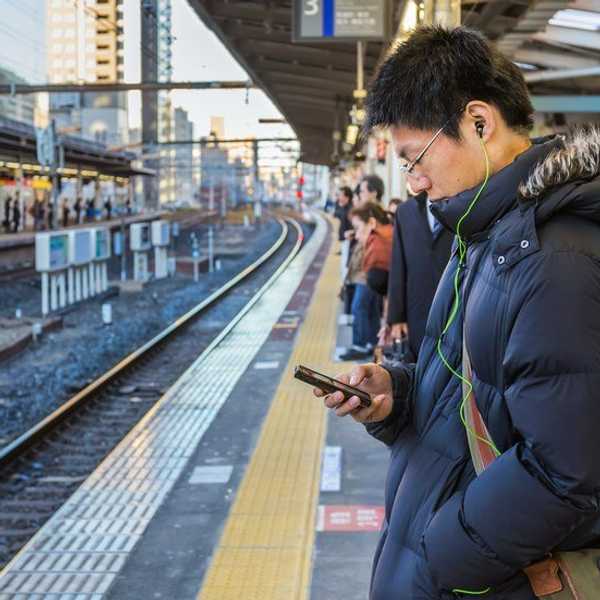

In today's society, everyone is aware that there is a soft addiction to the devices we stare into for hours of each day. Whether it is your laptop, TV, or phone, the amount of time and energy we spend using these conveniences can take over our lives.
As a communication major with an emphasis on technology, I find myself often analyzing the pros and cons of my most prized possession – my cell phone. “Cell phone" is almost the wrong term to describe it, considering I can manage my life on my iPhone. The flip phone that I had in junior high was what I would refer to as a real cell phone; all I could do was call people (besides the two games I could play on it, of course). Nowadays, we can literally do anything with a few clicks on the surface of a smartphone.
It's almost disgusting how much power we have in the palm of our hand, but it's also one of the most innovative opportunities that has ever been available to average people. The fact that I can keep in constant contact with whoever I want, at any time, is a privilege. All of the other incredible features that can be accessed through personal devices – such as a smartphone – exceed any other technological advances that can be easily used by almost anyone.
On the same token, the aforementioned time we spend on these devices seems to outweigh the benefits they offer. I've always been aware that we spend far too much time on our phones, but it just became obvious to me this past week. With the semester ending and everyone leaving campus, it feels like all my friends disappeared from my life. Obviously, we tend to cling to our phones more in order to fill the physical void that they left with the instant gratification of a Snapchat or text from our peers. I've probably charged my phone twice each day with how often the battery dwindled down to 10%, which is absolutely ridiculous to me. As soon as I realize how often I've been using it, I put it down, only to pick it back up five minutes later because I want to talk to someone.
This may seem like a unique situation because we aren't around our friends, but it happens so much more than that. I have been in plenty of social situations, like parties or regular hangouts with friends, where everyone's attention is glued to their phones. Even when we are together, we're not really together.
I think the idea of Snapchat especially has perpetuated the idea of connecting with others without really being together. Sometimes, people that I'm with (and I'm guilty of this myself) will post “stories" of who they're with or what they're doing so others can see, and in the process, taking themselves out of the moment. It's almost contradictory.
We as humans crave contact. This contact now comes in the form of social media, which is also a way to keep track of how much contact you're getting – measured by likes, follows, friends, whatever your poison is. Now that our lives can be spelled out in statuses and images, we can track how much attention we're receiving and base our feelings off of this information. Which, of course, is instantly accessible with a cell phone.
I've noticed a lot of anxiety is accompanied by these kinds of social media offered by smartphones. For instance, if you get 30 likes on a picture of a sunset on Instagram and you have 600 followers, you must be doing something wrong. You might even delete it because maybe it wasn't as pretty as you thought. Or, if a “friend" you made briefly at a party unfollowed you on Twitter, you get offended. You'll probably unfollow them back, just to get even, but you'll probably wonder what tweet was the last straw. Or, one of my personal favorites: when a guy opens your Snapchat and doesn't reply, you might wonder if he still likes you or not. Maybe you didn't look good enough in the picture and now you're convinced he's ignoring you. You start doubt yourself in ways that would never be relevant before these social networking apps existed – which is totally weird.
The same reasons that I love modern day technology also contribute to the reasons why I hate it. This isn't a unique or unheard of phenomenon, everyone knows that with this advancement in modern technology comes new, more intimate ways to connect with others. For this reason, more attention should be focused on what it's doing to our lives rather than using the applications themselves. It's time we start looking for a balance between our actual, human feelings and understanding its impact due to the way we portray of our lives from our cell phones.