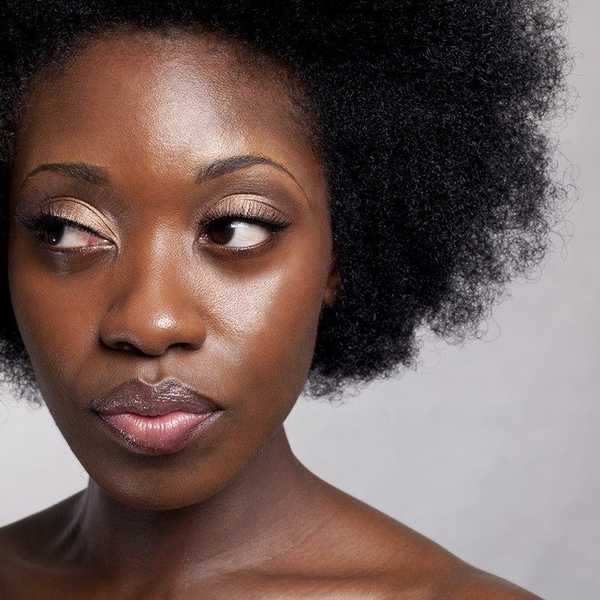

I have pretty big curly hair that is somewhat still chemically altered. I have been growing my hair out for about two years. I never knew how long these things could take. My hair journey starts from when I was a kid. My mom used to be obsessed with taking me to the salon for blowouts. I have natural highlights in my hair, and my mom would always enhance them by pouring everything chamomile related to my locks. When we incorporated chemical relaxers, and later on Brazilian blow outs, it was the end for me. I did not see the texture of my hair until a little bit into my twenties, when I decided I wanted to stop blow drying my hair.
My mom is the type of person to try the next best thing. If there was a new blowout from Brazil, she would get it, and then I would obviously follow. I didn’t have breathing room between all the different hair colors and treatments to allow my hair to just be. I think this is definitely a cultural thing. My parents are Brazilian and blow outs, and hair straightening in general, are a huge trend in Brazil. In the U.S. we only get a fraction of the different treatments available in Brazil. I believe it is probably because our products are a lot more regulated here than in Brazil. I have a little bit of knowledge on this topic because I also went to beauty school in California, but when I was done and ready to enter the industry, I knew it wasn’t my passion to sell these superficial products and styles to women of all ages.
A part of me was in conflict because I didn’t think anyone really needed to spend that much money to alter their hair or look. In a way, I felt that this is exactly the kind of thing that is used to oppress women. On a deeper level that is why I could never work in the beauty industry. On the surface though, I am not a conventionally attractive person. I’m simply artistic, so creating these looks comes easier to me, especially makeup. That is not the only factor that needs to work in one's favor in order to work in these New York salons. You apparently can’t sell beauty if you are a fat girl. I have had salon managers and owners look at me and, without saying a word, return my resume. I knew well enough that some of those positions I was overqualified for. It is honestly tough, but so am I. With that said, I just don’t think I had it in me to “plant the seed” of insecurity, so my clients would constantly come back in order to change something. That is pretty much part of what they teach you in beauty school. Don’t get me wrong, I am not against altering a person’s look, but if there are things you are changing because you have not dealt with a deeper psychological issue, then I don’t want to be the one to contribute to that as well.
My mother has a head of white hair that neither of us will ever see. That is totally fine by me, everyone has a right to change their hair color. I can’t help but think of the cultural factors that contribute to this as well. Women of color on a regular basis are told to straighten their hair because it is not professional to have curly hair. I think that is absurd. It doesn’t help when it seems like everyone else is so excluding of people with curly hair. My hair is huge, and when I was a tween, I remember reading those magazines that would show us how to do different styles. It was always catering to straight or slightly wavy hair, and the styles would never work on me.
I think it must have been around eighth grade that I swore I would never leave my hair curly again. I started getting chemical relaxers, specifically, “just for me.” That relaxer was never strong enough, so we slowly moved up. My hair was a weird texture; my ends were straight and my roots were definitely still curly. All that burning for nothing! Every bit of it was painful, from day one to the moment I put the blow dryer down.
I decided I had enough when I went back to Brazil and was inspired by my aunt’s nonchalant attitude. She didn’t have super straight hair but she never let anything like her hair or looks keep her from getting things done. We still went for manicures and pedicures as a traditional bonding experience, and all we did was playfully tease others about these obsessions. I never felt like I had to look a certain way. My cousins straighten their hair still for practical reasons, like I did, because they feel it's more manageable. These days my cousins are contacting me for hair advice, because quite frankly, it is time to go back to our roots altogether. I don’t need straight hair to achieve my academic or professional goals. I am glad that I can inspire people to do the same. I can feel my hair and my self-esteem grow stronger every day that I allow myself to be exactly who I was meant to be.