They say that everything is bigger in Texas, but when it comes to fast food, the “bigger is better” motto doesn’t just apply to the Lone Star state, it is applicable all across America. Ever since the tenfold increase in economic activity that America experienced during the Second World War, “bigger is better and better is bigger” has been a mantra recited by American companies that produce goods and the individuals who consume those goods. Since the opening of the first fast food chain, White Castle, in 1921, America and its people have been regular consumers of tasty, on-the-go meals from their favorite chains such as McDonalds, Burger King, Taco Bell, KFC and Jack in the Box. However, since the 1960s, the availability of food hasn’t been the only measure that has expanded; with each passing decade the rising popularity and demand for fast food has expanded the waistlines of American men and women. But is fast food the only culprit in the increase of weight? No, fast food alone cannot be blamed for increasing American waistlines, but fast food portion sizes can. Portion sizes for food in America cause the individuals who consume commercially sold meals to easily exceed a recommended 2,000 calorie diet and its effects are detrimental to the nation as a whole.
At the present time, portion sizes in America are much larger than the portion sizes for fast food in other countries. In an article posted on Daily Mail’s website talking about the variance in portion sizes of McDonald’s soft drink sold in the US versus other countries, it states that “America's large size (30oz) is 1.5 times bigger than the one in Japan (20oz)” and that “In Hong Kong, a small beverage from McDonald's is just about the same size as one from the U.S., but a medium-sized one is significantly shorter - just minimally bigger than the Hong Kong small”. This disparity between portion sizes can easily explain why Americans’ waistlines have been expanding as a large Coca-Cola Classic (30 oz.) contains up to 280 calories, 15% of recommended daily calorie intake recommended by physicians based on a 2,000 calorie diet. If a burger and fries are added to this soft drink selection, exceeding an 800 calorie per meal limit recommended by most physicians and dieticians isn’t very difficult.
However, the present situation of American fast food portion sizes does not depict an accurate picture of the past. According to an article written by the food and health editor of the Huffington post, Kate Bratskier, “McDonald’s portions have super-sized since the fast food chain’s first store opened in 1955. At that time, a customer could order only one size of fries off the menu, and the serving was about 2.4 ounces…that’s 0.2 ounces less than a standard small fries offered today”. Similarly, researchers at the University of North Carolina at Chapel Hill found that “hamburgers have expanded by 23 percent; a plate of Mexican food is 27 percent bigger; soft drinks have increased in size by 52 percent; snacks, whether they be potato chips, pretzels or crackers, are 60 percent larger.” This increase in portion sizes has been attributed to a concept called “value sizing" — getting more food for the dollar”. Taking the previous example of a large Coca-Cola Classic sold by McDonalds at the present time, a 52% decrease in portion size translates to a calorie count of 145.6 calories. Today, an individual would have to order one and a half extra small Coca-Cola Classic beverages from McDonalds in order to meet that same calorie count. Given this fact, evidence being able to easily exceeding a 2,000 calorie diet is present in the nutrition facts of every fast food franchise in the United States at the present time.
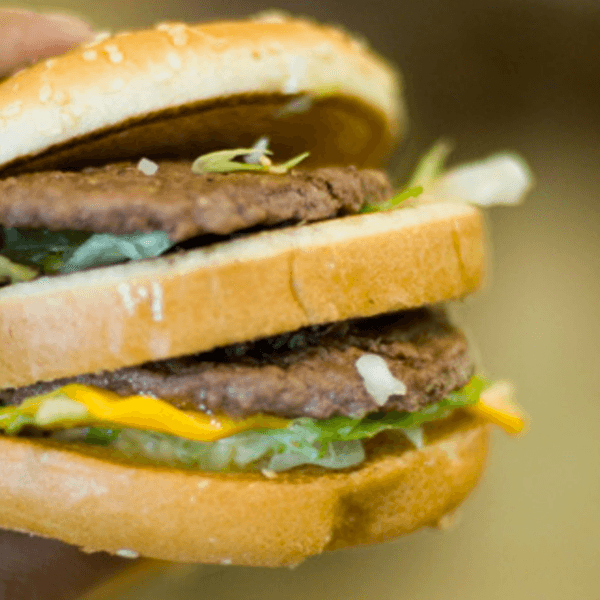
A typical fast food order for any of the 3 current major fast food establishments in the United States, McDonalds, Wendy’s and Burger King, consists of the most popular burger, medium fries, at the very least and a large drink. Keeping this ordered meal consistent across all three establishments, one can conclude that a single meal alone nears the recommended maximum of 2,000 calories as displayed in the table below. For example, a Big Mac, medium fries and a large Coca-Cola Classic from McDonalds is equal to a total of 1160 calories while a Whopper Sandwich, medium fries and a large Coca-Cola Classic from Burger King measures up to 1520 calories. The combination of a Baconator, medium fries and a large Coca-Cola Classic from Wendy’s is a whopping total of 1860. According to the Livestrong Foundation, a single meal shouldn’t exceed an average of 800 calories, however, all three of these meals not only exceed 800 calories, and they are almost equivalent to 1.5, 1.9 and 2.3 normal meals. Therefore, it is safe to assume that the vast increase in portion sizes is a large contributing factor in expanding waistlines and the culprit in why exceeding the physician recommended 2,000 calorie diet has become an easy task for American to accomplish today.
However, the increase in portion sizes doesn’t just affect an individual’s waistline, it also affects their internal health. An article published in the American Journal of Clinical Nutrition, states that “large portions of food may contribute to excess energy intake and greater obesity”. Obesity, as defined by the article on obesity published by the United States National Library of Medicine, “means having too much body fat”. The condition can “increases your risk of diabetes, heart disease, stroke, arthritis, and some cancers” and is caused by “genetic makeup, overeating, eating high-fat foods, and not being physically active”. Being obese can lead to type 2 diabetes, high blood pressure, heart disease, stroke, cancer, sleep apnea, osteoarthritis, fatty liver disease, kidney disease. In pregnant women, it can cause the development of gestational diabetes, preeclampsia and increase the need for a C-section. Although increased portion sizes may not be the sole culprit of the vast increase in the number of cases of obesity related problems, it is the reason why Americans are easily able to consume more than 2,000 in one day.
Critics may argue that portion sizes are based on how much the individual is capable of eating and differ based on the general eating habits of a country and that a difference in portion sizes does not equate to being the reason why exceeding a 2,000 calorie diet and doing so is not a bad thing because most Americans need to consume that many calories to stay healthy. After all, consistently being able to afford meals that lead to a full stomach are what separate the rich and the poor, correct? Wrong. Although the financial difference between those who can afford to feed themselves and those who cannot are the meals they consume, it’s pretty safe to say that with the ingredients used to make the fast food meals that are commercially sold in America and abroad, the poor and the rich aren’t that much different in health. Those who are poor are poor in health because they cannot afford to eat food, but those who consume the massive portion sizes marketed and sold to millions of Americans every day as “healthy choices” is poor in health because of how much they’re eating and what they’re eating. The Livestrong Foundation’s article titled “The Average American Caloric Intake” states that “the average adult woman reported consuming 1,785 calories per day and adult man, 2,640 per day. The USDA suggests that these numbers are probably lower than what is consumed in reality. A study published in a 2003 issue of the "Annals of Epidemiology" found after examining the food diaries of 161,856 women, the underestimated calorie intake was 25 percent on average. If this is the case, Americans may be consuming more like 2,231 to 3,300 calories per day.” From these statistics, one can definitively conclude that the increased number of calories per portion caused by larger portion sized offered by fast food restaurants is definitely a contributing factor in the consumption of excess calories.
Physicians typically recommend that women consume no more than 1,800 calories per day and males should consume no more than 2,200 calories per day. However in the age of fast cars, fast technology and fast food, grabbing a bite to eat on the go has become a steady trend and as a result, the meals being served by fast food establishments are in demand because they’re tasty. Just because something is tasty doesn’t mean that it is good for you and as a result, Americans are consuming more calories than they need. This increase in calorie intake can be attributed to larger portion sizes offered by companies that are proponents of value sizing, the concept of getting more food for the money spent. Unfortunately, value sizing not only expands waistline, but it also exponentially increases the risk of obesity which can lead to several potentially fatal ailments. In order to avoid these health risks, Americans should change their consumption mantra from “bigger is better and better is bigger” to “less is more”. In doing so, they will not only be able to improve their eating habits, but will also reduce wastage which in environmentally friendly and is more likely to provide a sustainable future for generations to come. Be American loud and proud, just not with your food.