
It is safe to say that everyone knows what happened in Paris, France, on November 13, 2015. And thanks to social media, the majority of us knows what happened in Beirut, Lebanon, on November 12, 2015. Similar tragedies like these happen unfortunately all the time in the world, and it is a shame that they are not as publicized as they should be in the media. But that’s not the focus of this article. What I want to point out is that the attacks in France have created a rippling shock factor in the global community. France, a highly developed Western country with a strong secular background, was specifically targeted in a religiously charged terrorist attack, and for the rest of the world, it showed that nobody is safe from these acts of sheer evil.
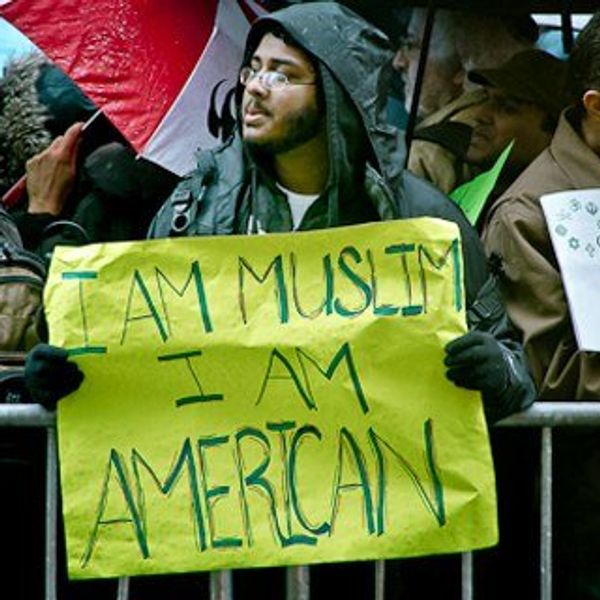
But in the panic that has manifested in the world since these events, many of us have begun to combine these acts of evil with the religion of Islam. Even in a country like America, I have to admit that there has definitely been an unspoken stigma against Muslims since 9/11 -- think of those “random” security checks at the airport. But following the Paris and Beirut attacks, there have been open acts of aggression against Muslims and those perceived to be Muslims in the world. Just a few days ago, a Muslim hijab-wearing woman was robbed and attacked by two assailants in Toronto, Canada, while picking up her children from school. Two Palestinian-American citizens were not allowed to board a plane in Chicago after a terrified passenger heard them speaking Arabic to each other. A medical student of Haitian and Mexican descent in Manhattan, New York, was harassed by another man about “what happened in Paris” while waiting in the lobby of a movie theater. And unfortunately, these acts of hate and fear are now happening on a bigger stage. The blame game has traveled to many states in America, where more than 30 states ranging from North Carolina to Michigan have barred Syrian refugees from arriving to their states out of fear they might be terrorists based on their religious affiliations. There is no longer a separation between the evils of extremist Islamic terrorism and the religion of Islam in general in the eyes of the public. The attacks in Paris and Beirut have frightened many people to erase that clear line.
From a religious point of view (I’m an atheist) and from a personal point of view, I do not blame Muslims for what has happened. I do not blame religion. I do not blame the Middle East or anything that is simply associated with these terrorists. I blame the terrorists who have carried out these horrendous acts of murder and genocide, not only in France and Lebanon, but in the world. I blame the systems that have compelled young adults from all over the world into believing that extremist terrorist activity is the only way to spread their cause, find a purpose, or feel a sense of happiness in the world. I blame sheer ignorance, hatred, fear, and anger. As an atheist, this will sound ironic, but I blame the fact that that these terrorists have turned towards everything that goes against their religion. No one can blame all Muslims for the acts of a few who are not even acting in the name of Islam, as much as they insist they are. No one is entitled to shame Muslims to wear badges of identification to separate them from the rest of the world and force them to face more misguided persecution. No one should prevent Syrian refugees -- the people who are trying to escape from the same evils we are all fighting -- from entering a country simply because its media-induced, radically conservative fears are overruling its sense of human compassion.
I want to ask every person in the world who has declared or implied that all Muslims are terrorists to go look at themselves in a mirror and ask themselves how they managed to stoop to this low a point in their life: where they are generalizing an entire group of people based on the actions of a few, where they can read of hate crimes against Muslims in the news and feel no compassion for them, and where they can look at photos of war-traumatized Syrian refugee children and tell themselves that they can live with barring these children from the same principles of life, survival, and happiness that they have been privileged with. As a global community in a time of terrorism and unrest, it would be detrimental to spend our time and efforts attacking each other rather than taking on the actual forces of the world that are causing this great amount of tragedy and horror.