When I was 13 years old, I announced to my parents that I would one day become the President of the United States.
From an early age, politics drew my interest greatly, and even though I eventually realized political achievement did not simply rely on magnificent proclamations of intent, my political aspirations are still the most primitive focus of my efforts. In my high school years, while my best friends attended parties on Friday nights, I dedicated long hours to politics. To me, this was not a hefty price to pay—it required no force or labor of me. This was exactly what I wanted to do.
Instead, the political burden I actually carried took the form of something that would not become lighter as I grew older. It was an impossible hurdle to jump: my mother is Lebanese, born and raised in the middle of Beirut. She met my American father after she moved to America in 1987, and so my upbringing was a mix of eating sloppy Joes and tabbouli, listening to Sonic Youth and Fairouz. I was raised to speak English and Arabic. I was the happy audience to fascinating dinner-table discussions between my parents. I experienced the best of both cultures. But the most defining characteristic of my upbringing, the one that—were I to actually run for president—would define me completely as a political figure? I am a Muslim. And, because of this, I was made to believe a presidency was not in my favor.
It was also in my teen years that I became hyper-aware of the hatred of Islam in the 21st century. Maybe it was because I was older, or maybe it was because the first black President (one of his most scathing scandals being his middle name and Muslim father) had recently been elected. No matter the reason, I was beginning to see frightening reactions to any Muslim ideal or piece of Arab culture that made its way into popular American society.
I can now understand, in a way I previously couldn’t, the way these reactions will always somehow affect my life, whether as a politician or as an American. However, even so, I find it hard to swallow. I find it hard to fathom the dilemma of myself as this specific Muslim-American, whose native language is English, who hungers to defend the very principles of American culture and who is still told, by implication, “Don’t even bother.”
And, for a moment, let’s assume that I’m not blonde or blue eyed, that I don’t look more American than some of my fully Caucasian peers. Even more, pretend for a moment that I wore the hijab, the religious scarf worn by many Muslim women. Not only would it be almost incalculable that I would ever gain a political position in America—I would also have to consistently deal with scalding looks and shameless remarks about who I was as a person, simply by the implications my scarf would convey to any uneducated person.
Forget my specific situation—why does any minority have to feel that their capabilities will not be the sole cause of their failure or success as an American? Why is it that anyone’s political success will be largely affected by where their mother was born and the religion they were raised by?
Before I ever learned the Surat-al-Fatiha, an honored verse from the Qur’an, I knew by heart the Pledge of the Allegiance. It was six days after my fourth birthday when the first plane hit the Twin Towers and my parents rushed to my home, where my paternal grandmother—who was a devout Christian and had always told me to do anything I set my mind to—was watching me and my brother. When I was five years old, my kindergarten teacher made us green eggs and ham in honor of the Dr. Seuss book of the same name: I ate the dish gladly. As I went home and told my mother, she did not fret. I think I remember her laughing on the phone about it with my maternal grandmother—who only spoke Arabic and who loves my father just as much as her own daughter.
I do not stand for terrorism. I do not want to harass or violate any person because they believe in a different God than I do. I have read the Bible and the Torah countless times. I have celebrated when the Supreme Court ruled gay marriage constitutional. I cried when I found out about the 2015 bombings in Beirut and Paris. I am an American. I am a Muslim.
But until our nation changes, virtually none of these characteristics matter except the last one—a characteristic that our Constitution’s founding fathers swore to me would never be the cause of my own downfall.
Perhaps the blunder of the American dream is something that I failed to understand when I told my parents that I would become President no matter what stood against me: what stands against you is not always in your control, and—even more frightening—not something that you created.
But beyond this misunderstanding, there is a more crucial point, a more important reason why I choose to address this issue in light of a time that seems to have much more pressing issues than an anecdotal dream.
Almost every step of our nation’s development was a result of change. We have allowed African-Americans to own property, vote, and be equal to any white citizen. We have compensated Japanese-Americans for their treatment during World War II. Even now, our country is still glowing from our national grant of equal love, straight or gay. There are over a million supporters of Hillary Clinton, who could possibly become the first female president of America.
But before we compensated Japanese-Americans, over 127,000 of them were placed into internment camps to suffer. Before African-Americans could vote and own property, they were enslaved, born to live and die only under the hands of a white men. Before gays could marry, they were harassed, beaten, barred at any costs to prevent them from doing so.
So, while I acknowledge our strides towards a free and democratic society, I continue to ask myself questions that cannot be answered by any politician or news source: why must we always partake in the three-steps-forward-two-steps-back for us to realize our hindrances as a nation? Have we really changed, or have we consistently and systematically shifted our focuses on who to oppress next, as we stand in a revolving door of perpetual hatred?
And even despite the impressive phenomena surrounding where we are now, let’s not get too complacent with it. The present, still, is tainted by the evils of where we once were. The LGTBQ community is still attacked, African-Americans are still classified by outdated generalizations, and I am still made to believe I can never be President.
These problems are rooted in each other. How can we shorten the financial gap between blacks and whites when we are still separating our citizens by religion? How can we stop separating our citizens by religion when the GOP nominee’s very platform is one of hate?
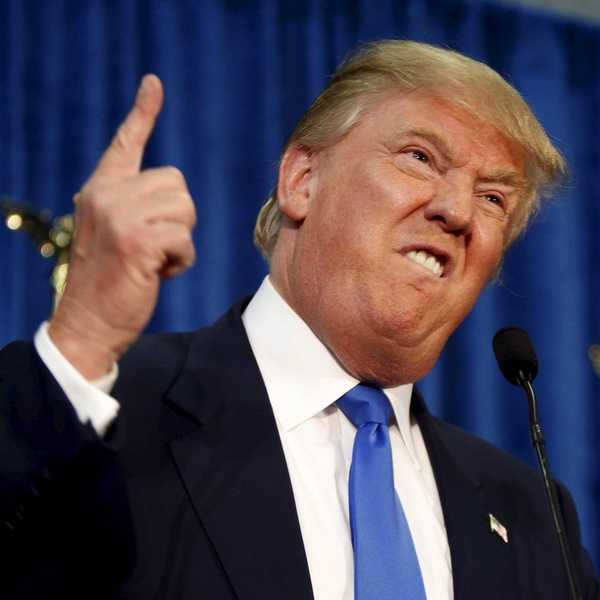
That is why this issue is not about me, or even just about our Muslim citizens. It is about what this singular issue represents in general, even within its specificity. The root of this particular problem shows itself in so many of the other problems that define this country. It is what allows a nominee like Donald Trump to flourish. It is the dangerous blurring of lines, the expansive contradiction between what every citizen of this country deserves and what they are, instead, rapidly gearing towards. I do not seek a Muslim president as a form of personal recognition or representation, but as an indicator of proper prioritization. Let’s pick a Muslim president, a Jewish president, another black president, a female president—not because we care about those identifiers, but precisely because we don’t.
And so before a Muslim becomes President, the American public must change. Before we are able to disengage the momentum of the Trump campaign, we must change. The answer is in the American people, and I urge every one of these Americans to remember where we were, where we are, and where we are rapidly going.
This morning, as I got ready for school, I read a news article detailing of yet another group of anti-Muslims crowded around my own mosque in Dearborn Heights, Michigan. My knuckles turned white as I recalled eating dinner at that same mosque in August with my family and one of the imams, whose wife is Christian.
This afternoon, I told my professor about a different mosque in Toledo, Ohio, where I attended school for two years and had some of my fondest memories. One memory in particular was the annual “Culture Day,” in which the students, some who were Christian, dressed in their cultural garb and brought traditional dishes. What I did not tell my professor about were my sleepless nights upon coming across a news article I found many years after leaving the mosque: in 2012, a man walked into this childhood mosque of mine and lit a fire. Some of the children at the school were younger than four years old.
It was during these two moments of my day when I thought of the 15-year-old me, sulking in her room because the society that raised her forced her to believe she would never become president.
But it was this evening during which a strange thought occurred to me. When I arrived home, I was greeted by my olive-skinned mother whose Lebanese accent still comes out every once in a while, and my pale-faced, baseball loving, fiscally-Conservative father. At that very instant, it was not the memory of protest at one peaceful mosque and attempted arson at another that I thought about. I did not think about the polls. I did not think about Fox News. I did not think about Donald Trump. I didn’t think of the Orlando shooting at Pulse club, or the Boston massacre, or 9/11.
No. As I watched my parents, two different people from two different worlds, able to wholly and permanently come together, I thought of something different. As those two vastly different people sat on the couch together watching reruns of Hell’s Kitchen, I thought about what we’ve been able to overcome as a nation. I thought about the rainbow of flags in Washington D.C. upon the Supreme Court ruling gay marriage constitutional. I thought of our first black president. I thought of 60 percent of our population claiming ethnicity of races other than white. I thought of "Culture Day" at my Islamic mosque in the middle of rural America. As I watched my parents, as I remembered the purpose of our nation and the liberties we have always been able to somehow put back into our grasp, it was at this moment that I smiled to myself, and thought that maybe having a Muslim president would not be so hard after all.