While scrolling through my Facebook feed the other day, I came across another provocatively titled piece from Vice, talking about the need to approach music classification in new and varying ways. That was enough to peak my interest, so I sat myself down and read the whole thing to pass some time. In it, famed New York Times music critic Ben Ratliff laments the traditional music genre system, claiming its objective sorting system puts too much emphasis on homogeny and fitting in with preconceived ideas about music. My description alone is not enough to do it justice; the interview touches on many interesting viewpoints regarding music and the industry that supports it. What got me really thinking was the notion that our current music genre system could, in some way, be flawed.
I would not classify my own musical exploration as being dominated by any sense of genre. This may sound like the kind of prissy, pretentious attitude held by the Earth’s hippest hipsters, but within my memory of how I discovered the music that defines me, there is not a single time I can remember when the proposition of genre led my discovery. I have always been a man of bands, and if not bands, the most obscure forms of the sounds I like, from any genre or class, suffice. Music exploration has been one of the most intriguing journeys of my life so far. There’s nothing more satisfying than finding music of increased diversity and obscurity deep within the bowels of YouTube and SoundCloud. The thirst for alienated sounds sometimes leads me down the endless chain of related videos and suggestions that I find myself cherishing songs whose video might have a couple hundred views.
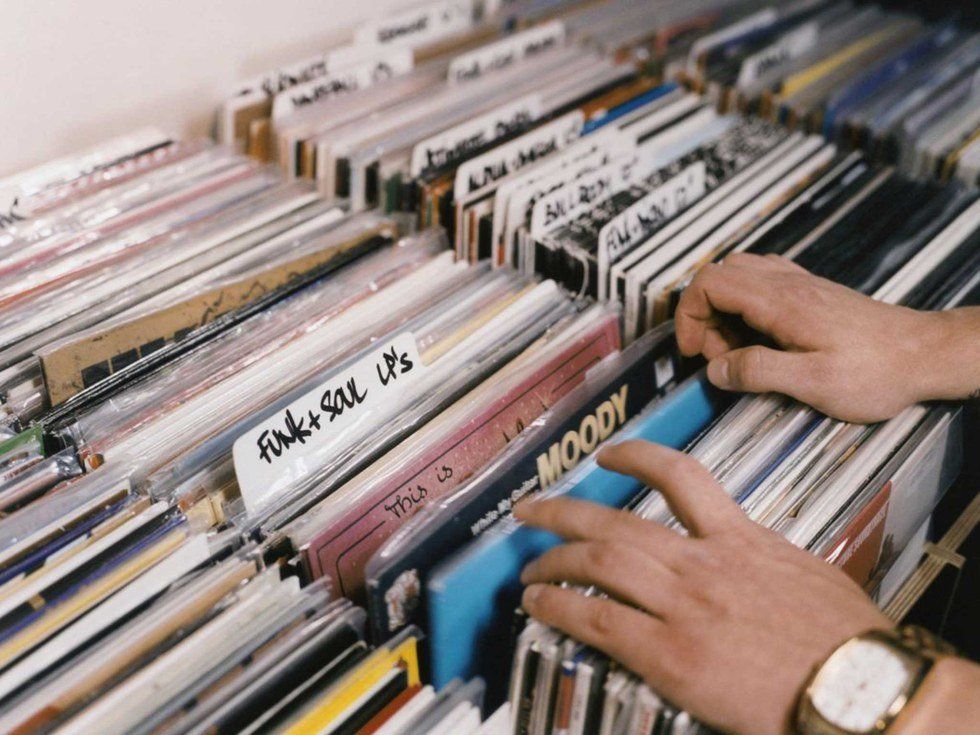
Needless to say then, when I considered the trends of Apple Music, Pandora, and Spotify as Ratliff explained them, I realized just how different the music consumption experience is today. There appears to be two extremes: the placement of music exploration on auto-pilot and the intricate submersion of one's tastes in all that music has to offer. Perhaps those aren’t the only two modes nowadays that music is found, but in more recent times, the division between these two distinctions has widened significantly. Maybe in another era, I would’ve been the scruffy guy whose second home was the record store, but the endless boxes of vinyl are now replaced, at least in the majoritive sense, by the internet. I do not need to say much about how the internet has changed music, as I’m sure anyone reading this has experience with its extent. I need not also try to defend the vitality of digital music over traditional methods; both hold the same amount of importance and specificity when it comes to music. What I aim to address, is the opportunities now present because of the vast and endless musical capabilities of the technological age. That might be a heavy way to think about something like Spotify, but as some put it, music is our very identity.
Genre, as defined in Fabian Holt’s book on the subject, “is a type of category that refers to a particular kind of music within a distinctive cultural web of production, circulation, and signification." Thusly, in addition to the actual music, a genre encapsulates the entire body of performers, producers, and histories attributed to that name. The culture of the genre is dictated by the media it produces, endlessly self-referential due to the similarities in form and context. Genre is set as a sort of identifying blanket, an image of how music should sound to a specific group of people. As a conduit to identity, listeners can participate in both the music and the culture of the music. A celebrated country music fan, for instance, in some sense automatically has grounds for common ground, with anyone else who fancies country.
The use of genres has significant history in the music of the United States. Jazz, blues, rock, country, all stemming from the same style, have all bloomed into flourishing and distinct histories that large chunks of the listening population can relate to. However, genre becomes a limit when its culture and form are forced. I don’t mean forced in the most hostile sense, but more in the vein of collective persuasion. This happens constantly in the music world of the internet. With the advent of streaming services like Spotify and Apple Music, the access to new, old, and varying music styles is endless. But in the face of this multitude, many are quick to assume that it is simply too much music, too much to go through, listen through, or even care about. So streaming services, seeing a means to end, created the suggestion algorithms that govern such seemingly random things as what song plays next. This alone isn’t all that threatening; you put your input into the system and then it does the work of finding songs for you. Where it falls apart, though, is when the algorithms are the only means by which music is discovered.
The narrow comparisons through which music is sorted for something like a Spotify Discover playlist, rob the listener of a fuller music experience. Since the actual process of procuring new sounds is put on auto pilot when Pandora or Apple Music is playing, the music spawned from those explorations stays within a relative niche of music classification. As Ben Ratliff puts it, “[the] experiences with Spotify’s Discover Weekly playlists can be so shockingly personal, and you think, ‘Wow, they really got me.’ But they’ve got you according to a reductive—albeit clever—profile of who they think you are." Auto-pilot listening strips a listener of choice, rendering their tastes simply to an algorithmic authority, stripping also the identities of the thousands of artists that don’t fit those specific niches.
What then is worthy enough to classify music by? Should the endless calculation of suggestion boxes rule our ears, or should the idea of genre and its short comings be torn to pieces? I propose an answer of both, classifying music by both its genre and a secondary quality. The qualities could be anything: pace, complexity, pitch, content, lyrics… The point is, the whole of music cannot simply be relegated to a single source of classification. Music is inherently human, and to claim that one system of organization suffices enough to cover something so intricately layered seems dis-respectful to what music stands for. This system would allow for the familiar classification of music to remain, as dropping all progress would lead us again to the problem of now, while guaranteeing lesser known and more individualized artists to receive the recognition they deserve. This would also give artists less worry in exploring new sound, since the generous classification would allow their music to be found regardless.
Now, there isn’t anything close to what I suggest above, but there is something close. Every Noise at Once is a genre mapping project created by Glenn McDonald of The Echo Nest. Created as an experiment in what genre really means, this massive map presents almost every conceivable (and recognizable) genre as a clickable, interactive holding. Upon clicking on a genre, one is transported to a secondary map, filled with artists and music that can be attributed to that style. This revolutionary program analyzes each song with a set of algorithms designed to recognize the individual parts that make up composition. It then organizes the music as it lines up, comparatively, to all other music. By creating a binary definition of genre, Every Noise at Once creates an amazing tool for music discovery. Instead of having music handed to you by algorithms, one must follow their own humble instincts to find what genre might hold their passion. It offers a bottom up approach to music exploration, presenting music in an organized way while allowing for the utmost individuality.
Technology, as with so many other things, can be our saving grace in the search for order. Ideas like Every Noise at Once prove that we are capable of approaching music in better ways. Now then begins the time where we must branch out. The eternal nature of music demands order and thus the classification of music is honorable. Classification is an art, building legacies and bringing people together. As a source of such weighted identity, classification of music deserves proper protection and respect from anyone who listens to music. Exploration must no longer be put on the back burner in full.
So the next time you’re thinking you would like to find new jams, why not try out something like Every Noise at Once or the endless archives of creators coming out of SoundCloud and Bandcamp. Who knows? Maybe you will find your favorite song, favorite band, or an entirely new genre that you never knew you liked. Music is a constant stream, ever diversifying, limited only by the time it takes to make it. To join in music is to join in life. Our exposure needs not be so needlessly narrow.