
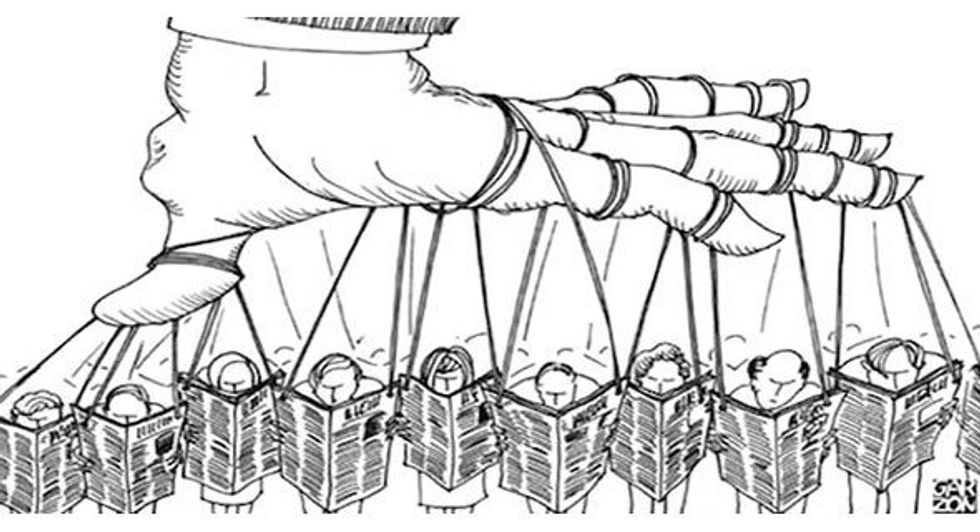
A couple weeks ago I wrote an article about some of the most notable series based on true stories of murder including Making a Murderer. For that piece, I was concerned with how the cases themselves were represented, but this time I'm interested in how the media represents (or exploits) the demographics of victims of violent crime.

The harmful effects of inaccurate crime reporting
You've probably heard the phrase "if it bleeds, it leads", and, sadly, it seems to be common policy in the news media, both in print and on television. News outlets make an effort to seek out 'ideal' or 'deserving' victims, those who can be portrayed as being particularly innocent and helpless. These may be little old ladies who have been violently mugged or children who have been sexually abused.
The studies I found suggested that race and class are also factors in considering 'ideal victimhood'. Take mass shootings for instance. If the victims are poor and black, the case might not get the same attention as if the victims were affluent whites. Same goes if the shooting happened in the inner city and is tied to armed robbery. These deaths might be cynically rationalized as coming with the territory, or the victims dismissed as criminals themselves. If the victims are majority white and the perpetrator a stranger, like in the 2011 Tucson, Ariz. shooting, the crime may remain in the news for weeks at a time. A high profile victim, former Arizona Congresswoman Gabby Giffords, also drew media attention to the shooting.
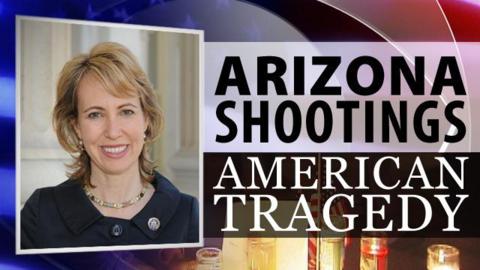
Random public shootings get more traction than street crime
These and other demographics are powerful tools in the media's hands, allowing them to influence public perceptions of violent crime. Certain members of the population, for example the elderly or blond women with green eyes, could be portrayed as potential victims of a serial killer. A single rape or murder committed or allegedly committed by a black teenager could be twisted around to suggest that all inner-city black kids are becoming increasingly violent and are poised to overrun the suburbs. That sounds more like a scenario Jake Gyllenhaal's character in Nightcrawler would have invented, but it would certainly attract attention. Hopefully most reputable journalists and news outlets wouldn't cross those kind of ethical lines in such an irresponsible way, but not all have those kind of scruples.
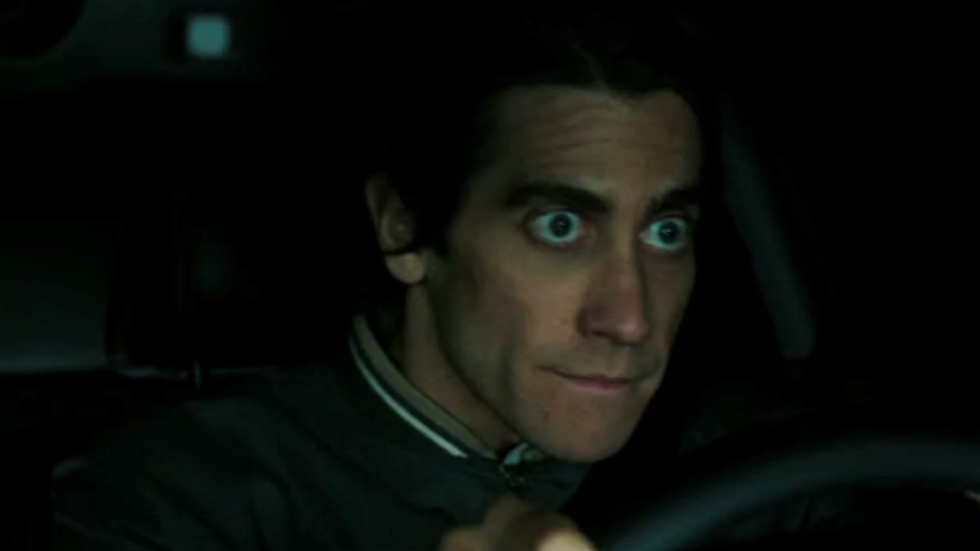
Sums up how creepy Jake Gyllenhaal is in Nightcrawler
My point is, we have a tendency of being led on by the news media. Viewers and readers want to believe the narrative that a victim was sweet and innocent and their killer was an unrepentant monster. We want to believe a man like Steven Avery could twice be the victim of a corrupt justice system in search of a scapegoat. The thing is, we're getting second or even thirdhand information that becomes distorted on its way down.