Physical borders always seemed to have a negative connotation for me, as if they were “othering” a part of the world for their marked difference from us. I understand that, in some case, they are needed for protection but their presence seems more ominous than protective. However, I am far from comprehending the complexities of this world that promote a physical wall to be built as a division within regions and countries. Therefore, my analysis of borders is limited to the metaphorical dimension of this word, which I have personally experienced both in New York as well as in Paris, being an international student.
A transition from a small town in India to the big, intimidating city of New York has surprisingly been an easy one. Although my sister and my best friends from home being in New York with me contributed majorly to my fairly easy adjustment, the boundaries of cultural differences are still palpable. Nevertheless, crossing the border of cultural difference in New York became a much less difficult task on account of a mutual language.
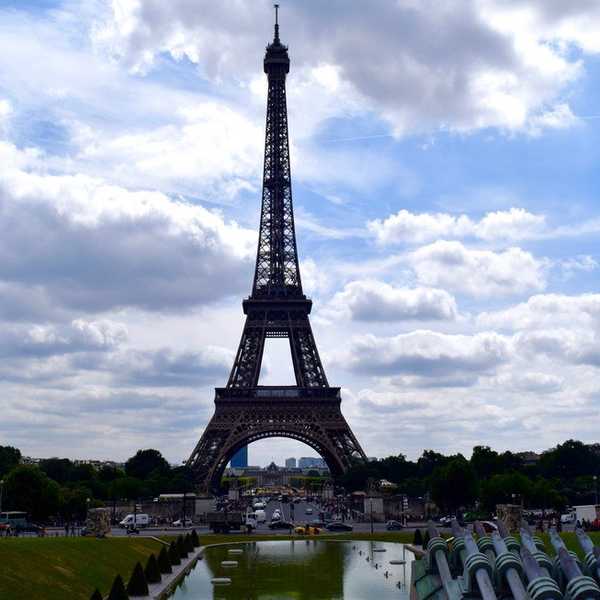
On the other hand, Paris, while romanticized with its charm and beauty, was a much bigger challenge. The language barrier was not the only determinant in bridging the gap between different traditions and mindsets. Attention to detail became necessary, ordinary eating habits had to be altered and “bisous” became the official Hello and Goodbye. I realized that acceptance of the culture without a critical eye was crucial to adapt to this new environment. Therefore, I now keep my bread outside of the plate, leisurely eat a meal (not on the go) and exclaim “Je m’en fiche” instead of "I don’t care”!
Studying abroad in Paris was not only a way to learn French but also to travel as much as I could around Europe. As a result, a number of weekends were spent outside of Paris in different cities. Naturally, I encountered the aforementioned metaphorical borders in every city I visited in a different country. While being in a foreign country for only a weekend was not enough for me to completely break down the boundaries of cultures and languages, I could at least comprehend where the line was drawn. A long weekend in Munich allowed me to learn a little bit of history, culture, and language of the city, just enough to perhaps superficially step over the cultural boundary. So I drank beer in a Biergarten, wore a drindle, and learned the essential phrases in German (Not that all Germans necessarily do that, I realize I am generalising).
While I am aware of the existence of borders between countries, I never thought about them as an obstacle, being in the European Union. Since I had a visa for the Schengen area, I was able to travel easily by any form of transport without worrying about immigration and customs. I fell in love with travelling when I came to Paris. I now realize that the convenience and the ease with which I could travel in Europe might have been a major reason for my obsession with travelling. Fluid boundaries between many countries in Europe has, therefore, given me a plethora of new experiences, both good and bad, but invaluable all the same. From what I have learned through my travels, seeing the remains of the Berlin Wall, which had separated Berlin into East and West Berlin as well as reading about the immense loss of human life as a consequence of that, boundaries seem to cause more harm than good. This is just my experience, however, it is important to contextualize global affairs while contemplating about walls and boundaries as well.