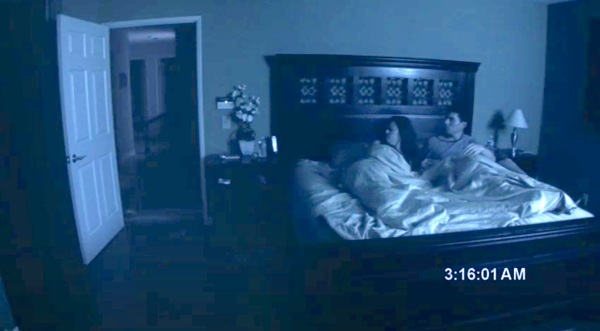
With the trailer for M. Night Shyamalan's new horror movie Split on the rise, many horror fanatics are excited to see a rare type of villain appear that doesn't have to do with supernatural elements so often seen in recent horror movies. This in itself makes the movie more scary because it doesn't step too far away from reality--for all we know, anyone walking on the street could plausibly have multiple personalities and one of them could be violent. What are the odds of you babysitting a possessed doll for a rich family, after all?
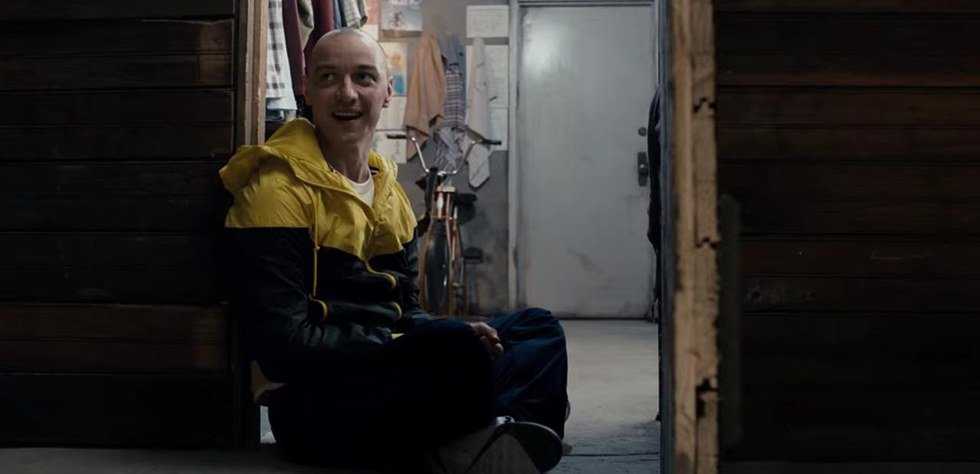
For those who don't know, Split is a movie set to release January 20th, 2017. It is about a man named Dennis who, due to a condition called dissociative identity disorder (DID) has 23 recorded personalities that access his mind at random. However, he has one hidden, unrecorded personality that has murderous intent and ends up capturing three teenage girls to torture. The teenage girls need to find a way out and get rid of Dennis through the means of driving the personalities against each other.
With a condition expressing multiple personalities, the audience is exposed to a rare type of villain not unlike Norman Bates in Alfred Hitchcock's 1960 thriller Psycho. The villain does not seem evil at first (or at least, for most of the movie) and seemingly helps the protagonist at certain points. But behind that layer of benevolence is someone who has evil intentions that are so well hidden, it questions if the villain was actually in control of his mind when committing murder. While it is unclear if Bates truly did have an identity disorder, Dennis outright has 24 of them and is no secret. His mental disorder is what puts the entire plot together.
If this film was realistic, Dennis would be no more violent than anyone else, even with his 24 personalities. That is not to say that Split's plot falls apart after knowing this or that it is a bad movie for its use of the antagonist. But it is important to remember that severely mentally ill people only attribute for three to five percent of violent acts. Mentally ill people are also 10 times more likely to be victims of violence as opposed to people who are not mentally ill. The chances of someone with DID, no matter how severe the case is or how many personalities are involved, turning and abducting teenagers to torture is extremely slim. Not impossible, but slim. There would be a much greater chance of someone abducting and torturing Dennis while he's in a vulnerable state as opposed to what happens in the film.
But let's focus on the disorder in question, DID. Surely, this isn't a mental illness like depression and anxiety, this is one of those scary mental illnesses that need to be avoided by normal people, right? Well, for starters, DID is generally caused by long-term traumatic experiences in childhood. It is linked to mental dissociation, or the disconnection or separation of something from something else or the state of being disconnected. Dissociation is something common in people who have been abused as it is sort of like a "mental blackout." A person who is dissociating will be able to stand, walk, and do general things that have been committed to muscle memory. But their mind may be somewhere else, not taking in any information whatsoever. Their thoughts may become difficult to grasp and the world around them dims. By dissociating, the person is able to mentally leave a stressful or anxious situation and the mind is allowed to rest. What happens in people who have DID, the alternate persona (alters) may take over while the person is dissociating.
All of the symptoms go exactly as you would expect: the presence of two or more distinct identities, at least two recurrently take control of the person's behavior, inability to recall information that is too extensive to be simple forgetfulness, and not being caused by any drugs, primarily hallucinogenics. As you can see, demonstrating any type of "dangerous" or "psychopathic" behavior is not exclusive to this type of mental illness. Famous writer Shirley Mason, Counting Crows frontman Adam Duritz, and pro football star Herschel Walker all have opened up to the world about having DID. DID is so common that it is estimated that between one to three percent of the world population is afflicted with it.
So why do these symptoms matter and how does it relate to Split? For most of the audience, Split is the first movie to ever explicitly mention a disorder such as DID. While the very mention of the illness could end up pushing some of the horror fanatics to look up what DID means, let's be real here. For most of us, we don't have the time or the drive to research about something not relating to school or work. Whether it is DID or another mental disorder used by horror script writers to put in their antagonists, whatever we see of the mental illness in the movie will be our only true exposure to that disorder. And first impressions definitely affect the way we see something and our willingness to continue to learn about the subject in the future.
The horror genre has always had an iffy relationship with mental illnesses. As I stated before, Psycho makes great use of multiple personalities. Hannibal Lecter has a bad case of Antisocial Psychopathy Disorder (ASPD) in Silence of the Lambs (1991). Patrick Bateman from American Psycho (2000) had three personality disorders that influenced his murderous thoughts. Jack Torrance in Stephen King's The Shining (1980) suffers post-traumatic stress disorder (PTSD) and uses alcohol as an escape. Shutter Island (2010) is all about investigating a psychiatric facility. And while other genres have slowly been opening up to using mental illnesses, these movies are much more rare and far in between than horror movies. Especially the ones who use mental illness as a characteristic for their antagonist.
I can definitely see why so many people are being compelled to watch it when it comes out in theaters. I don't blame the movie so much for using mental illness as yet another gimmick to make their antagonist creepy. But I blame Hollywood for not allowing more mentally ill protagonists in a variety of genres. Take DID and put it in an action movie: the protagonist is able to tap into one of their alters while in danger and comrades remark that they almost act like a different person out on the battlefield. Put it to a fantasy movie: sometimes the protagonist is a princess, other times a wizard, and sometimes a beggar. Or maybe a chick-flick: the protagonist gets vacation time and the alters have different ideas on how to spend the vacation, leading to a cross-country drive at random landmarks and getting lost multiple times during the film. I'm not saying Hollywood should hire me, but someone should hire me.
The point I am trying to make is that using mental illness in antagonists is not inherently bad, but using mental illness only in horror antagonists is really bad. Real people are affected by psychological disorders all the time, and having to seek treatment is becoming increasingly difficult when non-afflicted people think of when a friend or family member comes out with having a mental illness is that this person is dangerous and a threat to the family. This puts mentally ill people in danger for abuse, often victims of violence because of misunderstandings. Yes, people who have DID and other disorders need to be treated, not because they are a threat to others, but because they could potentially hurt themselves when not treated. Having a wider range of images to go by when someone mentions having a certain disorder will help to not pigeonhole that person into some sort of morbid visage with evil intent. Because this does happen most of the time and being exposed to different experiences with said mental illness through movies can help the general public see how diverse each mental illness can be. Until then, looking up what certain mental illnesses mean can go a long way before passing judgement on a friend, family member, or co worker, especially when your only experience with that disorder is from a horror movie.
Sources:
http://www.healthyplace.com/abuse/dissociative-ide...
https://www.mentalhealth.gov/basics/myths-facts/