
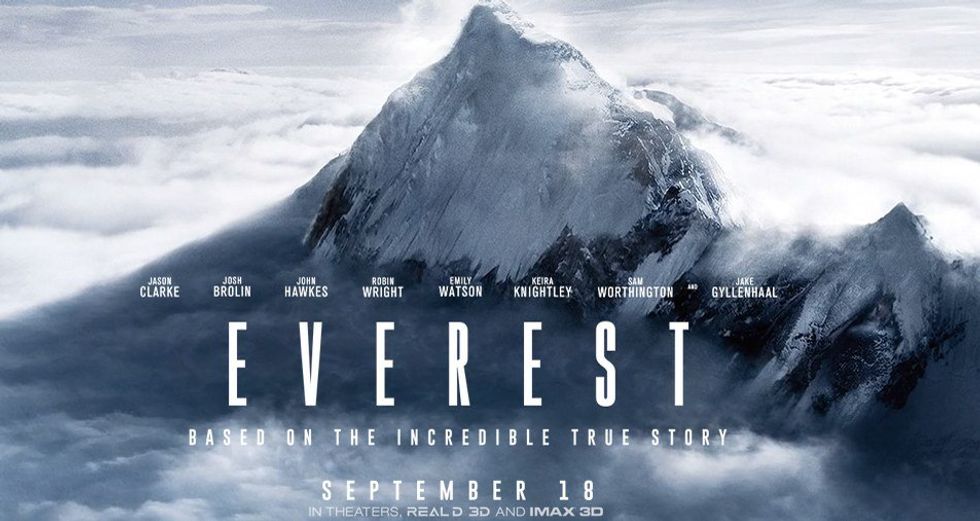
The 1996 Everest climbing season had 15 fatalities, the most ever for a season until 2014. It is only coincidental that the avalanche that killed 16 Sherpa guides on Camp 2 in 2014 just so happened to have occurred while the film crew of "Everest" was finishing the remaining B-roll for the film about the expedition that left 8 dead in 1996. That is the danger of climbing the highest peak on the planet.
Baltasar Kormákur, the director of "Everest", begins the film with the a message about said danger. A lot of people fail. Yet, businesses have been cultivated out of the desire people have to climb to the summit. Adventure Consultants led by Rob Hall (Jason Clarke) and Mountain Madness led by Scott Fischer (Jake Gyllenhaal) are two such businesses. Their job is to not only bring people up to the summit but to bring them safely back down.
But, the essential question that persists is why take the risk? Why does a recently divorced mailman (John Hawkes) feel the need to make his second attempt to the summit? Why does the brash, bravado Texan with two children (Josh Brolin) try, despite not being an experienced climber? When the character of author Jon Krakauer asks the question of why, it is quickly brushed off with the famous mantra, “Because it’s there!” It’s interesting how the expedition was immortalized in the real Krakauer book, "Into Thin Air", yet in this film he is portrayed as unsympathetic, and nearly opportunistic, just looking for a good story.
Courtesy of Universal Pictures
This is what the film seems to be battling. Krakauer is there to write a piece for "Outside" magazine which could provide a considerable ad base. Commercialism is put up against the pureness of testing the human spirit versus nature. Of course, when it comes to life and death, and this is reinforced with "Everest"--nature is going to win.
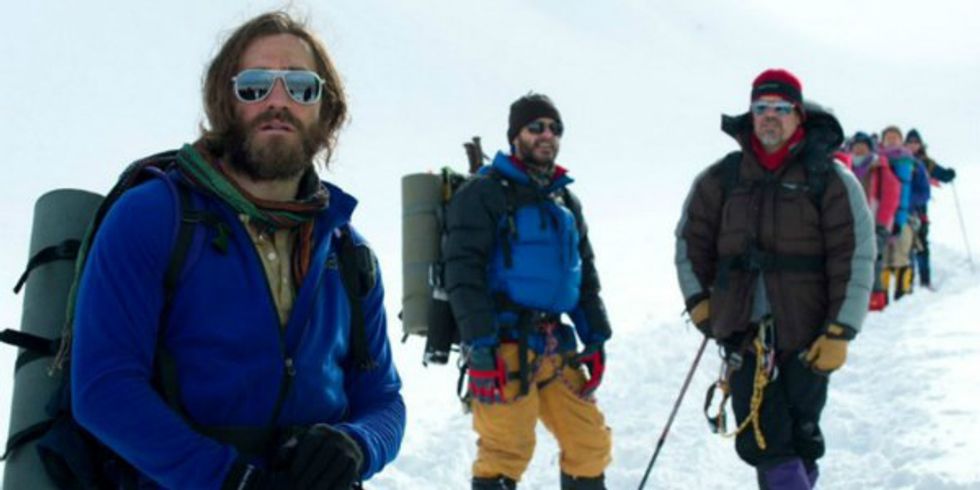
You get what you expect from something like "Everest." Throughout the movie there are dizzying effects and scenery of beautiful mountain landscapes. It's especially hard to tell exactly when Kormákur is using practical effects or CGI. Eventually, disaster is going to strike the group of mountaineers and the drama is created out of whether they will survive. The film superficially brushes over each character, giving them the semblance of motivation or stake for their survival. For the leader of the expedition Rob Hall, he has a pregnant wife at home (Keira Knightley), who sleeps by the phone every night waiting for the call.
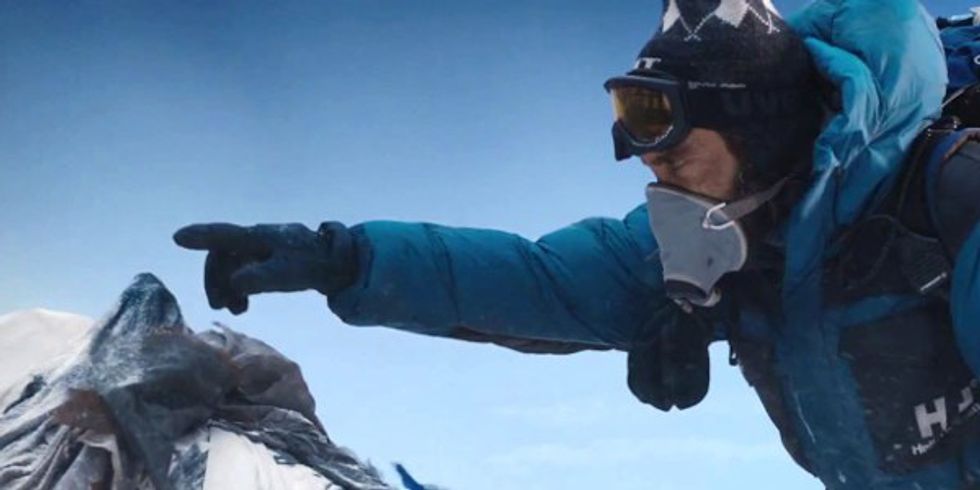
The formula works no matter how pandering it is. This is due to how affecting the majesty of the mountain is and how Kormákur really invests in editing, music and close up on faces to really make it affecting. There is a constant reframing of character within the environment, who are shown as barely visible amongst the vast mountain and then suddenly invisible due to the hail of snow.
The adrenaline is shared between the viewers and the characters. The final third is everything a film should be in escapist entertainment. The setting engulfs you through image and sound. At one point, I began scratching my armrest hoping for the survival of the protagonists which the film makes so painstakingly likable.
Courtesy of Universal Pictures
Yet, there is a problem with the film’s refusal to answer, why climb this mountain? There does not need to be a clear answer, just an exploration. Without that, then it is just a futile attempt of hubris. Like Icarus, the people are climbing something much too powerful for them with consequences that is all but unexpected.
In reality, people have not stopped trying to climb Mount Everest. Some would even say that Krakauer’s book on the experience has inspired them more than dissuade. This film will probably do the same. Just earlier this year, the Nepal earthquakes caused avalanches on Everest, killing 19 people and injuring over 100 others; the most in the history of the mountain. Yet, in August, despite all the dangers, climbing season reopened and climbers began their ascent to reach the top.
"Everest" captures that fulfillment. But, it never captures that initial emptiness.