
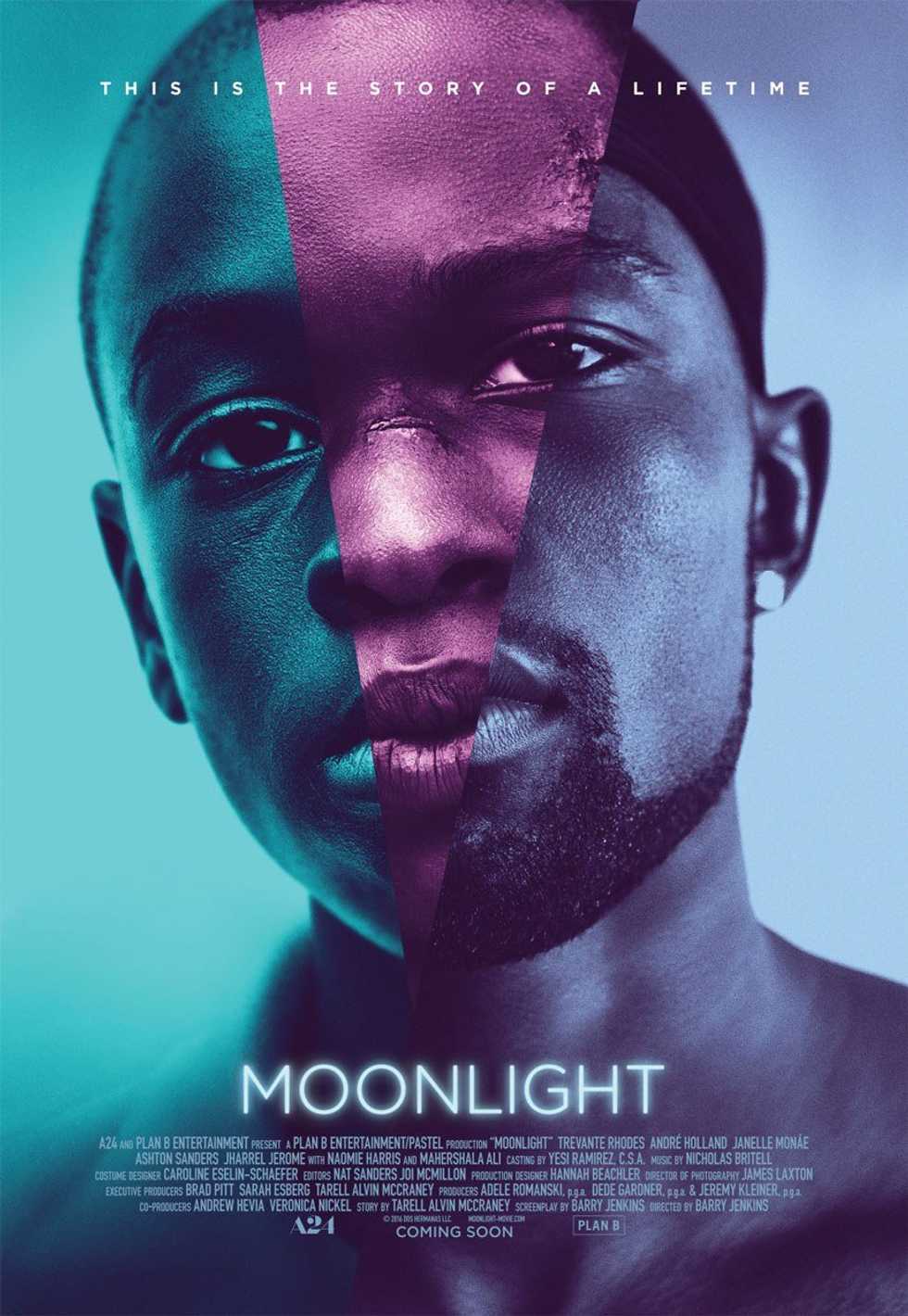
When I attended the Human Rights Campaign Gala about two weeks ago, I was not surprised at all to witness Moonlight receiving the Visionary Acts Award. Chad Griffin, the president of the Human Rights Campaign, said, “The film triumphs in its portrayal of the struggles that many in this country face every day because of discriminatory barriers that still exist, especially if you’re young, African American, and LGBTQ.” However, to me, a queer Asian woman, Moonlight won the award because it’s just a movie about LGBTQ from, not all African Americans’, but one minority individual’s lens.
The movie, a semi-autobiography based on the play In Moonlight Black Boys Look Blue, is directed by Barry Jenkinsand and written by Tarell Alvin McCraney. Throughout three stages of his life – from “Little” (Alex R. Hibbert), to “Chiron” (Ashton Sanders), to “Black” (Trevante Rhodes), the main character explored his sexuality and masculinity, dealt with his drug-addicted mother and broken family, and suffered from bullying and discrimination. During “Little," Chiron was bullied by his peers in the neighborhood due to his lack of macho, and he found a place safer and filled with love when he met Juan (Mahershala Ali), a drug seller and his girlfriend Teresa (Janelle Monáe), both of whom fully support Chiron after coming out. Then, in middle school, he first tasted the lips of his childhood best friend, Kevin (Jaden Piner), and gave him a blow job. Yet Chiron could not come out in school. In adulthood, the “Black” stage revealed that Chiron became more masculine and independent, more fearless to face his authentic self.
The movie easily gives the impression that it is about diversity and intersectionality since the movie centers on Tarell Alvin McCraney’s own story – he is a gay African American who grew up in a low-income family. While this shows one individual’s narrative, the heart of diversity and intersectionality exceeds the scope of singular cases. I can’t help but touch my heart and ask: Does this movie unveil the intersectionality problem LGBTQ community faces in general? Is this movie representative enough?
Heartwarming moments are weaved into Chiron’s misfortune. The love of Juan and Teresa and the affection of Kevin are Chiron’s shelters. Juan told Chiron that he is not a “faggot.” How lucky Chiron is that the person he relied on the most accepts him for who he is. In fact, based on the number from Pew Reseach Center, 4 in 10 LGBTQ American adults have been rejected by family or friends due to sexual orientation, and the percentage is even higher in the low-income families. The struggle of coming out is not fully depicted in the movie when coming out has been one of the major problems LGBTQ community faced. Moreover, every single LGBTQ member has his or her unique experience. The intersectionality problem exists not only among gender, LGBTQ, income, sexual expression, and race, but also religion, nationality, and so on. Even people of the same gender and same income level face different problems. If we generalize the community based on one single case, this is far from diversity. It is "jumping to the conclusion hastily."
When watching the movie in the theater last month, I overheard some people whispering, “Hollywood is really working on increasing the exposures of racial minority groups.” Yes, it is. Moonlight casts almost all African American actors, but that is not a sign of “diversity.” It is the same as a movie casting all white people. I see exclusions here, not inclusions. Granted, this is a story based on the screenwriter’s own experience in an African American dominant neighborhood. The movie itself doesn’t promote diversity. Moonlight winning the Oscar means that Oscar is promoting diversity. What a movie that truly represents the racial diversity in LGBTQ community needs to consider including Latinos, African-Americans, Asian and Pacific Islanders, Native Americans, and White people.
Moonlight may open the dialogue of intersectionality problems in LGBTQ community, but if it really intends to promote such discussion, people need to keep in mind that the movie is not representative enough to tell the stories of ALL minorities within the LGBTQ community. The education value of Moonlight is to show the public a hidden side of a minority that people fail to see. That said, it is not “a portrayal of the struggles that many in this country face every day.” It is just a story about one person in particular.