

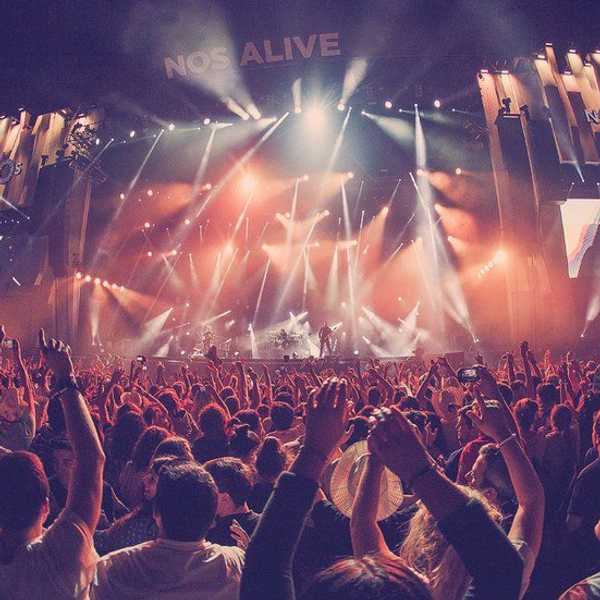
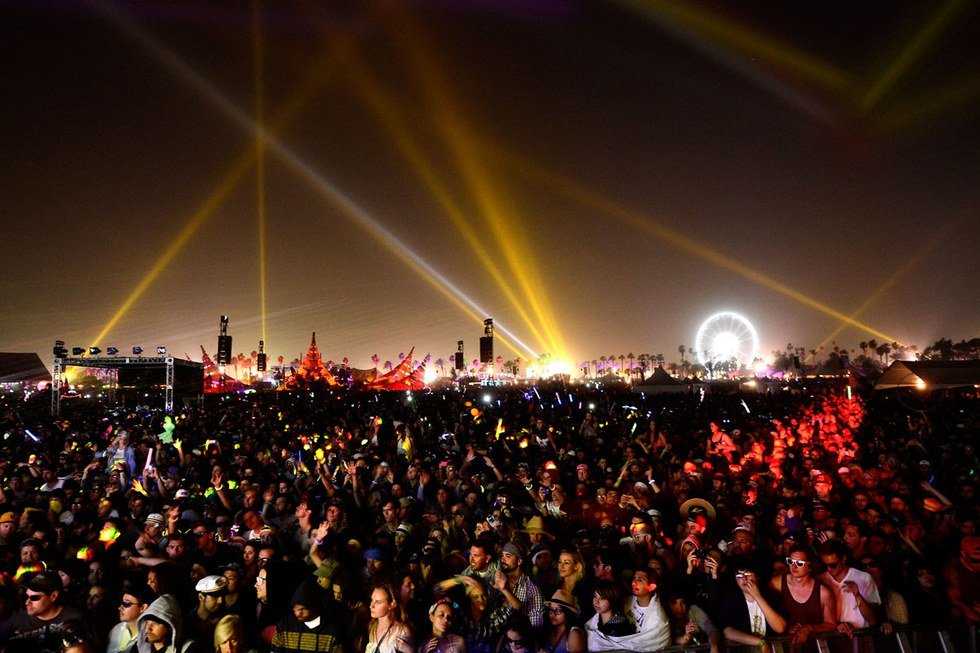
From the hippy revolution of Woodstock to the nocturnal spectacle that is the Electric Daisy Carnival, it is apparent that the music industry has changed drastically over the past 50 years. Album sales have plummeted, and music festival prominence, as well as their profits, have sky rocketed. Sixteen years ago (1999 for you non-mathmagicians), Coachella Valley Music and Arts inaugural festival was a two-day event that hosted a bleak 20,000 people and lost an estimated $750,000.
On the contrary, the 2014 Coachella event was not just two days, but two weekends, and hosted an astounding 579,000 people and generated a record breaking $78.3 million in surplus profit. Reversing the spectrum, revenue from album sales fell $22 billion dollars from 1999 to 2012 (NY Times). What Gives? As we can see, the correlation between album sales and live music revenue could not just be mere coincidence. But, what underlying factors can we assign as key contributors to this music market transformation? Many are worthy of recognition, but for times sake, we will focus on just a few.
I might get a tad pessimistic at points, but will do my best to end on a high note. In our modern consumerist culture, there is an irresistible desire for new products and services that offer experiences of wonder, transformation and pure bliss. Whether it be the new iPhone 10, or those fresh pair of Nike sneaks, we have been persuaded into thinking that these items supposedly hold within them something life altering. Something that will represent and symbolize me. Arguably, the feasibility of acquiring those products of wonder and transformation has been in a slow and steady decline for many years. We are at a point in our millennium when our threshold for worthy entertainment has reached an all time high. The more stimuli the better, and we see that riddled throughout our every day lives. From light shows to the array of useless phone applications, we have a craving for constant entertainment.
With all that said, and I think you will all agree with me, MUSIC has always been one of the unique commodities that seems to outweigh all rational thought. Music’s overarching reach seems to engulf people from all demographics, and effortlessly provide that personal and emotional connection we are longing for. Simply put, music is transcendent. However, that does not mean the music commodity is immune to the forces of modern capitalism, and we can see how the music marketplace has adapted to the above factors with music festival ascendency.
Though I do agree, that regardless of music’s mode of transmission (record, radio, cd, iPod, Spotify), it will always provide that sort of supernatural relatability just described.
But, I will argue, that listening to music through one’s iPhone or digital device is NOT the same as wiping off the dust from an old turntable record and placing that needle onto the groove of one of your favorite tunes. The latter provides tangibility, something physical to hold onto and appreciate. My parents have only attempted to describe the stories of how they would save their money to buy a certain Rolling Stones or Clash album, and then lock themselves in their room until the nooks and crannies of each song, lyric, and artwork had been unveiled. But, I realize their stories don’t do the actual experience justice. It was a different time in musical consumption, a time that is tough for me and all of our youth culture to comprehend. Music has progressed from sentimental objects to electronic libraries. Our all-encompassing music technologies have created convenience but eliminated aesthetics.
Accordingly, I will make the claim that: we, as musical beings, have lost some of our emotional connection and tangibility within music due to the rise in music piracy and digitalization. It has created a gap between our favorite artists and us. Very rarely do we get the chance to purchase and hold within our hands the artwork of our new favorite band; instead, we just add their music to the appropriate playlist. Some may see it as a glass half empty sort of situation, but myself, and I know many others, recognize this as an opportunity for musical consumption. An opportunity to fill the void that was drained by digitalization with something musically spectacular: The Festival.
The Festival is the ultimate commodity and a music enthusiast's dream. It provides a unique opportunity for one to witness not just their favorite artist, but favorite artists, in one extraordinary, jam packed, expense ridden, diverse and social musical experience that is, in a sense, priceless. It does not discriminate, it is all encompassing (maybe a little to all encompassing, but that is a different topic in its entirety). Whether one considers themselves a Rock n’ Roll activist, a hipster tripster, or an EDM enthusiast, music festivals deliver an assortment of musical talent and entertainment that stretches across all tastes.
Some have even considered the modern music festival as a right of passage for youth culture: a passage that grants audiences a first hand taste at what these exceptional artists are trying to exert through their music. Thus, we can see how the music festival has successfully abridged the gap between consumers and their music products and revived the emotional and transformational connection that has been arguably lost through digitalization.
On a final note, a dense topic such as this is hard to condense into a thousand word article, but I will make one final claim in light of all the above information. The modern music festival can be seen as much more than just a three-day concert, but a consumerist phenomenon that seems to have a deeply rooted influence over our youth culture and the ever-changing music market. It provides a remarkable opportunity for attendees and entertainers to be a part of something transcendent, tangible and timeless — a unique opportunity to rebuild the musical bridge that was destroyed by music piracy and digitalization.
As the festival-goer exits the venue on the final day, he or she revels in nostalgia and appreciates the wonder of entertainment and social collectiveness that was provided over the three-day extravaganza. Similarly, as the artist finishes their final set, they promptly gaze upon a sea of grateful spectators and recognize that the dream of supplying influential music to an enthused widespread audience has now become a reality. Though different in substance, both are victims of the spectacle transformation: the festival-goer leaves knowing he or she is ready to conquer the “real” world with the upmost conviction, and the ascending artist leaves knowing they have solidified their presence in the extremely competitive and dynamic music market.
















