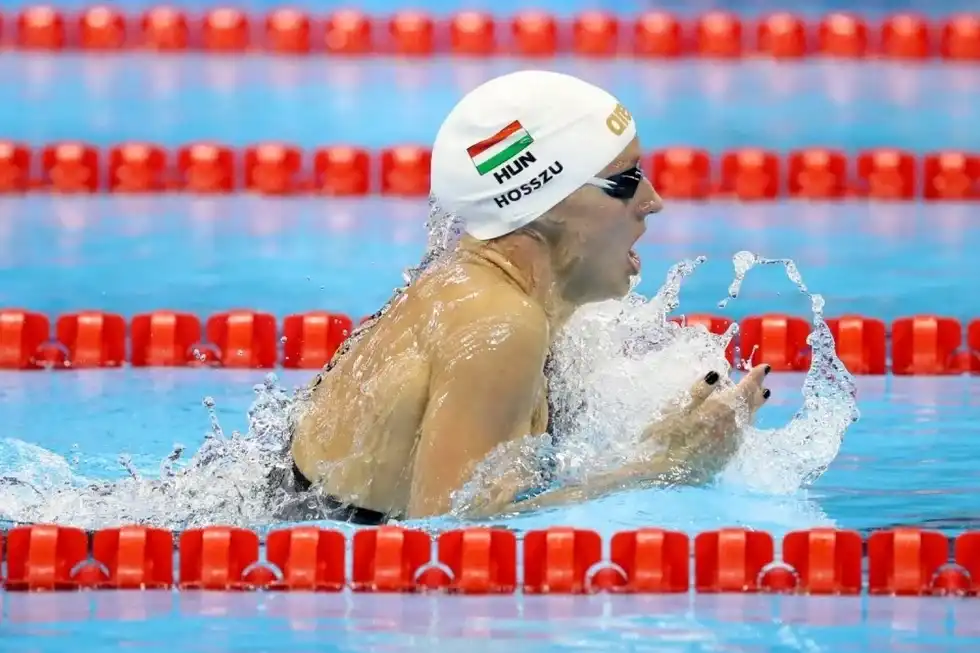
As most people are aware, the Olympics are in full swing in Rio de Janeiro, Brazil. At the time I'm writing this, almost a dozen world records have been broken by numerous athletes so far, over half of them being broken by women. Despite this, we’re seeing an upsetting amount of praise for male Olympians versus female. Even more upsetting is the case of misogyny in regards to Katinka Hosszu’s record-breaking win in the Women’s 400m Individual Medley. NBC’s Dan Hicks’ thoughtless comment at the time of her win is well-documented in online news media as crass and unnecessary. According to him, she was not responsible for her success, but her husband was. Her husband, Shane Tusup, was also her coach and undoubtedly played a huge role her winning the gold. However, to usurp her achievements and attribute her hard work to her husband paints a vividly horrific picture of the future of female athletes in the public eye. It is in situations like this, however, that I believe we can do well to start a discourse on misogyny in sports.
Now, I’ll be the first to admit that I’m not the biggest sports fan. I usually don’t watch many sports past the Superbowl and women’s college softball if it happens to be on the TV. However, I’ll also be the first to say that accomplished female athletes are always deserving of the same praise, admiration, and especially pay that male athletes receive for the same level of work and commitment. Some might be familiar with the lawsuit filed by five members of the women’s US National Soccer team citing “gross disparity of wages” seen in salaries, bonuses, and appearances. (For example, men get game bonuses even if they lose, while women only get a bonus if they win, and that bonus is less than the men’s loss pay.) These disparities are prevalent and often overlooked or unseen in all areas of sport and cannot be explained away as anything other than inset misogynistic and patriarchal ideals that the higher-ups can’t won’t admit to. It cannot be argued that the women underperform compared to the men, as in this case, the women’s US national team won more games and more championships and more World Cups than the men’s team has in previous years, and garnered $20 million more in revenue than the men, yet still saw inequalities in pay and media attention.
This is not all to say that men should not receive praise and admiration for their accomplishments; that would completely go against the entire point of this article and many others like it. The point is that women are deserving of praise for their success, and it is simply unfair for them to have to work harder for the equality that should have been there in the first place. Going back to the incident of Dan Hicks’ comment, all I could picture when I heard it was this: A young girl, dreaming of being in the Olympics one day, watching a strong woman with many accomplishments be reduced to nothing but an accomplishment of a man’s work, leaving her to question whether her success will one day be dependent on a man.