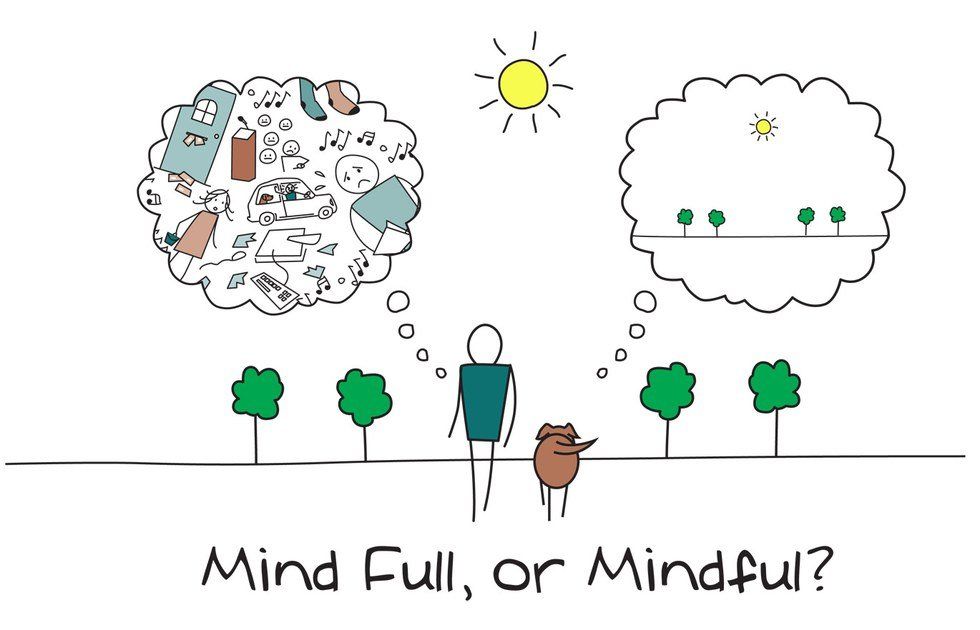
What is Mindfulness?
Mindfulness is quickly rising to be the new trend in the world of mediation. Unlike the traditional means of mediation such as yoga that require one to concentrate their thoughts on themselves and direct their mental, mindfulness allows one to let their thoughts race and go wherever they many want as long as they're being attentive of where their thoughts and emotions are. Mindfulness means one is living in the present and being constantly aware of their external and internal environment, thus accepting their own thoughts, feelings, and bodily sensations as relevant and essential. This means one is not thinking and worrying about the future, near or far, nor are they reminiscing on the past. Mindfulness is also one of the simplest ways to release stress. For example, in order to be mindful when listening to music, one would simply have to be attentive of the lyrics and beats of the music and how the music makes you feel.
How does it help you?
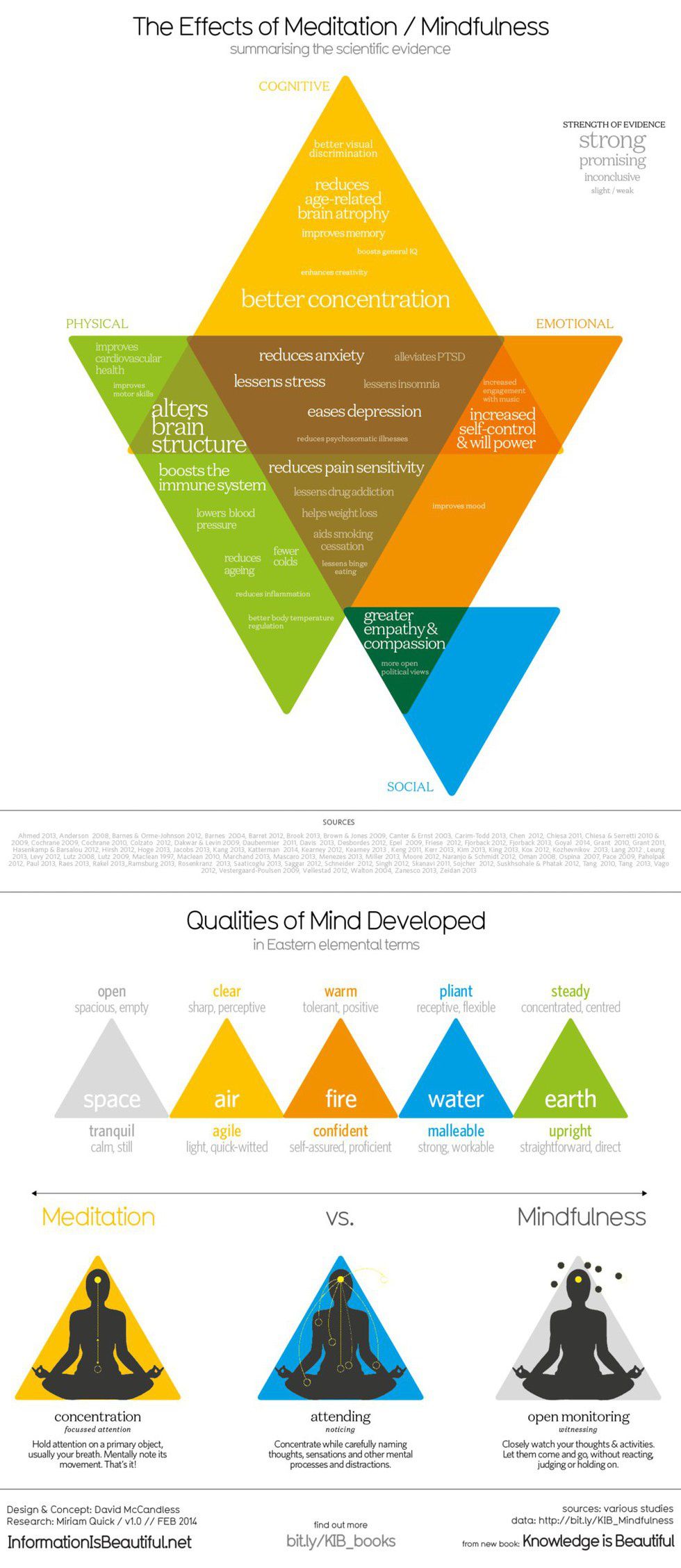
Mindfulness is good for both your mind and body. It is not being used as a method of therapy because it has many benefits such as:
stress reduction
Anxiety & depression reduction
Lifted mood & energy
Enhances relationships
Improve memory and attention skills
The diagram below states most of the social, mental, physical, and cognitive benefits mindfulness has:
Why you should try it:
In the speed of college life, it’s very easy to have your mind constantly running between various events, ideas, classes, etc which can lead one to have a lot of stress. Learning how to be mindful as a student can help you have a clearer mind and relaxed life, which leads one to be happier and make better choices. It’ll be easier for you to pay attention in classes, get your assignments done, and be attentive at all your meetings and interviews. For example, when it’s around midterms or finals seasons and majority of people are stressing out and living in the library, you’ll be one of the few that is well rested and well-prepared for the exams.