


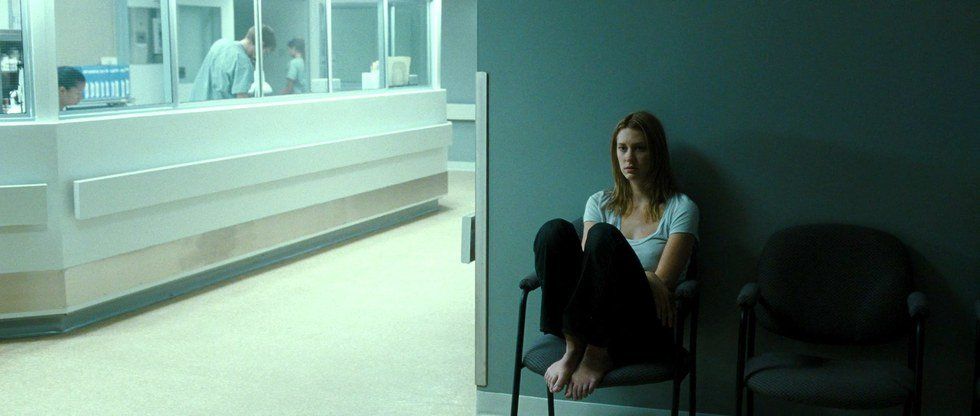
It seems to be everywhere nowadays: the stigma surrounding mental disorders. A couple months ago, I saw a trailer for a new movie called Split, and it really made me think about what kind of message the media is sending about mental illness today. The movie, which is slated for a January 2017 release, stars James McAvoy as the titular character Kevin, a man with 23 different personalities. The premise of the film is that 3 young girls are abducted from their car (it's implied that Kevin hurt their father in order to kidnap the girls) and they are held captive in a warehouse-like room. The trailer shows clips of Kevin's personalities, ranging from a woman with an accent to a little boy.
I understand that movies are meant for entertainment, but I believe that the trailer sends the wrong message about mental illness. It should not be implied that having split personalities makes you kidnap and harm other people. Mental illness should not be the aspect of blame. And yet, the same thing happens with mass shootings.
Now, I'm not saying that any crime committed may or may not be the result of a mental disorder, but what I am saying is that people should not jump to that conclusion right away. I say this because it continues to cast a negative light on people who have any type of mental illness (anxiety, depression, OCD, multiple personality disorder, bipolar disorder, etc.) and groups us all together as people who are "crazy" and "dangerous."
As with everything else in the media, there is an upside to things: not every TV show, movie and/or news report has gotten it wrong about mental illness. For example, the television show MONK, where Tony Shalhoub portrays a detective with OCD and other phobias. It's effective because it shows that despite having these troubles, he is able to continue his work with the police. I recently got to watch Silver Linings Playbook in one of my classes and thought that it was a beautiful representation of bipolar disorder.

But the point is, we should really reconsider the messages we are putting out there for the world to see. Media plays a big role there, and I hope that future filmmakers and television producers can remember that. We have to stop the stigma surrounding mental illness. We deserve better. We can do better.
















