
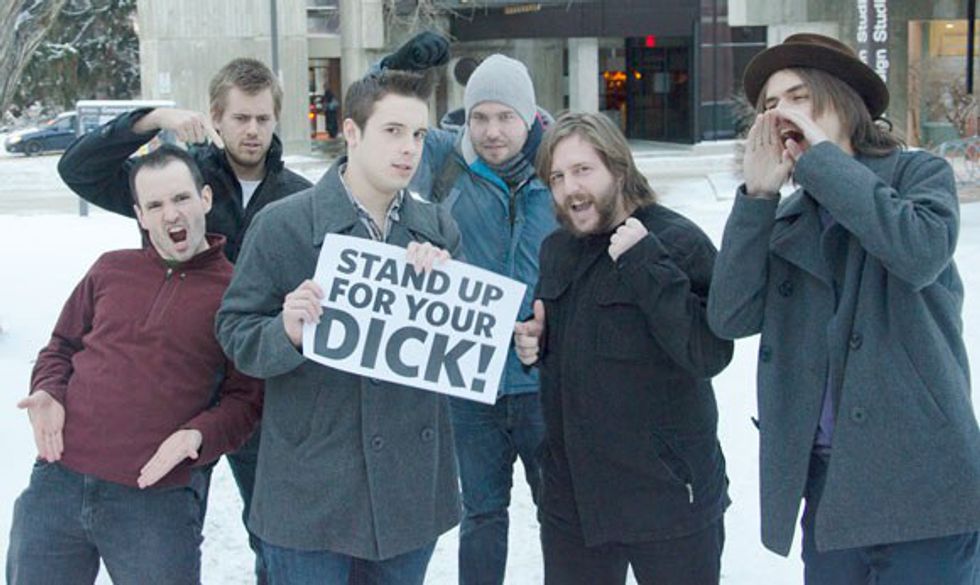
Because of highlighting the worst of the worst of the Men's Rights Movement (MRM), many people have a preconceived idea of what a Men's Rights Activist (MRA) looks and acts like: a young, white man with a neckbeard and fedora who comes out of the social media shadows to burst out in a storm of anger on your Facebook post. Acceptable grooming standards and style-shaming aside, this image creates a harmful perception of the MRM. You may have had unpleasant experiences with MRAs, but there are bad eggs in every movement. Many blend in with the other people you know, and chances are you have friends, classmates, or family members who identify as so, and you don't even know it. These are five misunderstandings people have about the MRM, and hopefully you can explore greater meaning about what it means to be an advocate for men's rights.
1. All MRAs are white, straight, cis men.
In feminist circles, being a "white, straight, cis man" is the epitome of privilege. For those who don't know what privilege is, or need a refresher, privilege is the idea that even while a person may not be well off, certain qualities that are seen as normal or beneficial by society will help them more easily obtain advances, such as a well-paying job, and avoid harmful circumstances, such as being at less risk of a hate crime. So according to intersectional feminist belief, a white person would be more privileged than a black individual, a man more privileged than a woman, etc. While being a white, straight, cis man is not a problem within itself, a group or movement solely consisting of such a demographic would be missing out on the experiences of women, people of color, LGBTIQ, and so on. Fortunately, the MRM does have diversity. Theryn Meyer is a trans woman from South Africa living in British Columbia who makes videos about men's rights, libertarianism, and other social and political ideas. Vice highlights other women in the MRM, such as Janet Bloomfield and Karen Straughan, and Honey Badger Radio was founded by Straughan and other women. This archived Reddit thread shows the existence of LGBT individuals in the MRM. Like feminism, the importance of men's rights appeals internationally. India is a stronghold for the MRM, and has its share of female supporters as well.
2. "Feminists believe that the patriarchy puts men at a disadvantage too, so in the end, we believe in the same thing!"

Patriarchy, simply put, is a system where men hold primary power. From this definition, feminists state that because we, at a default, expect men to be strong and therefore stoic, patriarchy harms men as well as women. However, as patriarchy has a broad definition and recognizes men as the power holders, it does not concentrate as much on how they are victimized, therefore MRAs do not like to turn to this reasoning of oppression. Instead, they believe in other systemic flaws, such as male disposability. Karen Straughan explains that because of male disposability, men are expected to sacrifice their health and well-being in order to keep women and children safe, and do not receive any admiration because it is a societal expectation. As a result, men are taught to internalize their feelings, and women get used to being attended to, and are unable to emphasize with the men's pain. Because of this lack of empathy, despite similar instances of domestic violence towards both men and women, male victims tend to be ignored. This also has negative repercussions towards women because of attempts to keep them safe -- they are treated like children and have their agency taken from them. Similarly, men can be viewed as the "actor" and the women as the "acted upon." In other words, men are supposed to be invulnerable, while women are naturally vulnerable. Overall, while the feminist and MRA lines of thinking can overlap, the differing or (lack of) emphasis of the details makes all of the difference with what lines of thinking people choose to believe
3. MRAs are conservatives.

Progressives will sometimes refer to conservatives as being "backwards," implying or outright stating that their views haven't caught up to contemporary advancements and generally accepted societal views. Identifying as conservative shouldn't equate to being an amoral human being, but that's how some progressives try to antagonize their opponents, and to put down MRAs as well in a seemingly logical manner, dismiss them as conservatives. Similar to #1, a heavy emphasis on conservatism means less political diversity. In contrast to the belief that MRAs are mostly conservatives, Dean Esmay points out that libertarians are attracted to the Men's Human Rights Movement, and that Karen Straughan and Paul Elam are among some of the notable men's advocates that have spoken at libertarian events. (Straughan told me herself that she identifies as an anarchocaptalist.) However, he points out that they would also be happy to speak to any political group that invites them. In mentioning that there are conservative MRAs, barbarossaaaa serves out criticism to conservatives, pointing out that it was conservative politicians who propelled the War on Drugs, which has incarcerated and taken advantage of thousands of nonviolent male offenders. So it would seem that MRAs can be anywhere from Point A to Point B of the liberal-conservative spectrum, to outside or in between.
4. Men are MRAs because they can't get laid.

This idea is the butt of many jokes, but is too simple to apply to the whole of the MRM. I do not have numbers on why people (women included) have decided to become MRAs, but their reasons include being excluded from feminist circles (lack of addressing male issues), believing that feminism is now outright harming and unfairly antagonizing men, and bringing awareness to problems that men face. Elliot Rodger is probably the most notorious person to turn to the MRM because of his lack of romantic and sexual experience. Tragically, he killed six people and himself. This is an extreme case, and while he did seek solace from the MRM, there is documentation that he was racist, believed he deserved women, and had problems with mental illness. It would be unfair and misleading to say that MRAs hold these views, there is something wrong with them, or that they are even dangerous. Instead of answering the question about whether or not men not getting laid is an issue, I will pose questions to both feminists and MRAs. Feminists: Is it a problem that men are unable to acquire sex because of societal expectations of grooming and attractiveness, emotional or intellectual ability, or standards of purity placed on women? MRAs: Are men entitled to sex from anyone?
5. Feminists and MRAs can put aside their differences to work together.

If only it were that easy. When you feel isolated from a community, are "kicked out," or don't feel that they care about you, understandably, it is in your best interest to stay away from these toxic associations. MRAs shouldn't be expected to join feminists, despite whether they ever associated with them or not. Many feminists, including myself, have the experience of being called names and harassed by MRAs. Upon learning that I am feminist, a number of MRAs have made assumptions about my knowledge about gender equality and have many-a-time called me a cultist because of my label. On the flip side, I know many feminists who make just as shallow judgments about MRAs. The damage has been done on both sides, and the bridges, for the most part, have been burned. Nevertheless, attempts have been made to understand the other side. Maybe by circumventing labels and making an effort to understand each other, feminists, MRAs, and other gender equality advocates can work together to form a new bridge.
Hopefully this list will make you rethink your judgement, or at least try to understand it.

















