

I grew up in Bhutan: for those of you unfamiliar with us––and a lot of us from there don't expect many people to be ––we are a small Mahayana (the greater vehicle school of Buddhism) country located between India and China, right in the Himalayas. There the most popular religion is that of the Lamaist tradition of Tibetan Buddhism. We place great emphasis on universal achievement of Nirvana: so that even if I were to enlighten today, I would choose to stick around in the samsara (the wheel of existence) as a guide for other sentient beings. The Lamaist tradition places some "Lamas" (teachers) on a cult of personality pedestals. So, there is a general hierarchy built on Lamas, monks, lay monks and lay people.
Those belonging to the lay community, are virtually support systems to practitioners of the religion. Through material donations and part time religiosity, we hope to receive spiritual merits called "Soenam." The functions of the practitioners and the lay people have gotten murkier and closer to each other as modern development has come our way, but there is still to be seen. One of these is things is meditation.
In the West, and in popular culture in general, Buddhism is associated heavily with a spirituality that is supposedly developed through meditation. But for someone who grew up in the Bhutanese tradition of Buddhism, meditation isn't for everyone. While most lamas meditate every morning, and monks go through a period of 3 years and 3 months (called "Losum Choesum") of continuous meditation after formal education, lay people hardly, if ever, meditate.
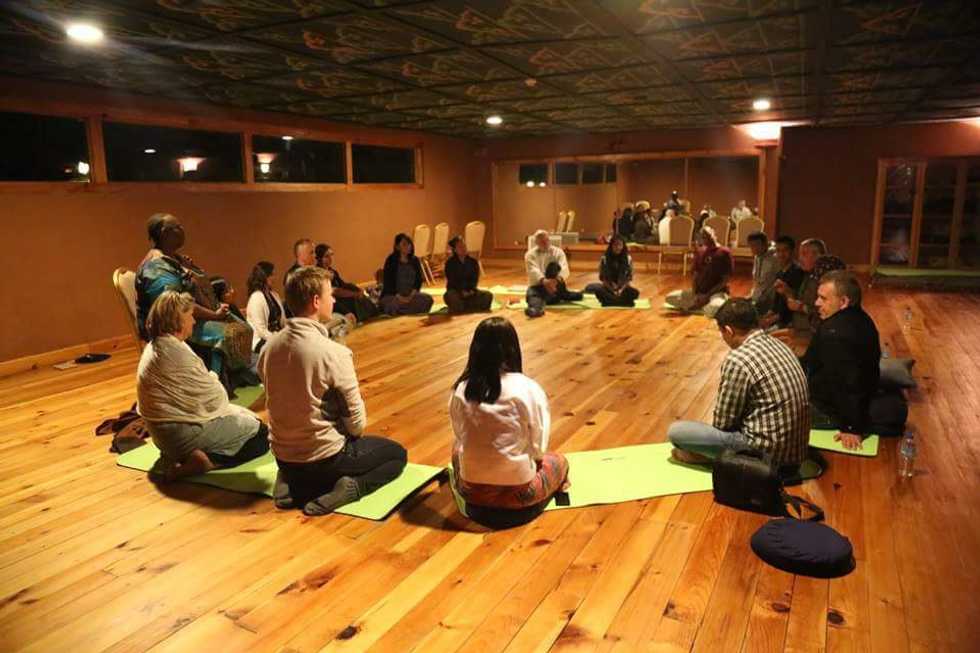
But with foreign perspective being internalized by local populations, I have seen, in the past 5 years, more and more lay people meditating. It is so popular back home right now that the Ministry of Education has added a "mindfulness" minute every morning during school assemblies. I figured that in this article, I will write a very basic guide to meditation as I was taught––first by my teachers in school then by my root teacher, Lopen Chado, and my friends.
The purpose of meditation is definitely to access a calm state of mind. One that can be considered the metaphorical equivalent of Nirvana. In such a state, the mind is able to access every information from the present and is free from worries, regrets from the other times. So the goal of any meditation should be to achieve calmness. It has been equated to "emptiness."
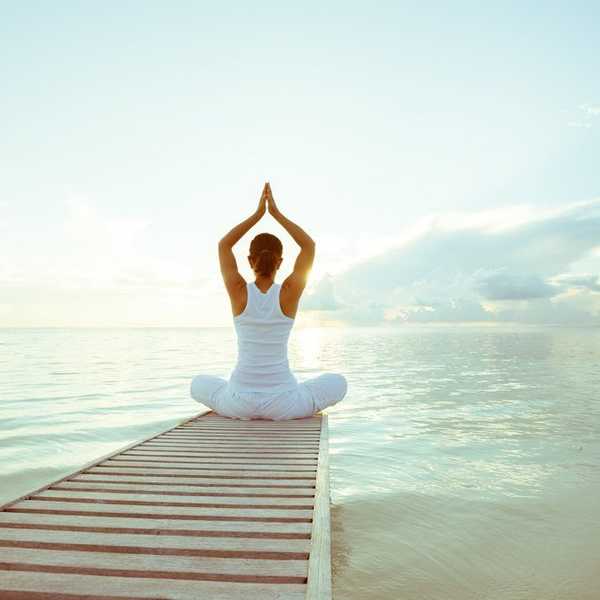
To start, however, it is difficult to directly access that empty state of mind. We start with small steps. The first being a simple breathing meditation. Sit in an upright position ––this is done to ensure that all the nerves in your body are as relaxed as possible. Then breathe in and out ––as you do this, you will find your mind wandering to all sorts of places ––when I was starting out, I found my mind constantly thinking "I'm not thinking anything right now." Get rid of that too.
A cheat to this is to count your breaths ––of course, you will have to get rid of that too at some point. As you breathe in, make sure to feel the temperature of the air on the entry to your nostrils. Follow that wind into your lungs and count. To keep your mind busy, think only of the figure of the count ––1, 2,...9. As you reach 9, start your count again. Do this for as long as you can and should your body face any trouble with the position you are in, be sure to relax ––discipline will come as practice hones your skills.
Do this exercise as often as you can and whenever you feel you need to. It has helped me and everyone I know who has done it, feel relaxed and calm. Personally, I have noticed that it makes me very mindful of what I am doing. It helps me to be mindful of what I say and the impact it may have on the listener. It helps me keep a check on myself. Of course, that same mindfulness is right now telling me that I have used too many "I's" in this article.
As you continue with this practice, you will find that between counts, your mind is empty. You have finished counting 1 and are awaiting 2 without expecting it. That emptiness is what you should try to extend. If that moment is perpetuated to infinity, you have achieved Nirvana.














