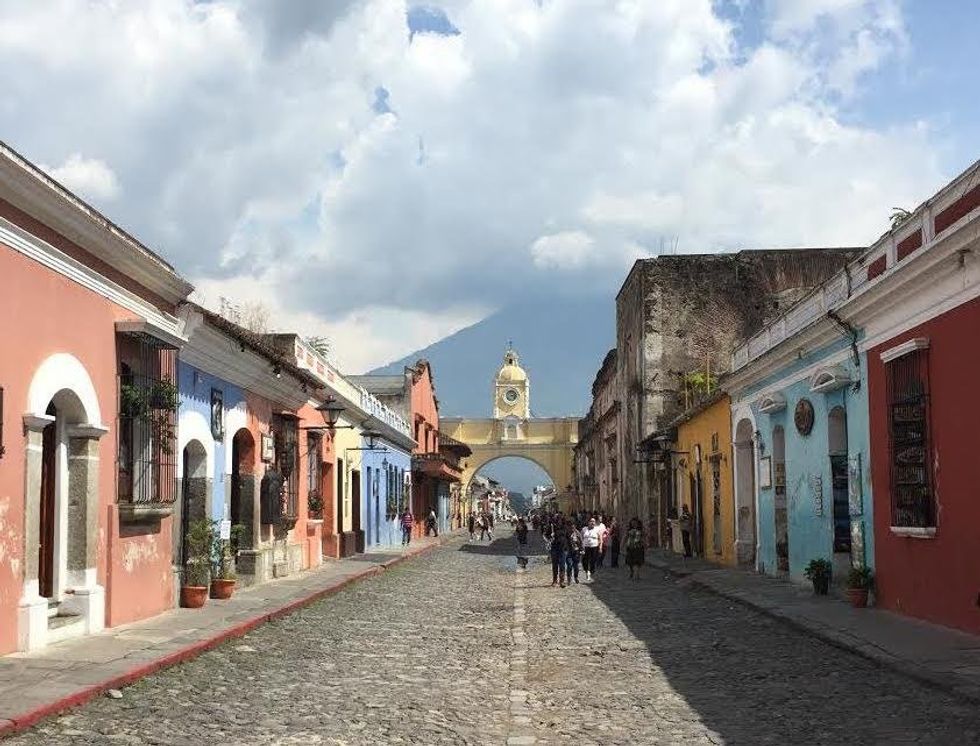
A month ago, I wrote about my excitement in starting my journey abroad. I wrote about my fears and how just diving in helped me to overcome them. I couldn’t wait to see what the coming month held for me, what I would see and do and learn.
It was more than I ever could have imagined.
My experience studying abroad in Guatemala is one of the greatest things I have ever done. It was an adventure of unprecedented proportions. I climbed ancient Mayan temples, roasted marshmallows in a volcano, and dove beneath the warm waters of the tropical Pacific. I saw scorpions and monkeys and toucans (oh my!). I had the opportunity to see and do things that cannot be seen or done anywhere else in the world, and for that, I am indescribably grateful.
But more than that, I lived somewhere new. This wasn’t a typical vacation, staying in a hotel and popping out to visit the tourist locations and shop in boutiques. The objective of this program was immersion, and on this my university really delivered. We lived in the house of a local, in my case a woman named Sonia who greeted each of her guests with kindness and generosity. She was patient with my initially bumbling Spanish and encouraged me as my skills gradually improved. I ate home cooked food at her table three meals a day, six days a week and watched magnificent lightning storms from her roof at night. I met her parents and her children, and her little white poodle learned not to bark when I came in the house. I was treated like part of the family.
Although I couldn’t pretend to be anything but a tourist, our school and the very nature of study abroad encouraged us to delve more deeply than a tourist typically would, into the culture, into their traditions, into the way that people understand the world. I learned that many of the colonial churches have open ceilings because the government intentionally destroyed them to force the capital city to move from Antigua to Guatemala City in the late 18th century, leaving huge, perfectly round windows to the sky where domed roofs used to be. I stood in the classroom of a 350-year-old university and wondered what it would be like to defend your thesis in front of the other 7 college students in the entire country. And by the end of the trip, I had learned where the best spots were in the local markets and how to haggle with the best of them.
My feet memorized familiar paths through town, down the street to school, up the stairs to my modest but comfortable bedroom. Antigua became a home to me, the place where I lived, and studied, and learned. I went to the ice cream shop down the block so many times that I came to know its owner by name. I befriended my neighbors and talked with my teacher about politics and religion and friendship and joy. When the time came to fly back to the US, it was more than the end of an incredible adventure—it was leaving behind a place that had found a home in my heart, just as I had found a home in it.