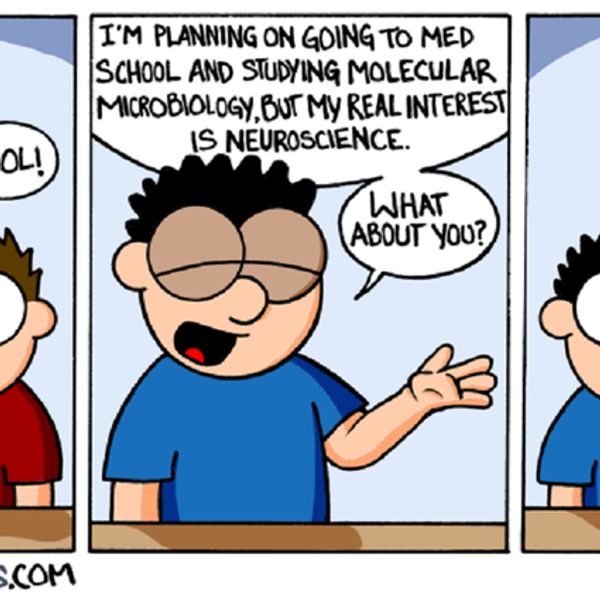
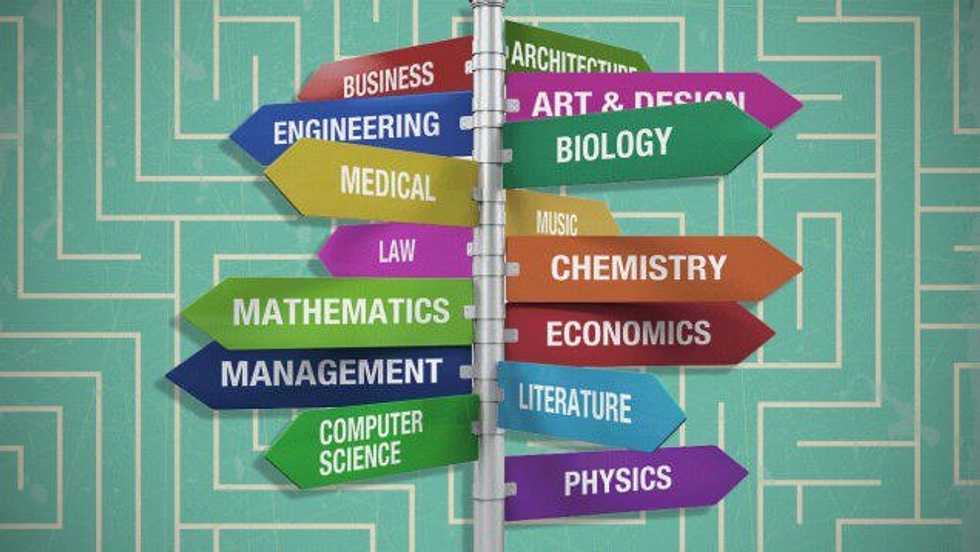
Many college students are pushed and pressured to choose a college major as soon as they can. This can be a daunting task. You're basically setting the framework of what you're going to do for the rest of your life. Most kids end up easily overwhelmed and find themselves in a major where they're unhappy or with regrets. The University of La Verne released a study where they found as many as 70 percent of students switched majors at least once. The study also showed that the average number of times that students switched majors was three. Many people have great advice for students trying to decide what to major in, but the fact of the matter is that each student has to decide for his or her own self.
When students ask what they should major in, one of the most common responses is to major in what you're passionate about. I'm passionate about basketball...that's not a real major. My suite mate is passionate about sleeping. News flash: you can't major in sleep. Unfortunate, but it's true. Some people are passionate about coffee. Others are passionate about playing with kids, but aren't interested in teaching. Still more are passionate about music, but have no musical ability. See the problem here? Sure if someone were to be passionate about X, then they could major in English, history, math, science, etc. For the rest of us who's passions fall outside clear categories, we need another method.
Another common method for choosing a major is looking at the job market and seeing what positions desperately need to be filled. So, according to Forbes, we should all be studying to be marketing executives, software developers, registered nurses, physical therapists, web developers, and similar other jobs. Let's not take into account how quickly the job market could change, but instead focus on the jobs themselves. I strongly agree with the motto "to each his own", and in accordance with such, some people may find these jobs terribly exciting and their calling in life. Personally, I don't think my brain is made to work for jobs like those listed by Forbes. Some people are gifted in science and math. For those who aren't, do we then just ignore our strengths and weaknesses in order to major in where there are currently jobs?
Yet another common method is to get all of your general education requirements "out of the way" in order to help find students an area that interests them. While there's nothing wrong with this, it does have the potential to take a longer time to find your major and if you have a bad professor or miss out on signing up for a class, then you could miss out on finding "the one" major for you. Also, students are feeling the pressure more and more to declare as soon as possible, meaning some might not be willing to wait two years before declaring.
"If you could do anything for a month, what would you do? Regardless of cost, job availability, or any other factors, what would you do?" That was the question someone once asked me before I left for college. For me, it'd be working with non-for-profits to end human trafficking. Therefore, I'm deciding to major in International Relations. Instead of working for the major, make the major work for you. Find what you'd want to do for a month and study to make it what you do for your career.