
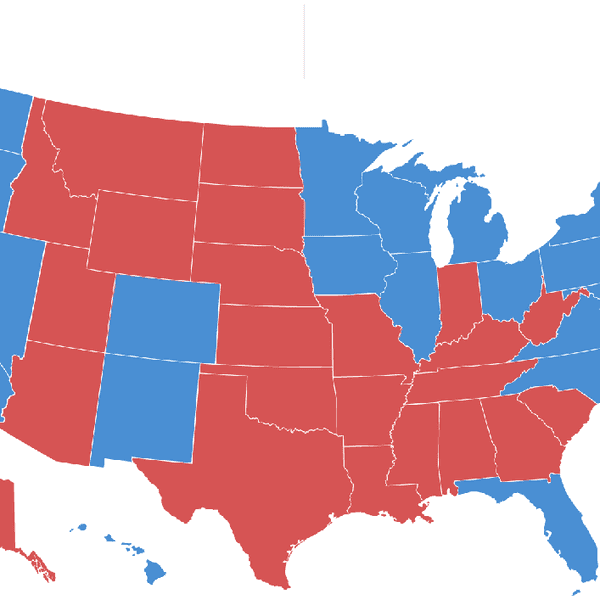
On Wednesday morning, Americans woke up to a different country.
A deep division between political parties had created an unparalleled tension after Donald Trump was elected 45th president of the United States. Liberals, conservatives, and moderates alike were left feeling a complexity of emotions, ranging from fear to frustration. People became targets for their race, gender, sexuality, and political affiliation.
Though the vast majority of us do not physically engage in these behaviors, we are all affected by the constant broadcast of post-election events on social media. We read, process, and form judgements based on the digital content to which we are exposed. Thus, unconsciously, biases form and fester in our minds.
At a time of such intense division, how can we grow the love for our neighbors?
1. Understand that not everyone will agree. We do not differ in beliefs by chance; our backgrounds and upbringings greatly influence our political opinions. Recognize these differences in others (and of course, yourself). More importantly, recognize that these influences will complicate attempts to sway others' opinions. Instead of using dangerous labels or trying to convince someone that you are "right" and they are "wrong," simply agree to disagree.
2. Converse with people with whom you disagree. "Agreeing to disagree" does not signal the end of a conversation. Listening to those with whom you disagree is an excellent catalyst for increased learning and understanding.
NOTE: Conversations are much more likely to be productive when held face-to-face rather than on social media.
3. Let others know you're there for them. You may not understand why someone is frustrated. You may not understand why someone is fearful of the future. You may not understand why the results of a presidential election have launched some into a grieving process. Although you may not experience the same emotions as someone else, or even agree with said emotions, you can still offer them love and support. Ultimately, the well-being of an individual is vastly more important than said individual's political views.
4. View social media through a critical lens. Social media is an excellent way to absorb information freely and easily. Unfortunately, these characteristics also increase the amount of biased information circulating through the networks. Consuming biased information often spurs negative emotions and prejudices towards a specific group of people (if you are skeptical, read through comment sections on politically polarized Facebook posts). Although abstaining from social media is ideal, asking one to do so is unrealistic because of its addicting nature. Instead, learn to recognize biased and emotionally-charged information. Learn to recognize such information from BOTH sides--it exists.
Moreover, at a time when hate endangers the unity our country strives for, loving one's neighbor becomes crucial. People are more than their demographics. People are more than their political party. People are more than a square they choose to shade in on a piece of paper.
Created by a wonderful, powerful, gracious God, we are united and loved. Sometimes, we just get so wrapped up in politics that we need the reminder.