Television and movies can be a great indicator of mainstream cultural attitudes. Over the past couple of decades, there has been a clear trend in the qualities of certain characters, particularly comedies. Hit shows like "Seinfeld," "The Office," and "It's Always Sunny in Philadelphia" star the lovable characters we all know like Jerry Seinfeld, Kramer, Michael Scott, Charlie Kelly, and Dennis Reynolds.
There is one obvious and definite characteristic that all these characters share: their egocentric delusions with reality. People do not become attached to certain characters unless they can relate to the main aspects of the character. Our love affair with delusional characters is rooted in our desire to embrace the part of us that is completely out of touch with reality.
There is something cathartic about imagining ourselves being or doing something that is unrealistic or even socially absurd. Everyday thoughts can range from contemplating scenarios of what it would be like going to prison for a day, telling your disliked professor or boss how you really feel, base jumping, getting with your crush, or even running for president.
Our daydreams seem more realistic when we think of ourselves as being more romantic, adventurous, confident, respected, or effective than we are in real life. Although our thought-out scenarios and daydreams might be way out of touch with reality, the mental escapism can help add intrigue to even the most boring of days.
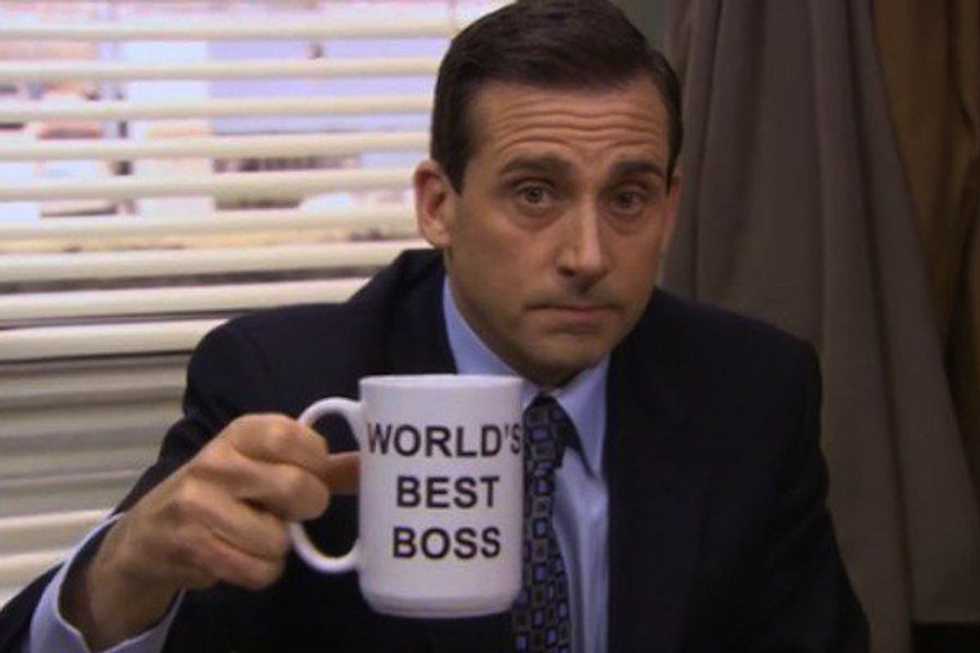
Why we love and laugh at the behavior of Michael Scott blurting socially awkward dialog or The Gang in "Always Sunny" doing ridiculous schemes in each episode is because they display such a disregard for social constructs and act out or say anything on their mind. Our sense of relating to delusional characters stems from their completely unfiltered personality that reveals their complete authentic thoughts and feelings.
Authenticity can be a refreshing relief in a world where image is everything. Whether it be the celebrities, politicians, athletes, or just everyday people out on social media, people are pressured in an ever more interconnected world to show a good public image.
When people only exhibit the qualities of themselves that conform within the context of cultural norms, there is a tremendous feeling of pressure to not break the “perfect” social mold and image that we create for ourselves. Our feelings of failure or social rejection are only augmented when we do not feel like we meet the so-called “expectations” that are set by everyone’s manipulated public image.
Characters like Michael Scott or Dennis Reynolds are in no sense role models. Their delusion and egocentric views of themselves and the world usually end up inconveniencing or harming others in some way. Their overconfidence creates a mindset of always being right which leads to their delusion perception of social reality.
This frees them from the restricting social conformity because they are totally oblivious to normal social constructs, and their behavior ends up appearing erratic and sometimes outright crazy. Nevertheless, people relate to these highly imperfect characters, but why more of these flawed characters have become popular in our cultural realm may say something about current social attitudes.
When our lives start to feel like a product of bland conformity, being erratic and crazy is maybe just what we need. People are relating and loving more of the outlandish characters because maybe we desire to break outside the evermore stringent conformity. The hidden crazy world inside our minds is just waiting to be completely freed.
Even though we might think our thoughts would be deemed weird if they ever left the confines of our mind, the world needs more dreamers and imagination to make it a better place. The world needs the so-called “delusional” people because who knows, maybe at least one of their crazy ideas will turn out to be a good one. The world needs more weird. The world needs Michael Scott.