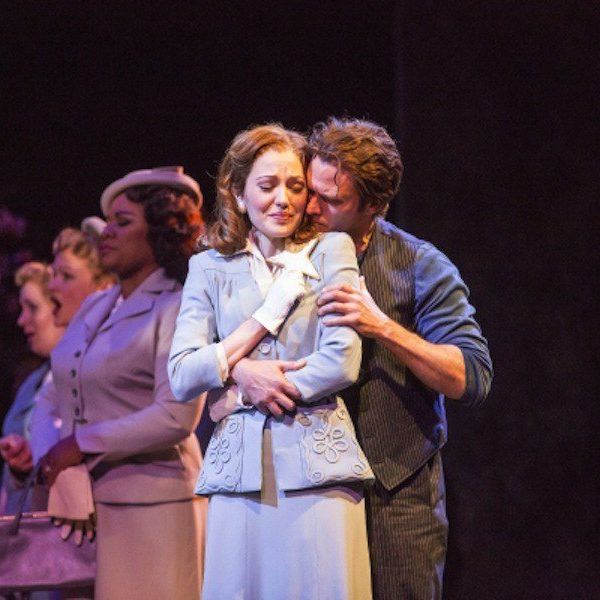


Her radiance commanded the attention of everyone in the room. Her eyes glimmered as she allowed her partner to take her delicate hand into his and lead her out into the middle of the floor. The crowd seemed to fade away as she focused her attention on the man in front of her. The door to her future was opening and the past was closing. She knew the days ahead would be filled with wondrous and beautiful moments such as these; but it would be accompanied with times of despair, which would make these moments seem like more of a mere fantasy. Her kingdom needed her. Her people needed her. She would answer their call and lead them with everything she had…. but for tonight; tonight she would lay these pressures aside and just live in a single moment. Dancing to music that called out to her soul and said all the things that she could not. Her memory would forever live within this Pavane.
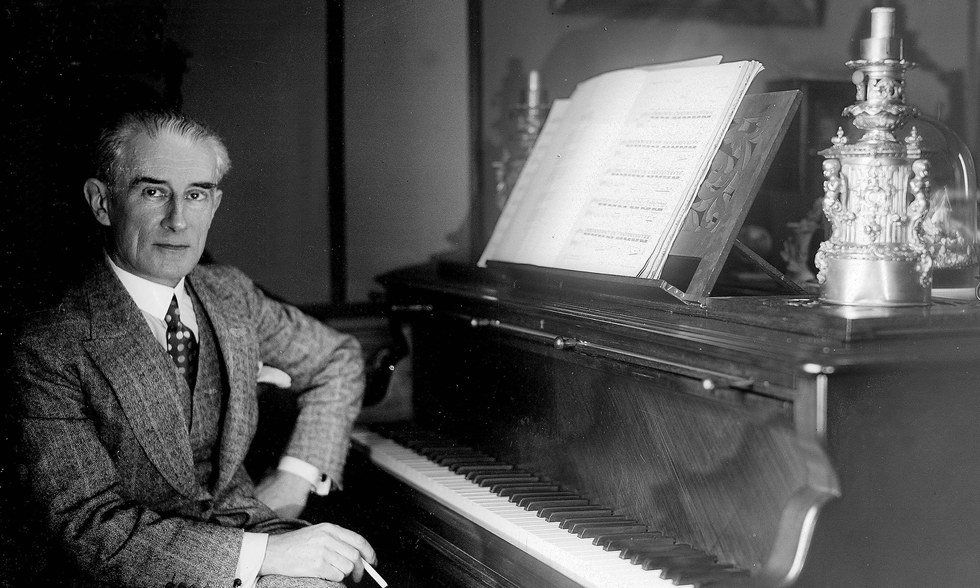
The magic which follows a glorious night such as this can be captured by the nostalgic music that is present. Attempting to capture such an event, Maurice Ravel wrote the piece, Pavane Pour Une Infante Defunte, which translated into English means, Pavane for a Dead Princess. This graceful piece of music had captured the imagination of many audiences and though no one interprets the music the same way, there is still this sense of magic and beauty that accompanies a piece such as this one, making it, to this day, an emotional reminder of a time where all motion seemed to stop around a single moment.
Maurice Ravel wrote Pavane for a commission in 1899 and dedicated the work to Princess de Polignac, as a thank you, for she held regular music events in her mansion in Paris. Though the work was published in 1899, it didn’t become popular until three years later, when a famous pianist, by the name of Ricardo Vines, premiered it. After the original premier of the piece, it became one of Ravel’s best known works. Eleven years after it was published, it was re-orchestrated, from the original piano version, to include two flutes, two oboes, a bassoon, two horns, a string ensemble, and a harp.
The original intent of the musical style was supposed to represent a Pavane, which was a dance during the middle ages and Renaissance period. The hope was to capture the vision of a princess as she enters a ballroom and proceeds to dance. The beautiful elegance and impressionistic color of the rhythms and the chords help to create this dream/fantasy state, though its slowness captured an emotion that Ravel had not intended. Many of the conductors mistook Ravel’s slow tempo, and the name of the piece itself, to be a signal for an over the top emotional piece. Conductors, musicians, and audiences quickly latched onto this idea and transformed Ravel’s beautiful dream into a gorgeous song of mourning. While this piece takes well to this interpretation, Ravel himself ended up hating his own piece, complaining that it sounded more like a “dead Pavane” (or dead dance) than a nostalgic reminder of the magic of the old days.
In my own listening to this piece, I can hear where the misunderstanding may have originated. Along with the title, Ravel has added in sections where the melody repeats itself. This repetition can be mistaken for someone being upset, the first time being quiet, and the next time being louder, as if someone feels like they are not being heard. This use of repetition does not speak like a nostalgic memory, for, though the feeling of nostalgia does seem to bring time to a stop, it most often does not include someone lingering and repeating the same memory. It usually follows a continuous sequence. While Ravel’s piece does follow a beautiful sequence, this continuation of melody is broken up by these repeating sections dictated with major contrast in dynamics. Also the feel of being able to flow in and out of these repeated phrases separate Ravel’s piece from a traditional pavane which, because of the timbre of the instruments, has a more of a bouncy feel.
I believe Ravel could have captured a different emotion, if he had either taken out the repetition and used the extra time to take the melody somewhere else, or if he had taken down the dynamic contrast between repeating phrases. These elements together just capture another idea entirely, as Ravel himself agrees by saying, “the writing was terrible.”
Though I do not agree with him that the writing was terrible, I do believe that the writing is not suited to hold his original idea. Which, in the long run, may seem like an issue to him, but to the audience, it captures something more moving. Whether this is a success or not on Ravel’s part is up in the air, but I would argue it doesn’t matter what Ravel originally intended. Once a piece of music is out in the open, it technically falls into the hands of whoever performs or listen to it to decipher its meaning. This meaning can change from person to person and even change within the same person, depending on what mood or mindset they have going into it.
This is one of the beauties of music. Because music tells a story that words cannot describe, it becomes flexible. Allowing it to fit to a bunch of different stories or ideas that the listener makes it out to be. As a testament to this statement and how popular it is, different musicians and arrangers have recreated the piece in order to fit different styles that they are going for, whether it be to put it into a video game or movie, or just feel like arranging it for something else. For example, a Japanese composer by the name of Yoshino Aoki, arranged the piece for a music box, (which I believe he ended up giving to his wife). Sony used Ravel’s Pavane in their Playstation games, Breath of Fire IV and Gran Turismo V. It can also be heard in the famous batman movie, The Dark Knight Rises, during a ballroom scene where Bruce Wayne dances with his lover, (which, I guess the producer of Batman saw the actual intent of the piece, since he actually used it as a dance. Instead of sad music in a cut scene, which is what Sony used it for.)
Maurice Ravel may not have intended the Pavane to take on the character that it has but he did accomplish to make a piece of music that captures the imagination of all who hear it. It’s beautiful slow moving rhythms and notes that tell of longing has created a realm of fantasy that has allowed it to be heard through multiple different mediums and still gives its audience the chance to escape into a dream of their own. Whether that dream tells the love story between Bruce Wayne and Selina Ball or follows one’s own imagination, the Pavane will continue to thrive as one of Ravel’s most beloved pieces and continue to move the hearts of his audiences.