
Have you ever just stared at an animal and wondered what they were thinking? If you have a pet dog at home, you've most likely experienced this more than once. Dogs seem very curious and even interesting. Your dog comforts you, keeps you company, makes you laugh and you can tell your dog anything knowing they won't tell a soul. Your dog may really be your best friend. There is just one problem - your dog can't talk. Luckily, dogs communicate through body language. You just have to understand what your dog's gestures mean. You will become much closer with your dog if you can learn to understand at least a little bit of their language. Here are 11 gestures to look for when trying to communicate with your pet.
1. Look At His Face
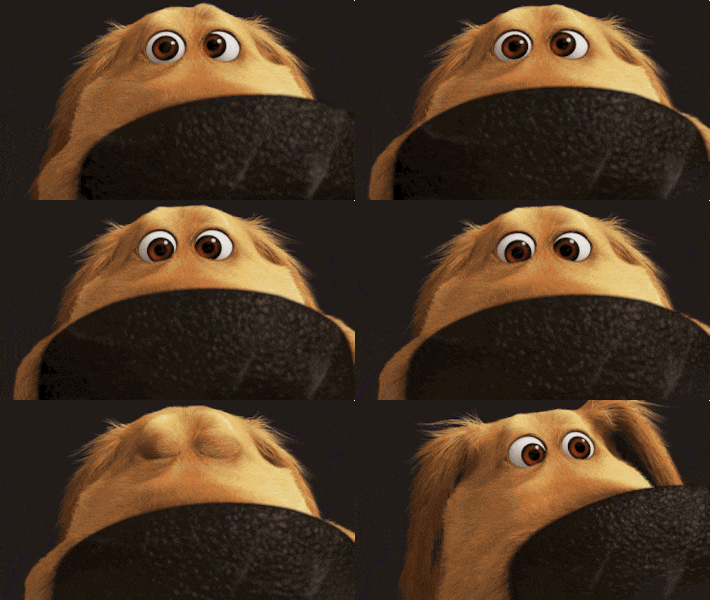
If you look closely at your dog's face, you'll notice small muscles moving. When your dog is confused or determined you will often see him raise his "eyebrows." This action is very similar to what a human would do. You can also look for defined wrinkles on his forehead as well as the quizzical head tilt.
2. Look Into His Eyes
If your dog is in a positive mood, his eyes will brighten, especially when he wants to play. However, if your dog is feeling threatened you'll notice that his pupils will dilate as the whites of his eyes become slightly more visible. If your dog is mad, he will narrow his eyes just like anyone else would. Your dog will follow your every move. It's best to avoid eye contact at this point as this can agitate your dog even more.

3. His Mouth
Does it ever seem like your dog was smiling at you? He is actually telling you that he is happy, wants to play or he wants something that you have. So technically, your dog is smiling. Isn't that cool!? In a neutral state, your dog may let his tongue hang out of his mouth a little. When your dog (or any dog) wrinkles his nose and exposes his sharp fangs, he is most likely about to attack you.
4. Your Dog's Ears
If your dog's ears are moving around and raised, he is simply listening to the sounds around him. He may also be relaxing or showing acceptance. On the other hand, if your dog's ears seem pushed back, he is most likely scared or showing submission.
5. His Tail
Your dog's tail can indicate his energy levels. Obviously, if he is wagging his tail, he is happy or wants to play. If your dog's tail is tucked between his legs, then he is scared or being submissive. Fun fact: Did you know your dog's tail is used to balance when jumpin?
Now that we got the basics down, lets move onto the more advanced stuff. What can these actions indicate when put together?
6. Normal
Don't overthink it. Your dog will appear alert with his head up, jaw loose and tail waging freely.
7. Submission To Authority
Do you ever play around with your parents but are careful not to say the wrong things because you know you'll get in trouble? This is how your dog feels right now. Your dog may lift his paw to invite you to play. He will crouch down, put his ears back and his tail down. Your dog may also yawn or sneeze to release stress.
8. Fearful Aggression
In this case, your dog will look like he is about to jump. He will have his tail wagging rigidly, ears back and his teeth showing. Your dog is afraid but he will be barking, snarling and growling to keep his scary facade.

9. Dominate Aggression
Your dog will be showing his teeth, but his ears will be forward and his tail will wag confidently. Your dog is very alert. This is similar to how two boys would be when horse playing.
10. Play With Me!
Your dog will wag his tail wildly and crouch down into a playful position. His backbone is very curved upward and his butt is in the air. His head is held up high, waiting for you to respond to his actions.

11. I'm Sick
Your dog may need to take a trip to the vet if you notice he has difficulty in walking, standing, excessive coughing, sneezing or panting. You may also notice your dog has scars, lumps or scabs on his skin. Other common signs included dry, red eyes and an irritated digestive system.
Now that you know how your dog communicates, maybe you can get an idea of what they want next time they just seem to be starring at you. You'll be able to analyze them and respond accordingly. Remember, an understood dog is a happy dog!