
One of the most difficult things to cope with as a young adult, or student, is rejection. Rejection is the feeling associated with not belonging or feeling isolated or disconnected with those around you, or even the rest of the world. Being that interracial couples are becoming more and more accepted, logically, we come into contact with more and more bi-racial people every day. Being that I happen to be multi-raced myself, I’ve experienced many instances in which I had to pick and choose which race I wanted to identify with. Growing up too white for my black friends, and too black for my white friends, I battled an internal war, struggling to come up with a solid answer of where I belonged, or what the hell I was supposed to call myself. I knew there had to be others out there just like me, I just didn’t know any -- or so I thought.
I usually get my haircut at a Dominican barber shop. I’ve been paying them to cut my hair for years, however, every time I sit down in the chair to get my haircut, my barber immediately begins asking me questions in Spanish. Because society has deemed me Hispanic due to my tan skin and curly hair, I usually tell them respectfully that I do not speak Spanish. Occasionally, my peers ask me for help with their Spanish homework, assuming I speak Spanish, all while I’m struggling with my own.
The reason I occasionally felt rejected was because I adapted the same ignorance of those around me and just assumed that most people I met were just one race, and fit snugly into their racial niches. I felt like even if I had met other bi-racial individuals, that I would still be the only one who struggled to find where I fit in, and what mannerisms I should or should not pick up or leave behind so I could finally identify with something that was accepted by the majority.
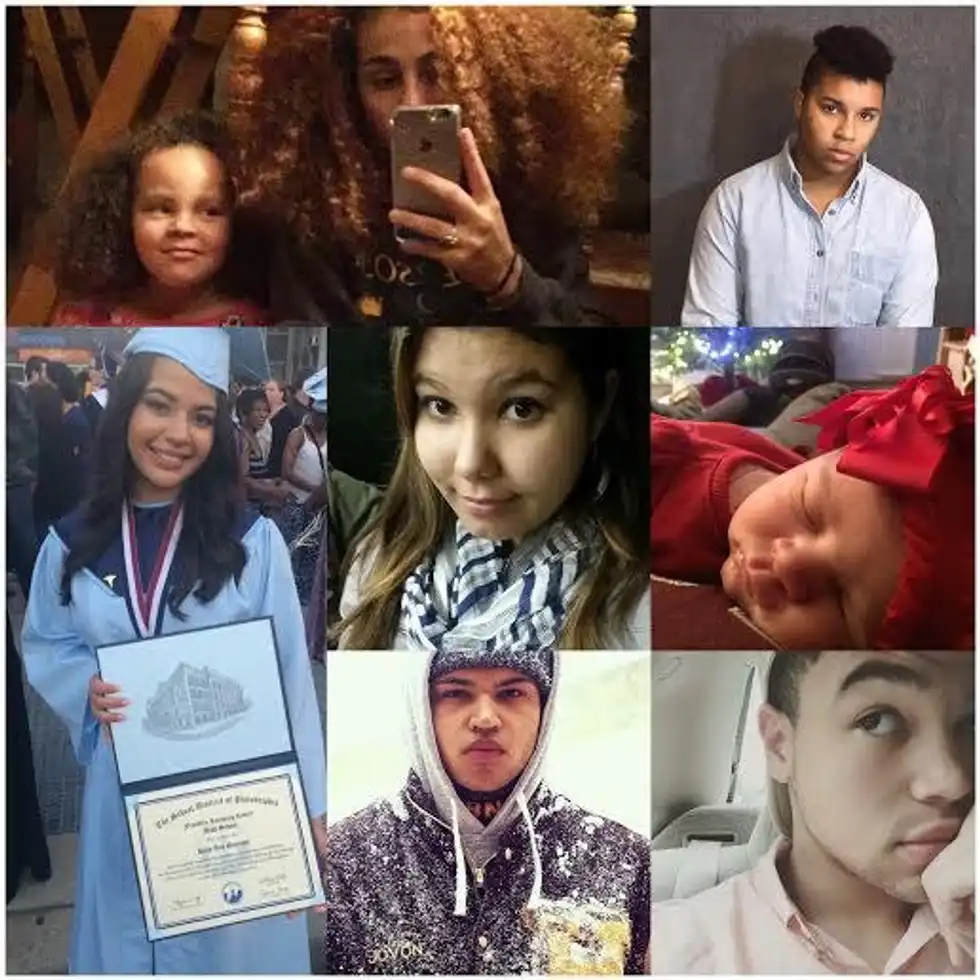
Meet my beautiful multi-raced sister, Kaja.

Kaja, like me, is both black and white. Her skin is darker than mine, and because my skin is lighter and our mother is white, my sister often received questions like, “Are you adopted?" Although she is a senior in high school, comments like these in grade school can be hard to deal with. When we are young and are not yet aware of how different we are, questions like these can be harmful and, being so young, being adopted was likely viewed as having parents that are not our own.
Kaja was not adopted, she just does not happen to look like our mother, and to many, it’s a surprise that this is biologically possible. In a recent conversation, I asked her about some of the struggles of being bi racial and she told me that she hates it when people tell her that she’s “pretty for a black girl.” This is not only infuriating because the people who make statements like this are making the generalization that black females are less attractive compared to another race, and that to be a pretty black female is a rarity. If you ask her she will tell you, “I am black and white” or “I’m mixed.”
Knowing firsthand some of the difficulties that my sister and I have faced, I thought I would ask other bi-racial friends of mine if they ever struggled with ideas related to belonging, or struggled with any sort of race confusion or nagging assumptions. I was pleased with the response I received, and comforted in knowing that I was not living a life in the middle, on my own.
This is Edwin. Edwin is a senior in high school, and like many other mixed students is often ignorantly identified by his race.
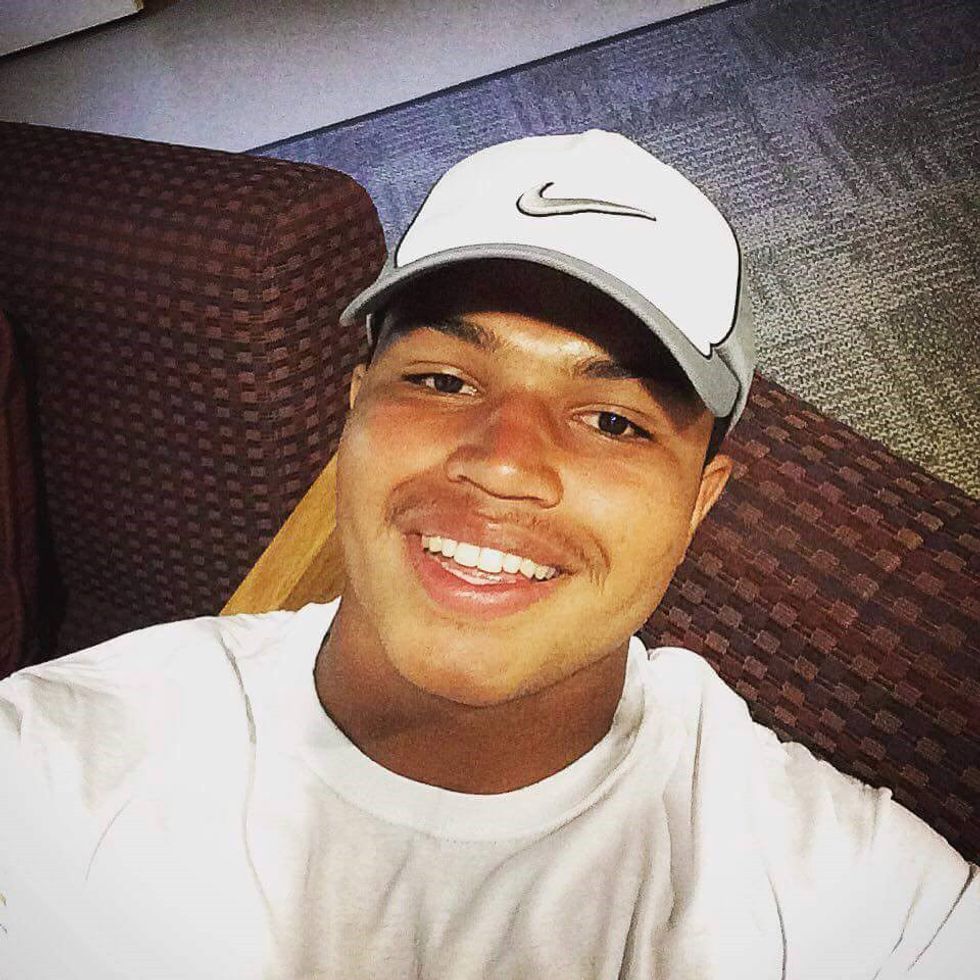
What Edwin had to say came as no surprise. “People usually try talking to me in Spanish and get all surprised when I tell them I am not Dominican or Puerto Rican. And while growing up, it was sometimes hard to truly identify with people because I was too white for the black kids, and too black for the white.”
Kelly is one of the closest friends I’ve made in my first semester. Our lives are actually super different, however, we have very similar ideologies when it comes to racial identity.
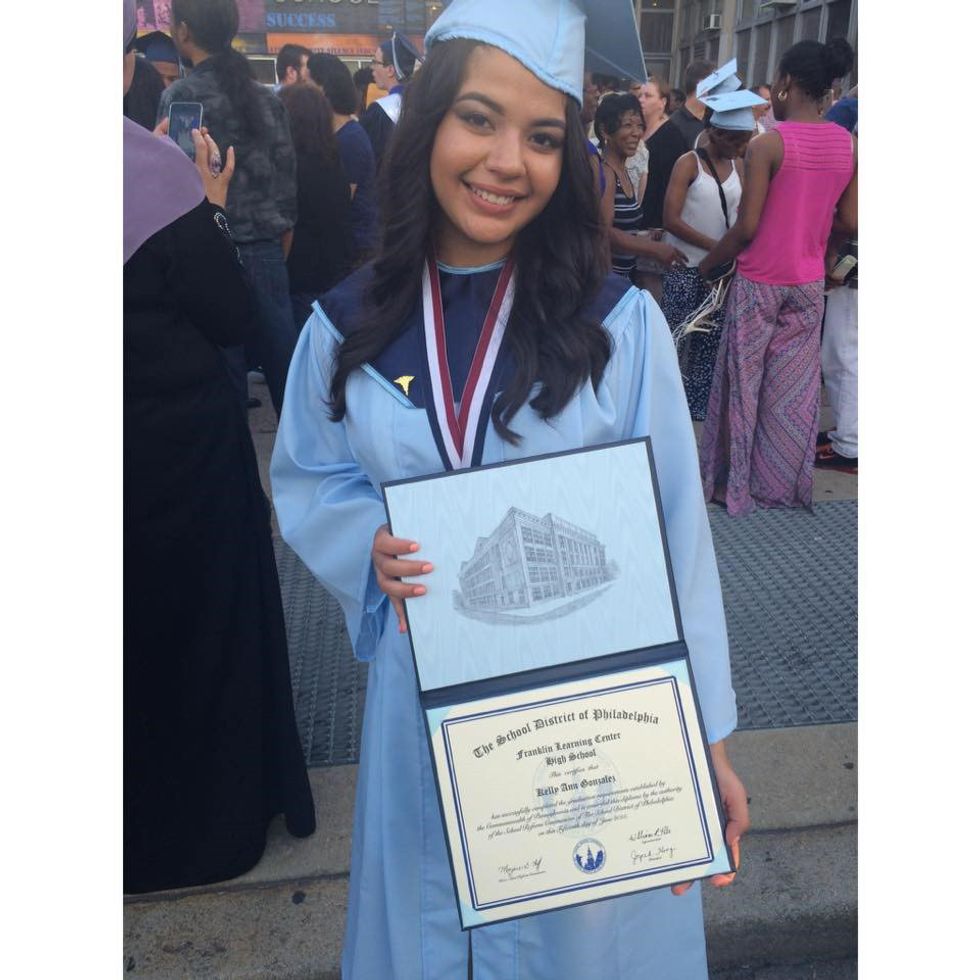
So, I left it up to Kelly, who happens to be both Mexican and White, to tell me whatever she wanted or could possibly tell me about being bi-racial. Her response is very much comparable to those already mentioned.
“Good things: You're classified as a minority so you get the few privileges that come with that. Also, I just like being multicultural, in general, and I'm proud of it.
"Bad things: People often say I'm ‘acting too white’ or that I'm ‘not acting Hispanic enough.’ It's like I have to pick and choose which race. Or I have to act a certain way based off of how I look. Even though feel like I don't suffer with ‘not belonging to one race’ internally, it's like society almost wants you to pick and choose.”
Kelly brings up the point of being told she’s “acting too white” or “not Hispanic enough.” This seems to be a common theme among mixed-raced students. There are instances where they don’t feel like they belong or struggle to identify where they fit in.
When it comes to filling out applications, people who are born of more than one race are forced to choose just one to identify themselves. Is choosing one disrespectful or ignoring what the other race(s) makes you who you are? The option of choosing multiracial on a standardized test or application is not good enough. This could mean anything. Latino and Asian? Blalk and White? It’s outstandingly frustrating when in parentheses next to the question, it says “check one,” when I am not one race.
This is just one way people of a bi-racial identity are forced to choose who they are. Being proud and accepting both of your identities collectively is a process that is not always easy, but is often the only way for a bi-racial individual to feel content. It’s often something that they have to figure out for themselves, with very little help from others. Of course, we can always ask those around us for help, however, unless someone is experiencing the same thing, it’s not very likely that they will know how to respond in a way that is more helpful than hurtful. Children of mixed race families need to be encouraged and learn to be proud and accepting of their identity. This means all of their identity.
This is Tessa! Tess is an RA in my residence hall.
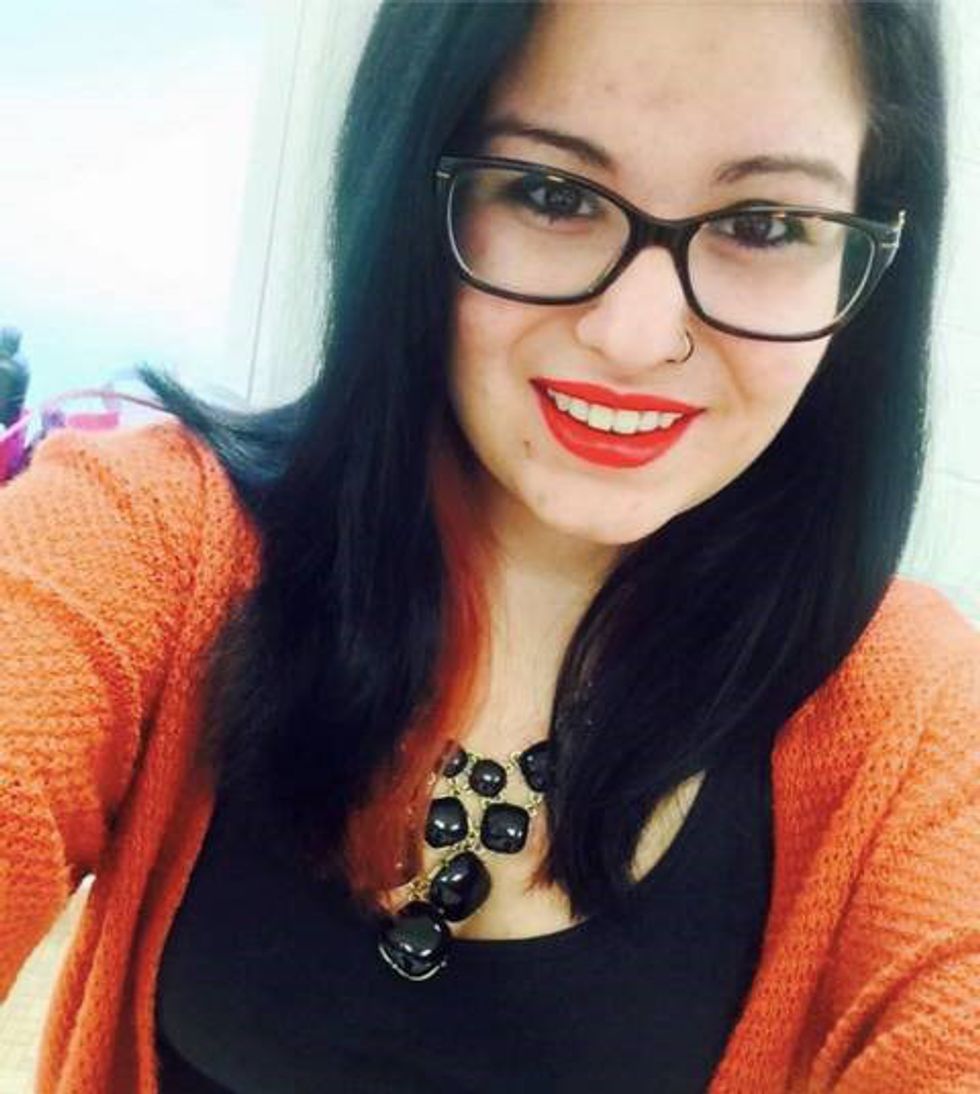
Upon meeting her most, as well as I, assume that she is white. It’s hard to admit that even after experiencing ignorance of others regarding my race, I was ignorant myself in assuming hers. Situations like these are enormously eye-opening to me because it really brings into focus, the idea that bi-racial people are more apparent than we think and regardless of what we may assume about a person’s identity, a person’s physical features can mean very little when we take it upon ourselves to play the “identifying game.” Tess made the point that people usually say, “"But she looks white, she must be white." As mentioned before, to a mixed race student, this can be very annoying. Tess also outlined both downfalls and perks.
“Perks: Less racism towards me (sad, but true perk)”.
“Downfalls: I don't fit in with the Latino community, or really the white community either. Also, people always think my dad (who is darker than you are) is my step-dad simply because I'm more of my mom’s skin tone. People have their own idea of what even a mixed-race person is supposed to look like even though genes do whatever they want.”
A sad part of reality, as Tess points out, is that if you happen to be mixed with a minority, but lack the characteristics, you experience less racism than others in that minority. People who are mixed race often experience situations like this, and it is one of the factors in contributing to why so many of us feel the need to pick and choose. Perhaps if we were able to, we would pick the race of our minority parent and use the voice we developed while people assumed we were, in Tessa’s case, white.
It’s overwhelmingly obvious that being bi-racial goes deeper than becoming fed up with hearing the question “what are you?” again and again. The experience of being biracial, mixed race, multiracial, etc. forms the core of your identity. Race is only one area in which a mixed heritage can create that awful feeling of having no home or no roots -- that you belong nowhere and to no one.
When somebody calls me white, I say “Yes, I am black and also white.” When somebody calls me black, I respond the same way. Yes we have the right to not acknowledge everything, but it becomes crippling when the reason it’s done is because society says so.
When my peers try to pick me apart and guess my race, they mostly never guess that I am mixed. Why? Because with many others I am racially ambiguous, and if all of someone’s guesses are one thing, they will always be wrong. If I am ever in a position of leadership, I will check both boxes, identifying as both black and white. I will never ignore one half of who I am, regardless of societal implications. Others may have their own reasons for identifying as one race, but being that I am proud to be a product of love of two different races, I will always claim all parts of me, the same way many of my bi-racial friends would.