Conscious of it or not, we probably learn more lessons from our parents than anyone else in our lives. From words and first steps, to how to treat other people and how to conduct ourselves, our first perception of reality is through the lens of what Ma and Pops do. Lucky for me, I've been blessed with two thoughtful, kind, and wise parents. Here are just a few lessons they've taught to me.
1. Learn to recognize the difference between freedom 'to' and freedom 'from'

When my dad explained to me how freedom to and freedom from are two kinds of freedom, it struck me as absolute genius.
Especially as Americans, we’re infatuated with the idea of freedom, and the “I can’t do whatever I want” mentality. We’re allowed to do a lot, so we want to exercise those freedoms. Our freedoms include manner of dress, career path, recreational activities, what we say on social media, etc.
But, even though an alcoholic is free to drink, they’re not free from drinking.
Do you see what I’m saying? When we chose what to value, what to invest in, and what we either will or will not protect, we’re making formative decisions that have consequences. If you spend all of your freedoms on doing things that aren’t good for you, SURPRISE, you’re not free at all. You’re actually a slave of your own making. Repetitive unhealthy choices in what we do oftentimes creates cyclical addictions. Which is a terrifying place to find yourself in. So we ought to consider our habits and coping methods… are they freeing? Or are they enslaving?
2. Apologize (and mean it, too)

Whenever my sister and I fought as little kids, I was horrible (like seriously, really horrible) at saying I was sorry. I don’t know what it was, but I hated it. But, no matter how long it took, my parents would stay in the room with us until I said the words “I’m sorry” loud enough to be heard, looking at my sister, and in a non-sassy voice. Did it take a lot of time to make me do this? Uh, yeah. But I’m glad they did it. Now, as a college student, I know that sometimes I’m wrong, and admitting it is one of the first steps towards mending a damaged relationship. To never be able to verbalize an admittance of wrongdoing is prideful and destructive.
3. Unconditional Love
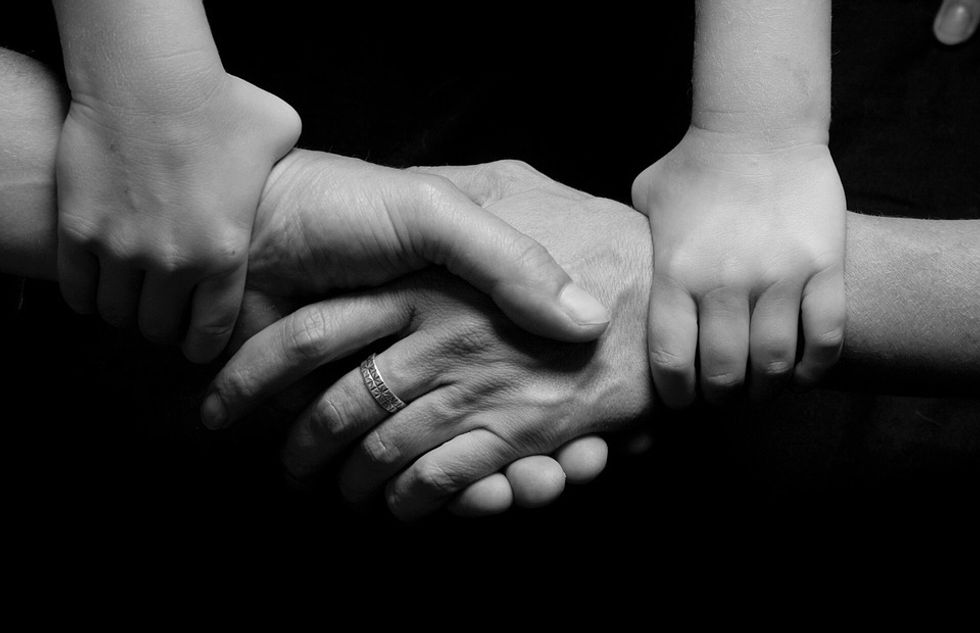
Love is a verb, right? My parents didn’t just say they loved me on a daily basis, but they showed it – and in more ways than one.
Yes, it means the world to me that my parents would give me homework help, plan family trips, read the books I wrote in middle school, and I do even appreciate the rules they established and the times that I was grounded in retrospect, because it built my character. But Unconditional Love is SO MUCH MORE than affection and rules. It's truly amazing how my parents give their time and their hearts, like the Bishop in Les Miserables who gives the thief his candlesticks. Unconditional love is rare.
So often, people view love as a transaction. You give to me, I give back the same amount. It's like a business deal. But my parents taught me a love that I couldn't earn, and that I enjoy as a free gift. No grudges. Their love doesn't grow or shrink. This is the way I want to love; giving without expectations. Honestly, I believe my parents are able to love this way because of their faith in Jesus; we're a Christian household. My parents are already so filled up with love from the Lord, that the love they give to me is an overflow of the unconditional love the experience, instead of an attempt to make me feed into some constant need for attention and confirmation. Their love is more constant, more grounded, than it would be if it were based on how other people treat them and give back to them. My parents can give unconditional love because they have accepted it -- Christianity is the one faith where you don't earn your way into being enough, and you live not for a place of acceptance, but from a place of acceptance. Unconditional love like that isn't logical, but it is life-changing. It's changed me from the inside out.
4. Value people over materials

Two images come to mind with this point.
1: First, a particular occasion of babysitting with my mom. We were watching a little girl (let’s call her Melaine) when she spilled a cup of red juice onto a light-colored rug in the kitchen. When Melanie realized what she’d done, she dashed into the bathroom and hid in the bathtub, lights off, the curtain pulled. Without hesitation my mom left the mess in the kitchen and slid into the bathroom after Melanie. I’ll never forget what my mom said: “you’re more important than a rug.” And she is. She absolutely is. But how would Melanie have known that if we’d yelled or paid the rug 20 minutes of our attention before paying attention to her? Mistakes happen, and our opinion of and value of Melanie didn’t depend upon her being perfect. Children don’t know these things unless they’re demonstrated and vocalized, like my mother did.
2: Neither of my parents have ever been the materialistic type. They both have some nice things, and they dress up beautifully, but neither of them shop often… heck they don’t even like shopping. Seeing this in conjunction with how well my parents have loved me has helped me to realize how little items matter. It’s not having a lot that makes them happy, nor is it giving crap-tons of things away either. The most valuable thing they give to others is giving themselves; their time, their energy, their advice. Now, I value relationship better because I know that my parents’ disinterest in money has made room for them to invest more into the people around them.5. Value what is True

As a teenager (and if we’re honest, as a human being) some of my struggles in high school were especially related to worries of how I was perceived, and being misjudged. I was shy. But my mom would say, “well, what’s true?” As much as it can be easy to get caught up in appearances, I’ve realized that what’s true is most important, and what’s true is often more complex and more difficult to see than what is on the surface. Not just for me, but for everyone around me. It's made me a more empathetic person.
I never was the most outgoing, loudest person, but I did always care about my friends, care about deep personal thoughts and honest conversations, and enjoy books that made me think about how I’ve felt and how others feel. Those are all valuable things. Even if others have thought I wasn't worth their time, that was their opinion, but not an objective Truth. My characteristics and values may not be flashy, but they’re real and true. I’ve learned to better love the kind of person I am, no matter how I am perceived, from this lesson. It’s also taught me not to buy into the false and transient trends of distraction and fleeting enjoyment that floods college campuses. What is attractive or immediately gratifying isn’t always true, or lasting, or important.
Thinking about all the lessons I’ve learned from my parents, these five points are only the beginning. I’m so blessed to have a mother and a father who have loved me so well and so deeply all my life. I better understand how to use my freedoms, how to apologize, how to love deeply, how to value people over things, and why I should value what is true about me and others, not what is flashy or seen on the surface. So if you’re reading this, mom and dad, thanks a bunch. Even from hundreds of miles away, you’re still changing my life, every day.