"What do you want to be when you grow up?"
This is a question we are all asked from the day we can understand what that question means. I've answered this question many times, and my answer has been ranged from being an actress when I was in kindergarten, a doctor when I was in elementary school, and a marine biologist when I was in middle school.
Then you reach high school and people ask you, "What will your major be in college?" This question always gave me a lot of anxiety. I enjoyed English, Art, Science, History, choir, and volleyball. How could I choose just one thing, when I'm interested in so many things?
Now that I'm in college, I settled on a management major and a communications minor. The reason I did this was not because I have a deep burning desire to manage a business, but I figured it was a broad enough major that it would open up a lot of doors to a wide variety of opportunities. To this day, I'm still constantly being asked what I want to do with my major, and I still have no clue. I took on this position writing for the Odyssey because I'm interested in writing. I also have a job in a campus office because I'm interested in working for a college, and I took an internship this summer in managing a business because I was interested in it. See a pattern here? So many different career paths sound interesting to me, but yet I can't decide which path is right for me.
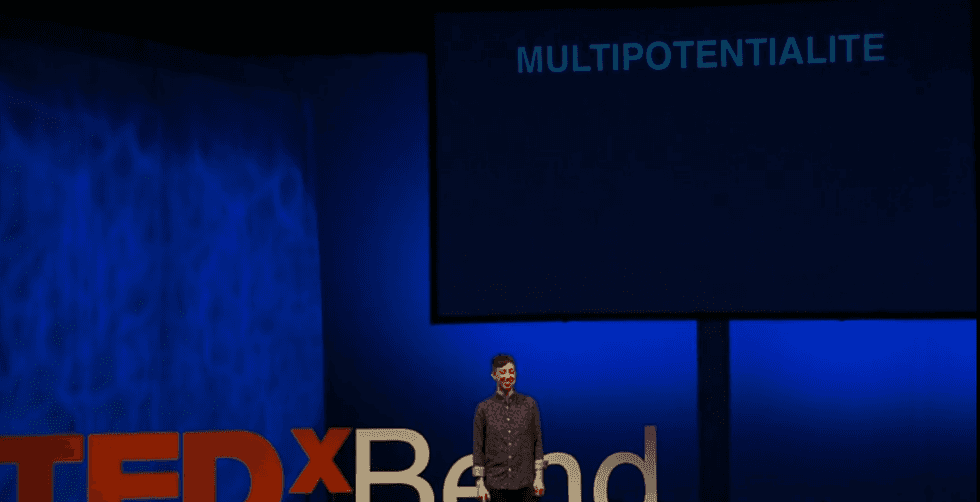
I've gotten some criticism for this. People tell me that if I don't have one clear career goal in mind, it will harm my chances of being successful. These sort of things were starting to stress me out, until my mom (who knows me best) sent me a link to a TED talk. The talk is by Emilie Wapnick, and it's called "Why some of us don't have one true calling." In the talk, Emilie brings up the idea of someone being a "multipotentialite." To put it simply, it is someone with many interests and creative pursuits.
In the talk, Emilie says, "What do you want to be when you grow up? See, while this question inspires kids to dream about what they could be, it does not inspire them to dream about all that they could be. In fact, it does just the opposite, because when someone asks you what you want to be, you can't reply with 20 different things, though well-meaning adults will likely chuckle and be like, 'Oh, how cute, but you can't be a violin maker and a psychologist. You have to choose.'"
"All they hear is that they're going to have to choose. But it's more than that. The notion of the narrowly focused life is highly romanticized in our culture. It's this idea of destiny or the one true calling, the idea that we each have one great thing we are meant to do during our time on this earth, and you need to figure out what that thing is and devote your life to it. But what if you're someone who isn't wired this way? What if there are a lot of different subjects that you're curious about, and many different things you want to do? Well, there is no room for someone like you in this framework. And so you might feel alone.You might feel like you don't have a purpose. And you might feel like there's something wrong with you. There's nothing wrong with you. What you are is a multipotentialite."
Maybe I have a true calling I haven't discovered yet, or maybe I don't! Either way, I am going to begin embracing my love for many different subjects, positions, and things. Someday, I hope to have a career that allows me, a multipotentialite, to not have to choose what I want to be, but rather helps me be all that I can be.