
It is not rocket science that the issue of police brutality is on everyone’s mind. The thought of having people that are sworn to protect and serve do the exact opposite is frightening to save the least. According to the Guardian, a total of 751 people were killed (so far) by police officers in 2016, including Philando Castile and Alton Sterling. Mike Brown’s death still stings after two years after the incident and fanning the flames of unrest from protesters all around the country. You’d be pretty angry too if you heard about Tamir Rice’s untimely death (if you haven’t, check it out in this link). As an African-American, these tragic deaths makes me feel uneasy and alienated from this country, a feeling that has been haunting the African-American community decades. So what can you do if there is has been a growing disconnection between the people and law enforcement? You have a sit-down and talk about it of course.
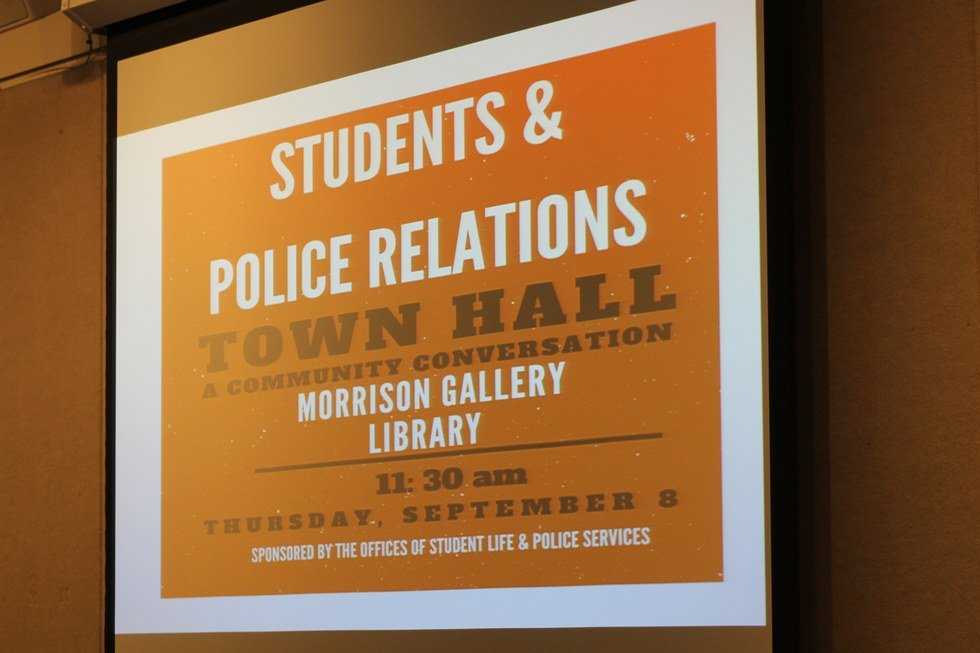
Recently, Black Student Union of Penn-State Harrisburg and Assistant Director of Student Activities, Marcellus Taylor had created a meeting with the campus police to discuss the recent events of police brutality. Chief of Police Kevin J. Stoehr and Officers Marlene Sherwin and Richard Rocco were present, willing answer any questions that the students had wanted to address. It was a moderately sized crowd, with most of them containing members of BSU, fraternities and sorties. The ambience was silent, filled with an amalgamation of anticipation and anxiety from students. After a summer’s worth of protests, media hype and more incidents of police brutality, could you blame them?
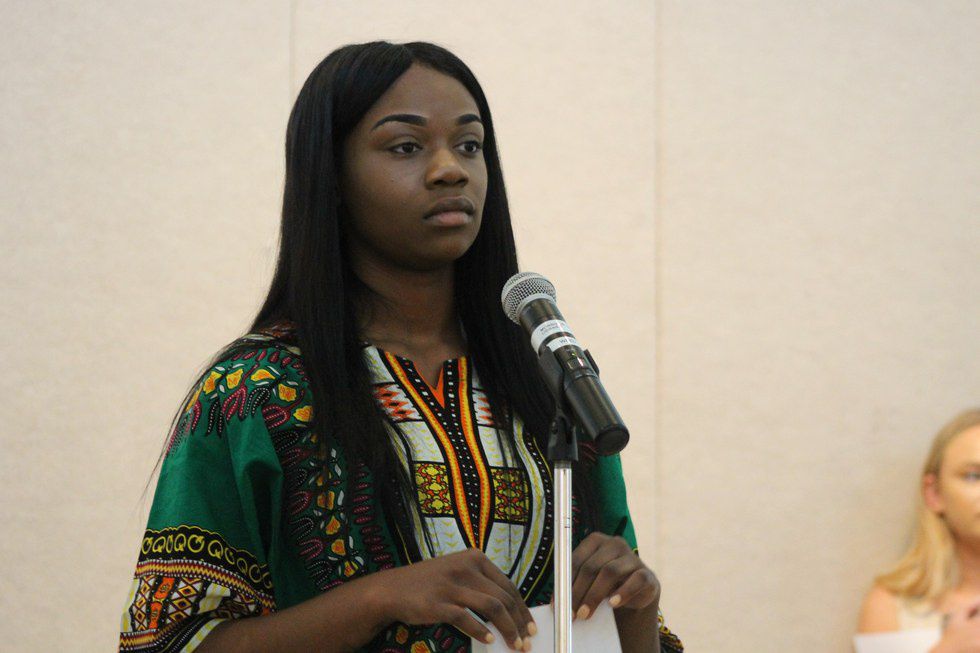
Even I was worried about what would happen in the meeting, afraid that an argument or two would ensue. However, the officers had a calm and levelheaded demeanour about them. Their kind nature and cooperativeness became a breath of fresh air to many of the students, who had no clue what was going to happen during the sit-down. In return, the students were the same way, asking heartfelt opinions and even shaking hands with the officers as well. Even I participated, asking questions and having friendly conversations with officers Sherwin and Rocco after the meeting had ended. Stoehr was everything the students were hoping for, an officer with an open mind, rational behaviour and a type of friendliness that would put Ned Flanders to shame.
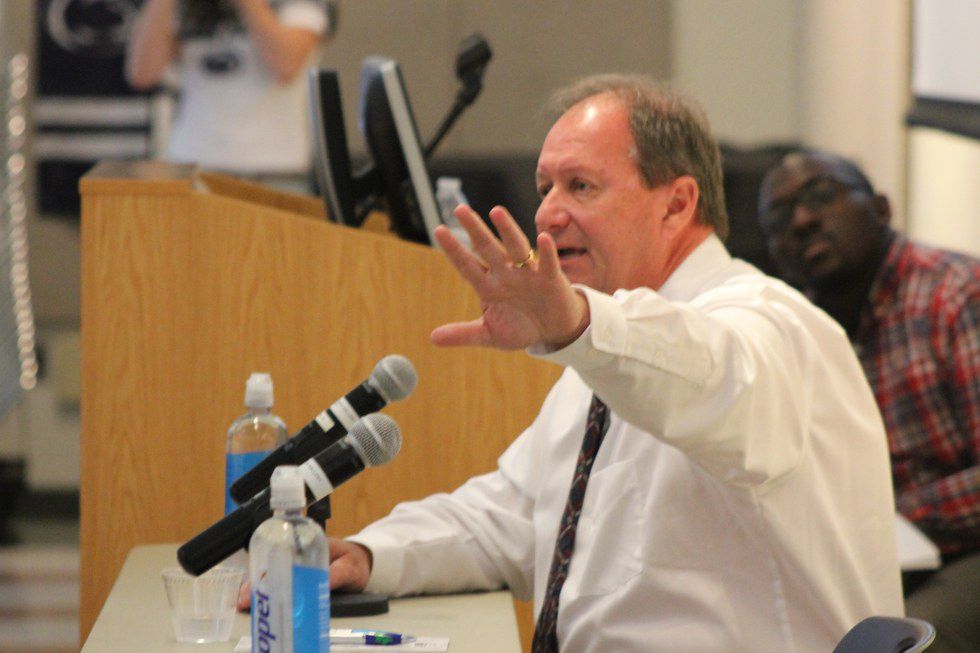
“I think we need to go back to getting to know that neighbourhood sort-of-thing,” Stoehr said to the crowd. “I think we’ve gotten away from talking to people, because we have more in common than differences, as hard as that might be to believe. When you have children you want them to achieve and provide for your family. We’re all the same and that’s what we have in common.”
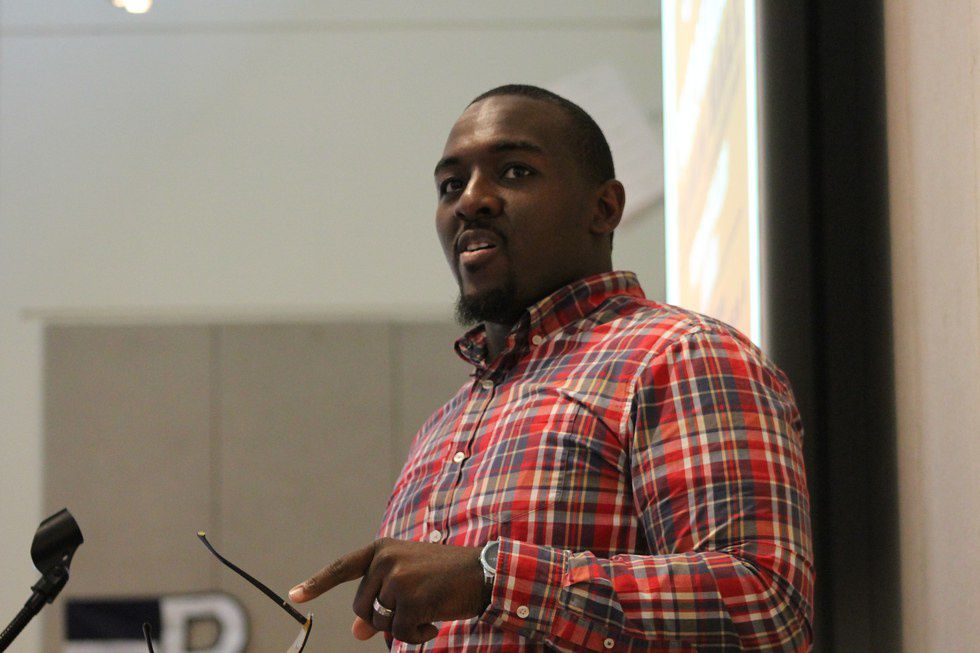
Stoehr’s answers combined with the support of his fellow officers shook off the nerves of many of the students, yet there have been so noticeable issues. When one of the officers asked how many of the students wanted to become a part of the law enforcement, not one single hand was raised. One of the students shared his own personal issues with police in the past, and another student addressed the plight of the African-American community. The sit-down may not have been the ultimate truce between the people and the police, but it was a good start. It was the beginning of something special and by addressing these situations without fighting. The progress of trust is still forming, supported by the strength of all of us and the hope that change will come. With sit-downs like these combined with time and effort, the solution towards police brutality may be closer than we think.
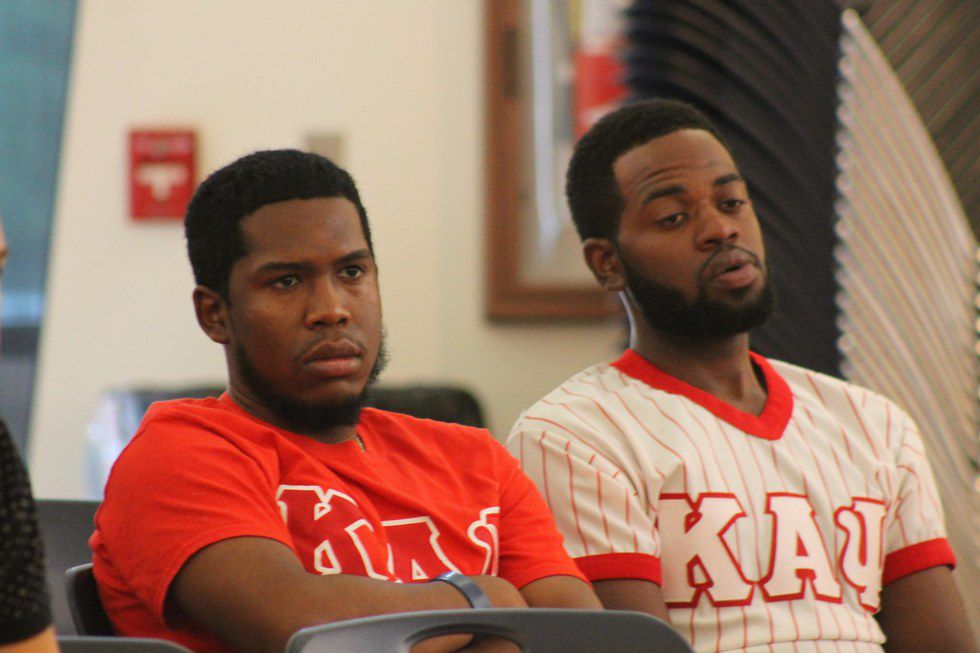
On behalf of the students that attended the meeting, I want to thank Marcellus Taylor for help organising the event and the officers for willing to answer any questions to the best of their abilities. All photos were taken Jelani Splawn of Penn State Harrisburg