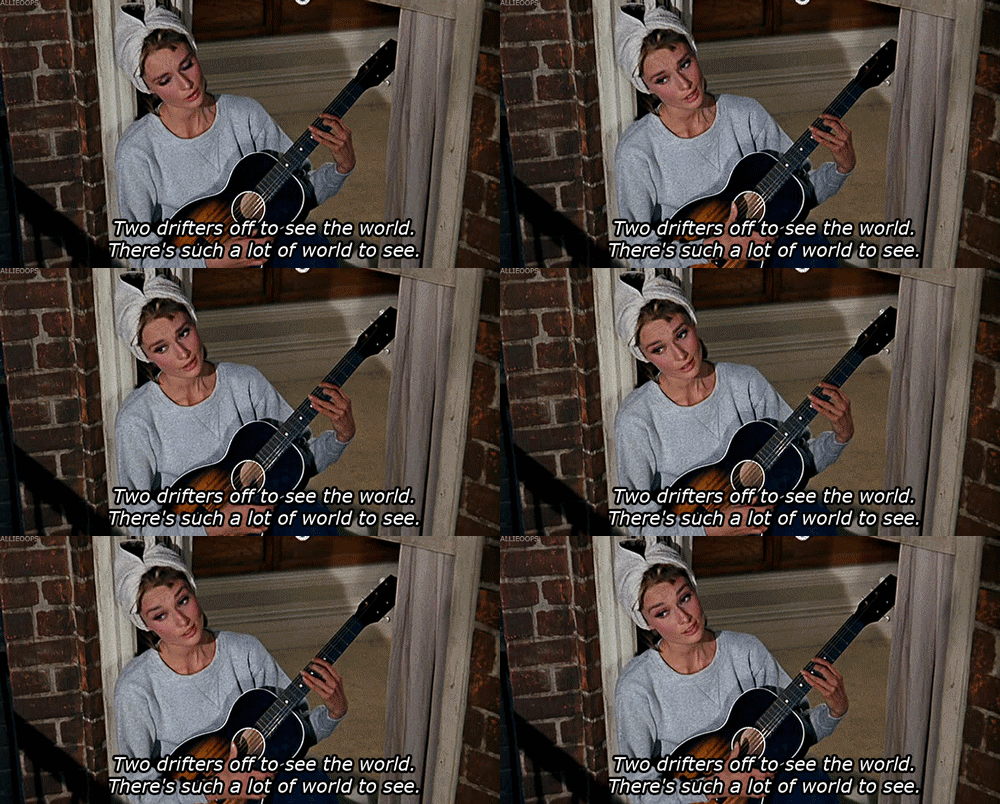

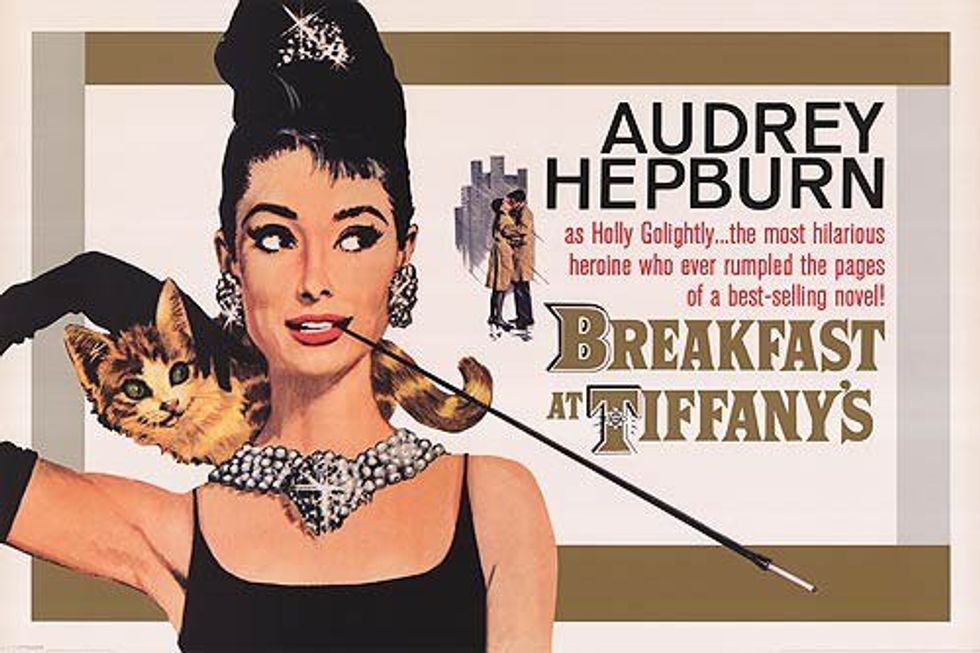
This upcoming Oct., 5 marks the 54th anniversary of the release of Blake Edwards’ iconic and classic cinematic masterpiece "Breakfast at Tiffany’s." Based on the beautifully written novella by Truman Capote, "Breakfast at Tiffany’s" tells the tale of a young woman named Holly Golightly who struggles with her desire to be free and her belief that the men in her life are trying to tie her down.
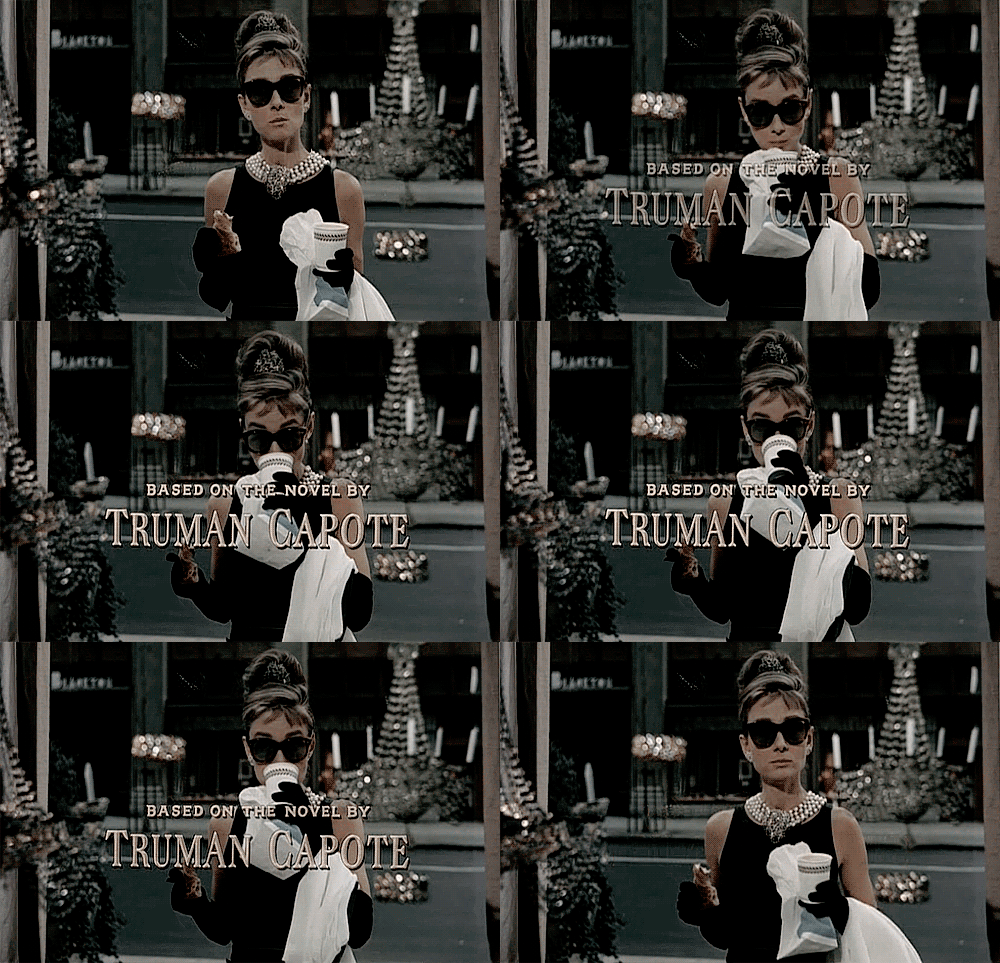
Wonderfully portrayed by the stunning and elegant Audrey Hepburn, the movie version of Holly is a whimsical and witty woman in pursuit of a happy life by way of meeting the right person to take care of her. Hepburn’s Holly takes a different form from the one in the book which is meant to be a “woman of the night.” The role was originally intended for Marilyn Monroe, who dropped the project because she didn’t want to be typecast as the carefree call girl. Hepburn, of course, took the role in another direction. Instead, Holly comes off as a “society girl,” like a Nicole Richie/Paris Hilton circa 2003, but obviously with more maturity and style. If you look hard enough to get past the inherent grace and poise that is Audrey Hepburn, you can see how Holly appears to be a bit of a human disaster.

Most people do not understand Holly when they first watch the film; she is not your usual romantic comedy female lead. Holly Golightly is an enigma. She doesn’t have a steady job, she is flirtatious with men of all kinds and loves to accept their money, and she has a mysterious origin story that the male lead Paul, played by George Peppard, comes to uncover. The way Holly is depicted creates an unreasonable ideal for women, she is one of the first of those romantic comedy female characters that we see so many of today: the troubled and beautiful woman whose quirks and emotional instability draw the male lead even closer, though nearly everything she does or says is a glaring red flag. She’s a lavish spender, though she has no income, and her favorite place in the world is the jewelry store Tiffany’s, but she can’t afford anything they sell. There are so many aspects of the film that are upsetting, Holly’s financial dependency on men and Mickey Rooney’s horribly racist portrayal of an Asian man aside. The worst, in my opinion, is the library scene toward the end that is so frequently misquoted. The wrong version -- not hard to find on Tumblr -- is below:
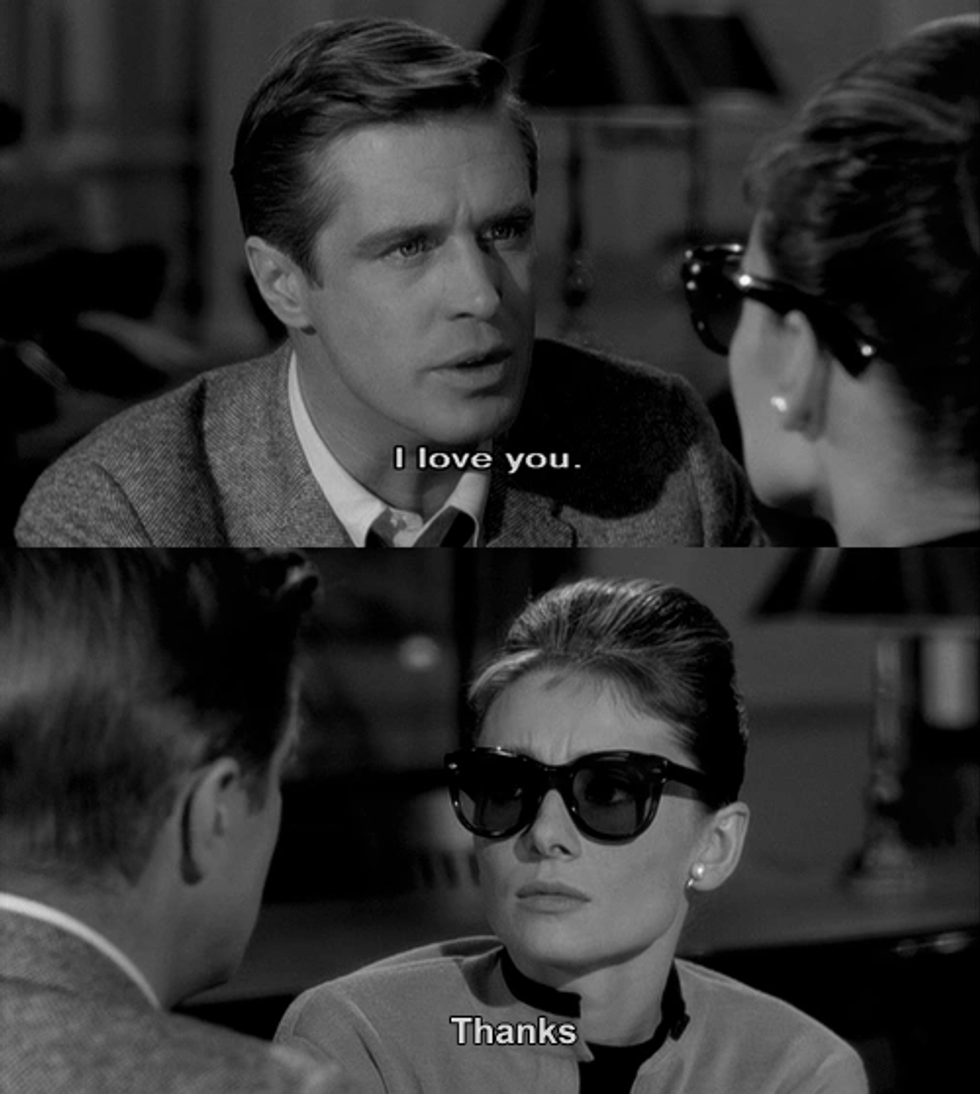
In the film, she doesn’t say “thanks,” she walks away and tries to ditch Paul by going to the bathroom. Holly’s very clearly averse to confrontation and doesn’t wish to have anyone view her in a bad light. To me, she was always kind of a coward. I think people often find her to be relatable and likable because she indulges herself and her fears, and she embodies the wanderer in all of us. In reality, Holly would not have done well in the world.
While Holly Golightly is a lovely party costume, the character herself should not be an ideal. I often state that "Breakfast at Tiffany’s" is my favorite movie of all time, and I stand by it. I love the story that unfolds, the strange chemistry between George Peppard and Audrey Hepburn, and the setting of New York City in the 1960s. I do not, however, idolize Holly - let’s be real, she’s a mess. But Hepburn, there is a real idol for you. Hepburn was a manifestation of grace and pure beauty. Not only was she a humble and amazing actress, she was also a genuinely good person. She traveled to third-world nations and brought relief to children and mothers in need. In 1989, she was appointed Goodwill Ambassador of UNICEF and worked diligently for the rest of her life for underprivileged, suffering youths.

There is something to be said, however, of Hepburn's most famous role being that of Holly Golightly -- she is somewhat of a train wreck, but she stands for the part of ourselves that wants to run away from problems. Her journey to find love for herself and to not rely on rich men represents our transitions in life away from the comfort zone and into a place of uncertainty but with the possibility of real happiness. What Hepburn brings to Holly's character ultimately changes our perspective from viewing her as a hopeless fool to a struggling dreamer surrounded by cynics. I believe that this was Hepburn's own nature showing through in Holly, and it is why I still find "Breakfast at Tiffany's" a timeless classic. Hepburn inspires us to find our own "Moon River" and seek out everything that this world has in store for us.