I’ll never forget the first time a person attempted to deny me something I wanted because of my biological sex. I was nine years old and it was Halloween night. I grew up with an older sister who was a major tomboy and looked up to her more than anyone else in the world. She loved playing with ‘boy’ toys and watching ‘boy’ television shows, and I loved imitating anything that she was doing. The year was 2006, and our favorite program to watch on TV was "Power Rangers Operation Overdrive." We loved Power Rangers so much that we both decided to be our favorite characters from the show for Halloween, and begged our mom to buy us costumes.
My older sister identifies herself as a female, but has always performed several aspects of the male gender, including wearing short hair and boys clothing, as well as playing on all-male sports teams until she began high school. I however, identified and performed as female. While at a glance, someone could easily take my sister to be a boy, it was very clear that I was a girl. We both decided that we wanted male Power Ranger Halloween costumes, though.
As October 31st rolled around, my sister and I were euphoric. When it was time to trick-or-treat, we jumped into our costumes and dragged our mom out the door to watch as we paraded around, pretending to be the Red and Blue Rangers. As porch lights slowly began to turn off and trick-or-treating began to wind down, we began to trek back to our house—and then it happened.
A boy that couldn’t have been older than twelve was walking behind me. He saw my long blonde ponytail sticking out from my red mask and exclaimed, “Wait! That’s a girl! Girls can’t be the Red Power Ranger!”
“Why not,” I retorted. “The Red Ranger is the best and everyone knows it!”
The boy went on to argue that only a boy could be the Red Ranger because that’s how it is in the show, and that if I wanted to be a Power Ranger I’d have to be either the Pink or Yellow Ranger because those characters were girls.
This story is something I have always carried with me, and as I began to study gender and biological sex, I began to understand why. I was never raised by my family to think I couldn’t have something because I was a girl. The boy who called my Halloween costume into question that night wasn’t trying to be mean to me. He genuinely didn’t understand that people don’t have to conform to the gender roles they see portrayed on television.
I realize that this isn’t an extreme example of the expectations that society places on adolescents to perform as male or female. However, this early experience opened up the door for conversations in the future with my family and peers about gender and the ways in which it intersects with other aspects of our lives. As I began to study gender at the college level, I learned that there are many people who have been terribly misinformed about the concept of gender. I’m not here to place blame on anyone for this massive case of misinformation, but I do feel it’s important to discuss some of the lies about gender that I have heard throughout my life.
I’ve compiled a list of messages that friends, family, strangers, and most often, the media have told me about what they think gender is and what it should be. I bet a lot of these phrases will sound familiar to you or somebody you know as well. Additionally, I have provided my personal insight on these statements and why I feel buying into these ‘lessons’ cheapens our abilities to understand the experiences that people of all genders have.
Here are the lessons about gender I learned that I firmly believe society ought to do away with:
1. There are Two Genders—Male and female.
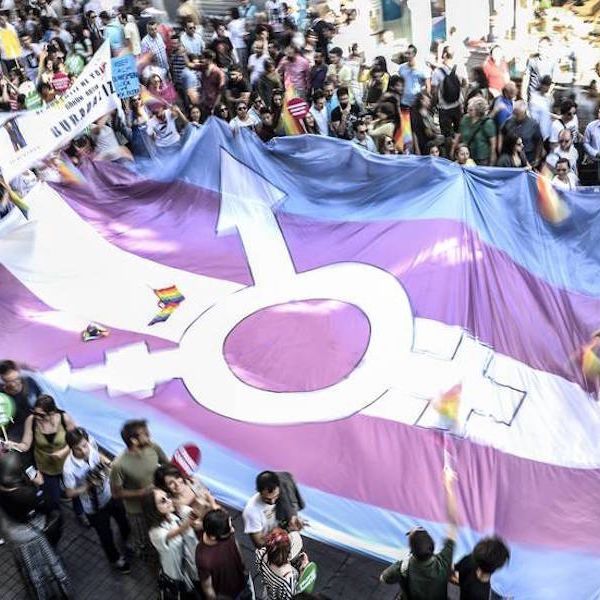
This is one of the most common misconceptions I hear when others chime in on the topic of gender and biological sex. Gender is defined by the Merriam-Webster dictionary as “the behavioral, cultural, or psychological traits typically associated with one sex (Gender).” A person’s gender can be fluid, switching back and forth between male and female. A person can choose to refrain from subscribing to gender altogether.
I wanted to talk about this topic first, because I have been saying a lot about ‘boys’ and ‘girls’ in this article. I decided early on that it would be the most beneficial to tackle the two most commonly known genders here before writing about the entire spectrum of gender and biological sex.
2. Something to the tune of, “boys are better than girls at _________” or “girls are better than boys at ________!”
I first began hearing these statements in elementary school as one of the few girls in a circle of friends dominated by boys. Of course this is typically seen by adults as harmless generalization, however children are often internalizing the things they hear from their peers. Imagine being a 10-year-old girl who loves running races with the other kids at recess. If your friends were consistently telling you that you will never be as fast as a boy, you may decide to give up on running if you truly believe you won’t win any races.
3. Males and Females should be attracted to each other.
This particular statement wreaked havoc on many of my peers as they began to hit puberty and understand sexuality. Mass media’s predominant portrayal of heterosexuality, erasure of bisexuality, and mockery of homosexuality leave a lot to be desired for those who don’t fit the ‘straight’ mold, and are looking for a community in which they feel represented. Middle and high school are difficult enough for students looking for a place to belong, and sexuality adds a whole new dimension of doubt for those who aren’t sure of their orientation.
4. "Girls are too emotional,” Or “Boys shouldn’t cry. That shows they’re weak. ”
Though often played off, the messages behind these statements are insidious. They shame individuals for having emotions –and I don’t want to shock anyone here--but most human beings have emotions. It’s completely normal to have a bad day, or even a bad month. These statements can often make people afraid to share their feelings with others out of fear of how they will be received, and that is a dangerous game to play.
5. “Girls your age wear makeup because it’s just something they are expected to do.”
If you are a girl and you want to wear makeup, great! If you are a boy and you want to wear makeup, that’s also great! If you don’t want to wear makeup or subscribe to something that is considered ‘normal’ for your gender, then you shouldn’t have to. Statements like these tend to eliminate the element of choice that an individual has when it comes to decisions about their body and life.
6. “Girls shouldn’t lift weights—they’ll get bulky.”
“No guy in his right mind wants to date a girl with bigger muscles than them.”
This one stung a lot the first few times I heard it as I began getting more into weightlifting as a means of staying in shape. I spent quite a bit of time politely reminding men that I don’t lift weights to impress them, I do it because it is something I love to do. Gender shouldn’t be a limiting factor when it comes to pursuing anything that makes a person happy.
Now this last one applies specifically to my female friends :
7. Girls who act on their sexual desires, show off their bodies, or use the dog Snapchat filter are ‘sluts.’ Girls who cover up or don’t put out are prudes.
If you know a woman alive who hasn’t heard a statement along these lines, I would love to meet her and then proceed to interrogate her to find out how she successfully avoided the people who tried to impose their own personal values on her. A person’s body belongs to them alone, and they are capable of deciding whether or not they want to cover it and what they would like to do with it. Additionally, I am still failing to understand why a girl who wants to use a cute Snapchat filter should be seen in a negative light for doing so.
It’s clear that gender is one of the major in which humans organize society. We tend to categorize characteristics such as gender into neat little boxes labeled ‘male’ and ‘female.’ Then we promptly put them away at the top of our closets and forget about them. My wish is that people will begin to unpack the societal definition of gender and see how that ‘one-size-fits-all’ mold actually misses the majority of the world’s population.The good new is that this can change in our lifetime. The lessons that we have learned can just be unlearned just as easily by us.
This list is by no means comprehensive. I simply cannot understand the experiences of everybody on the planet. I would like to, though. If you feel you have important information to add, don’t hold back! Comment on this article. Share your opinions at the dinner table. Come armed with your experiences and bring them into the discussion. The world (or at least your social media circle) just might be a better place because of it.
Works Cited
Gender. (n.d.). Retrieved August 26, 2016, from http://www.merriam-webster.com/dictionary/gender