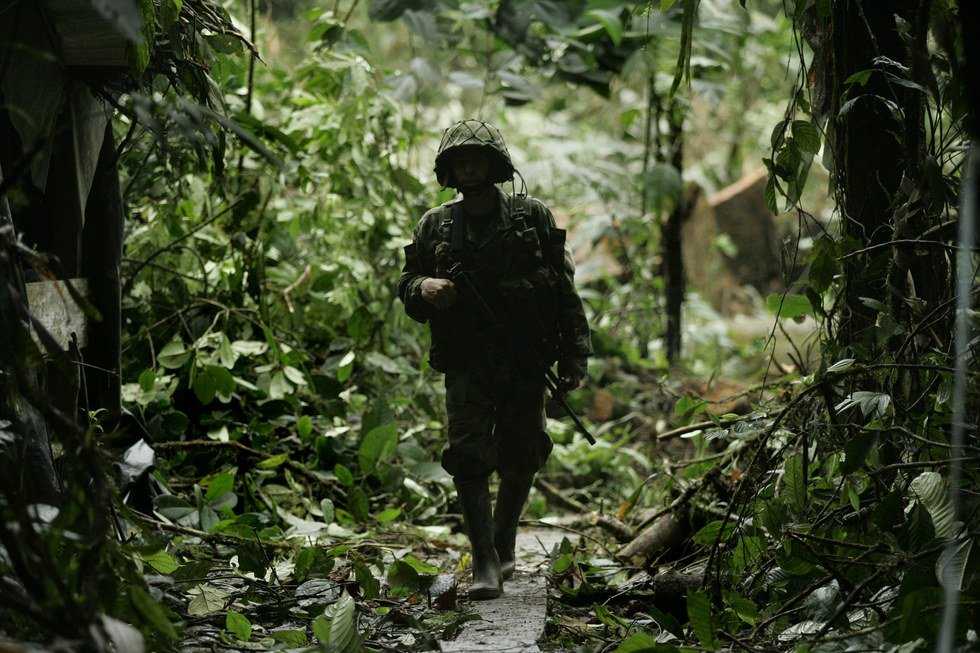
The Colombian Armed Conflict is a decades-long war between several parties, and is widely considered to be one of the most difficult conflicts in the world. The conflict has managed to persist for decades upon decades, and only today are peace talks making any headway. Although the conflict has many causes and may have seemed inevitable from the beginning, there was one factor that over-arched all others: political exclusion.
A tumultuous time period known as La Violencia not only set the stage for the conflict, but also began a trend of violent dynamics that would persist for years. It all began when popular Liberal leader and presidential candidate Jorge Eliecer Gaitan was assassinated in 1948, igniting a Liberal uprising in Bogota referred to as Bogatozo. A civil war between Conservative party members and Liberal guerrilla groups quickly erupted following Bogatozo, and lasted until 1953. During those five years, more than 200,000 people were killed as a direct result of the violent clashes.
When a political pact called the ‘National Front’ split the Colombian government up equally between Liberals and Conservatives in 1957, most Liberal guerilla groups that fought in La Violencia disbanded. Unfortunately, the new power monopoly between the two parties led to harsh government repression against communist peasants (as well as any other dissenting voices in the political sphere). In reaction to the repression, embittered peasants and academics alike formed leftist revolutionary guerilla movements such as the National Liberation Army (ELN) and the Revolutionary Armed Forces of Colombia (FARC) with one goal in mind: to overthrow the unjust government and create a communist state.
As the guerrilla movements got larger, drug trafficking and extorting civilians became the method of choice for securing funds. To defend against this perceived communist menace, a number of right-wing paramilitaries emerged from the population to fight back. However, after most of the paramilitaries combined forces to create the United Self-Defense Force of Colombia (AUC), they merely became part of the problem. Many other conflict parties arose during the Colombian Armed Conflict, but today only FARC and the Colombian government are left standing and intact.
As one can see, the Colombian political sphere was quite obviously not the most friendly environment, and competition between parties was bitter. However, that's not what began the conflict; it was started when a significant number of people were muzzled and brutalized. When violence was perpetrated on these impoverished outcasts, they were ready and willing to commit to a violence in retaliation. I believe that, with Colombia already having made this mistake, the rest of the world must take note. To repeat such events would not only be a mistake, but also a candid representation of ignorance.