Since viewing French films like "Martyrs" (2008) and "Maniac" (2013), I've been more open to watching films from our European comrades. As I was scouring the Internet for some of the best animated films from Europe, one of the most frequent candidates was a 2003 film called "Les Triplettes de Belleville."
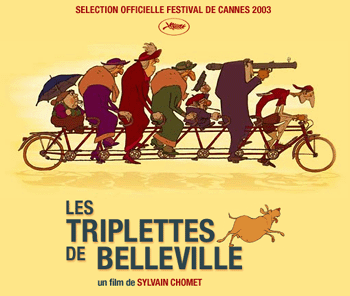
In all my years of watching cartoons and animated films, this one is an unparalleled feature.
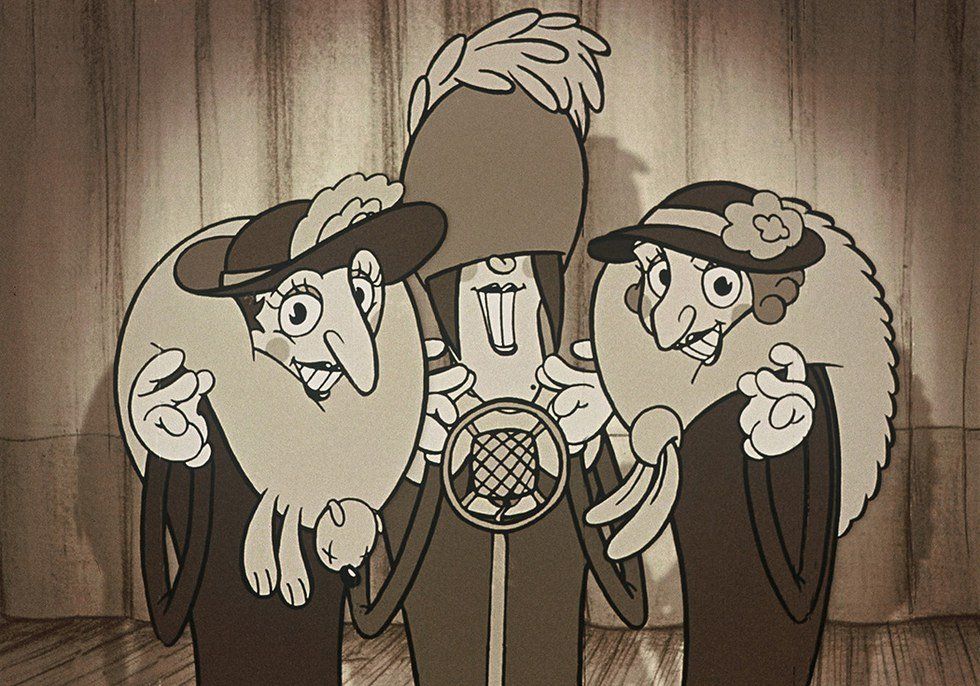
After her grandson is kidnapped while racing in the Tour de France, Grandma Souza and her dog, Bruno, must travel to the big city of Belleville, where they meet a washed-up trio of jazz singers known as The Triplets of Belleville. What follows are surreal dream sequences and humor so absurd, I had to pause the movie to laugh and comprehend the logic.
Of course, with every animation, the art style is top priority and "Les Triplettes de Belleville" has the best detailed animation. Every scene is like a painting and the exaggeration of most characters gives the movie its own charm. Cyclists have extremely muscular calves and the French mafia have square bodies with large shoulders.
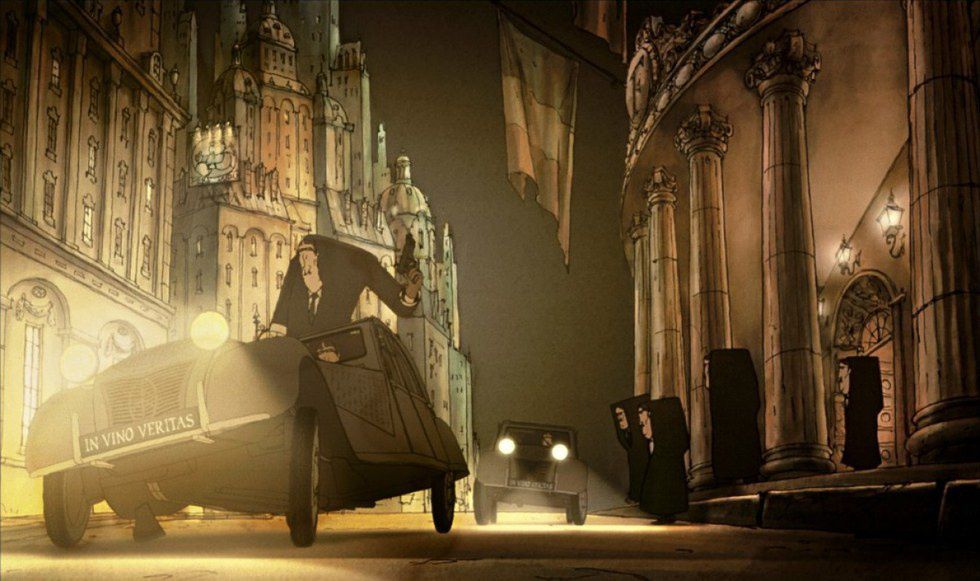
Despite having very little speaking, the movie does a tremendous job telling the story through its gestures and emotions. I found myself asking a lot of questions as the story went only for it to be answered within seconds. Why is she shuffling to the ocean by herself? What’s the net for? Oh, she’s using a pipe bomb to blow frogs out of the water for dinner.
But, something feels disturbed, now that I'm looking at our American animated features and comparing them to "Les Triplettes de Belleville." Very frequently, I hear filmmakers complain about working in animation, saying how it’s too expensive for how time-consuming it is. There is a contradiction in this duly-noted complaint. Looking at all the budgets for largely hyped animated films, a good majority of these films have budgets that reach past $100 million. Last year, alone, we had "Big Hero 6," "How to Train Your Dragon 2," "Mr. Peabody & Sherman," and "The Penguins of Madagascar" reach budgets with a mean of $146.75 million.
In 2003, when "Les Triplettes de Belleville" was made, "Finding Nemo" had a budget of $94 million, "Looney Tunes: Back in Action" received $80 million, and "Sinbad: Legend of the Seven Seas" spent $60 million.
Using only $9.5 million, "Les Triplettes de Belleville" was nominated for two Academy Awards, won a Cesar (France’s version of our Oscars), won a Genie (Canadian Oscars), and the BBC Four World Cinema Award. Dare I mention it is regarded as one of the most highly praised animated films in the last decade, still being talked about to this day?
“But, Ty, those other movies came from big budget companies and managed to make back more than their budgets and win more awards.”
Yes, they did. But, with the exclusion of "Finding Nemo," "Looney Tunes" and "Sinbad" were incredibly mediocre films. Despite being a "Looney Tunes" fan myself, even I could have gone through my life without "LT: Back in Action." "Sinbad," on the other hand, was an absolute snore fest. I remember going on a field trip to see that movie and I, along with the majority of the class, fell asleep because of how boring it was.
In today’s times, however, it seems that big animation studios, like Disney and DreamWorks, have to rely heavily on spectacles and 3D computer animation just to get audiences in. Sure, it works, but in hindsight, there’s nothing innovative they did. It’s the same thing I said about DreamWorks movies; you’ll watch them, love them, but walk away none the more impressed. There’s no value or meaning to it. So the studios decide to spend nine figure budgets to make it seem nice when, really, it’s the same formula as the last movie that had Disney or DreamWorks slapped across it.
Now, I’m not saying Disney movies are bad, but I’m saying they aren’t all as great as the public likes to make them out to be. *cough*--Frozen--*cough*
Then, you have directors themselves who get impatient and frustrated with animation. Gore Verbinski, director of the 2011 film "Rango," went on record, when talking about the film’s production, to state how time-consuming and long it takes for animation, making him unlikely to come back to animation.
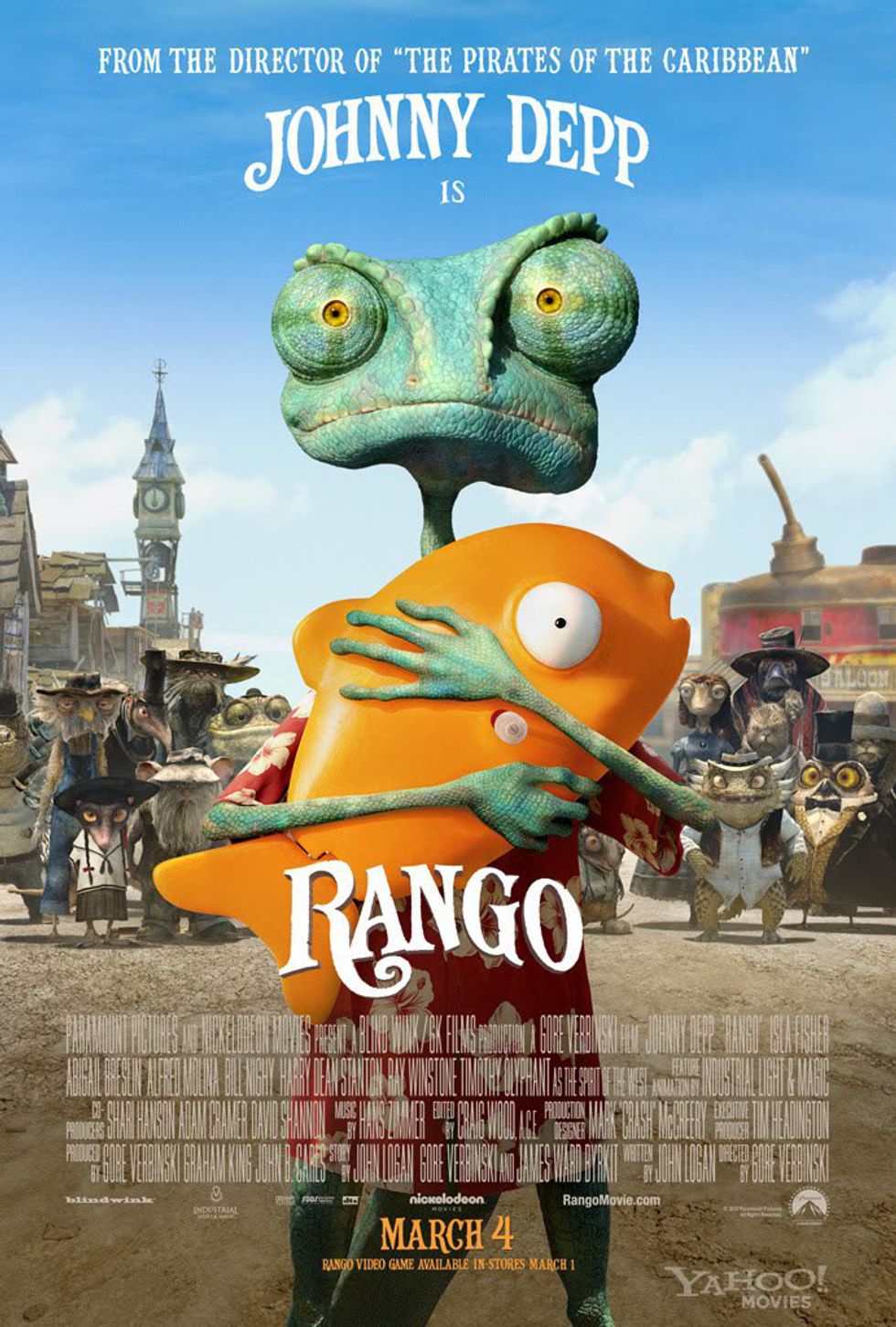
When a filmmaker is spending $135 million on a computer-animated film, they aren’t just paying actors and production designers. Part of the money also goes to animators and texture artists who need that money (and a lot of time) to make a film look good. In the long run, of course an animation is going to take a long time. It took me two weeks straight to make a hand-drawn animation that was only a little under sixty seconds. On top of that, I was still in high school, juggling seven classes while also maintaining a job at a cruddy fast food establishment. All I had to make it was a laptop camera, pencils, and fax paper.
I ended up winning Best Animation at my school’s film festival.
In the end, filmmakers are right about animation taking a long time, but there is no such thing as “painstakingly long,” as Gore Verbinski puts it. If you want your animation to look good, you spend what you can get. It took Aardman Animation almost decade to finish "Wallace & Gromit: Curse of the Were-Rabbit." However, spending a nine figure budget won’t always mean good quality.
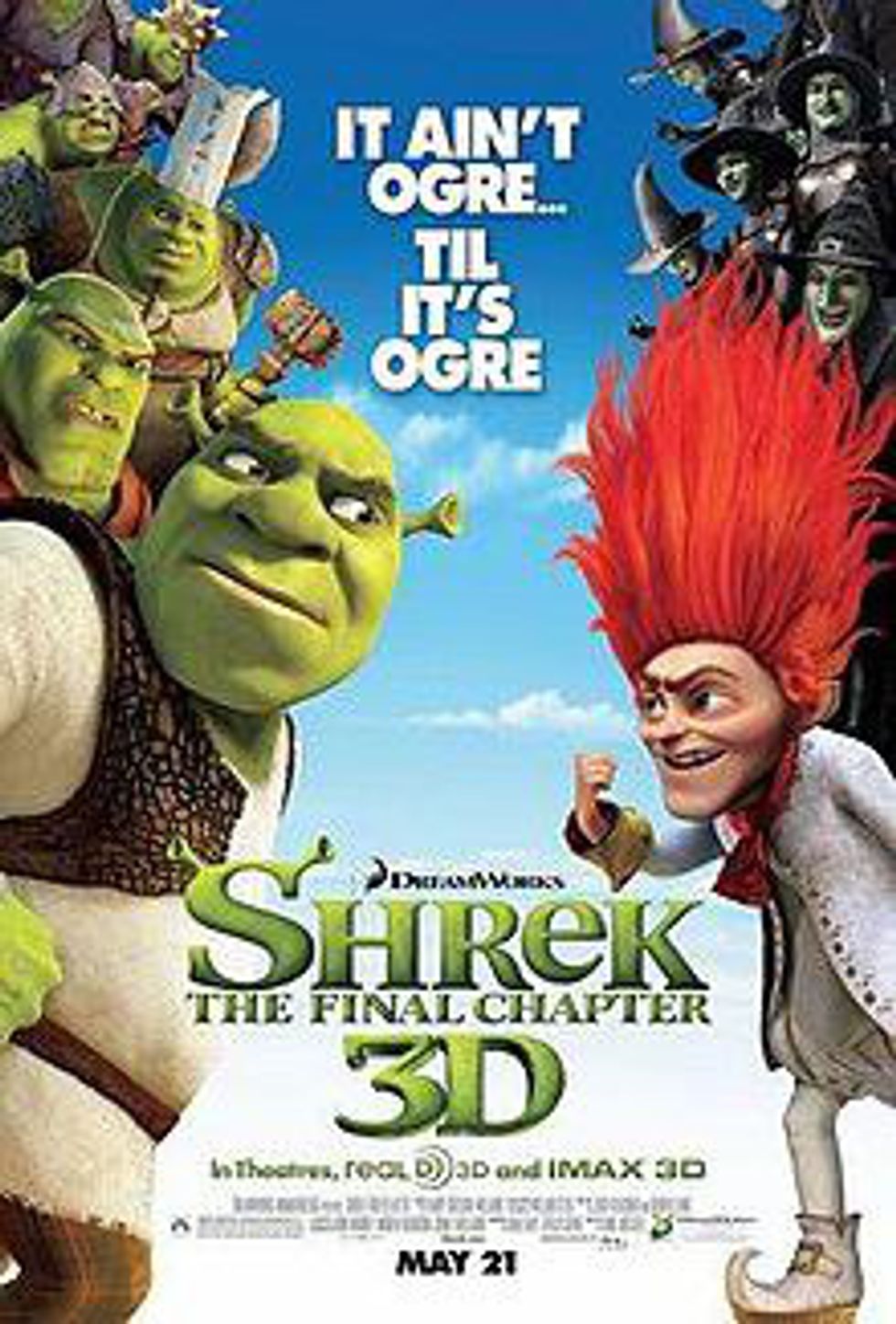
I look at "Les Triplettes de Belleville" and think, “Wow! A beautiful movie made on such a small budget, even for 2003!” I look at Disney and DreamWorks movies and think, “You spent $150 million for me to watch the same movie with a different theme, but with the exact same message as your last film? Here’s the $1.60 from my Redbox fee. Don’t spend it all in one place!”