


The scene opens with a boy taking a video of himself. “Everybody is out and about with their lovers, except for me,” he says as the camera pans out to show a crowd on a sunny day in Southern California. Within the next forty minutes, this boy will take the lives of many young women.
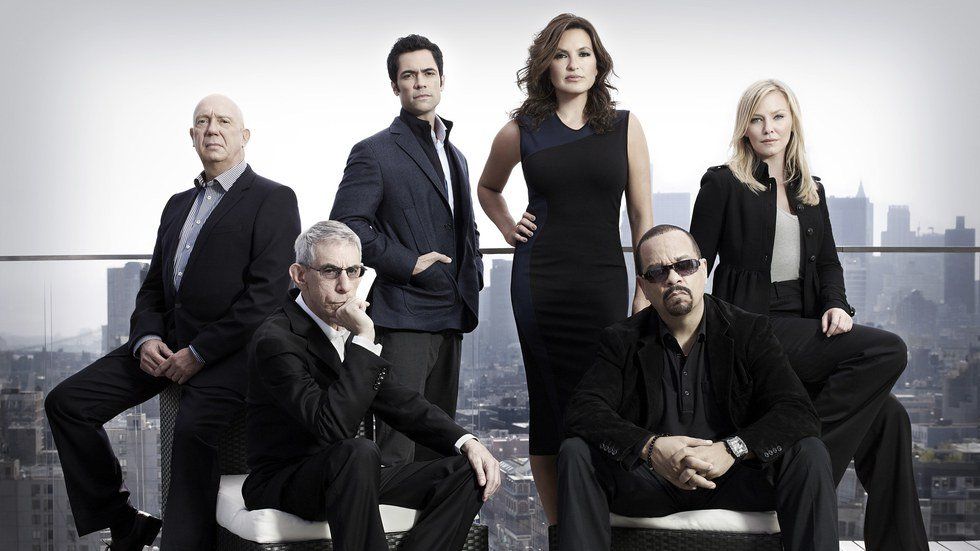
"Law and Order: Special Victim's Unit," now in it’s twentieth season, has opened the door to discussions of sexual assault and hate crimes in modern television, and its audience. The series follows a police squad at the Special Victim’s Unit in Manhattan, the center of focus being Detective Olivia Benson, played by Mariska Hargitay.
This series has offered a way into talking about difficult subject matter that America did not previously discuss on network television. When the series first aired in 1999 as a spin off of creator Dick Wolf’s successful series "Law and Order," none of the other popular network shows discussed anything related to the topics SVU so boldly takes on. Popular television series at this time included "Friends" and "Sex and the City," 1999 also marking the first seasons of "The Simpsons" and "Family Guy." These were the shows that sold, the networks believed, so why should they make anything else? SVU was the first show to break out of that mold.
Wolf’s spin off series, SVU, did much more than originally anticipated, not only in the role of what subject matter is allowed on television, but the role of women in Hollywood. Wolf originally cast Hargitay after extreme pressure to hire a female, as the original Law and Order featured only male main characters. They sprinkled in female attorneys, but they were largely there for sex appeal and never served as intelligent or strong women. Hargitay’s character, Olivia Benson, is portrayed as a powerful woman who does not let her personal life affect her work life. During this period most female characters on television were portrayed as sexual objects that used as plot devices to support the male characters, or to take their shirts off and act scandalously to increase the show’s ratings.
Many popular series now feature strong female leads, such as "Grey's Anatomy," "Orange is the New Black," and "Scandal." This is something that may have still been slow approaching were it not for Hargitay’s enormous strides. With Hargitay portraying this strong, female character, many younger girls were able to identify with her because they saw themselves in Olivia Benson more than say, Rachel and Monica from "Friends." Benson is real, strong, and has had to fight to be accepted in her male-dominated workplace.
In October of 2014, in it’s 16th season SVU did what they do best; stage “ripped from the headlines” stories that start a conversation. In this episode titled Holden’s Manifesto, a young man named Holden Chase uses a phone to record himself ranting about his lack of romantic interests, how often he is rejected, and the men who he deems “worse” than him who get all the girls he believes he should be getting. This story is not far fetched from an actual crime which took place near Santa Barbara, California earlier that same year. The real killer was named Elliot Roger. He posted a YouTube video entitled, “Elliot Rodger's Retribution,” where he recounted almost identical things to “Holden’s Manifesto.” Huffington Post describes the episode’s series of events as a scenario in which:
“Holden starts hunting down a series of pretty blonde acquaintances he obsessed over but who never noticed him. He quickly graduates from stabbing the women to killing them. The SVU detectives go all out to find him, eventually executing a search warrant on his apartment. They find Holden's 100-page "manifesto" detailing all the injustices he believes he's suffered.”
The actual series of events with Roger was slightly varied, as he began his killing spree in his apartment and proceeded to kill six people, and injure thirteen, in that day. However the parallels between the storylines are clear.
In the episode Holden writes a manifesto, just like Roger who wrote one that totaled 100,000 words. In Roger’s he wrote:
“You girls have never been attracted to me. I don't know why you girls aren't attracted to me, but I will punish you all for it. It's an injustice, a crime, because...I don't know what you don't see in me. I'm the perfect guy and yet you throw yourselves at these obnoxious men instead of me, the supreme gentleman. I will punish all of you for it. On the day of retribution I'm going to enter the hottest sorority house of UCSB. And I will slaughter every spoiled, stuck-up, blond slut I see inside there.”
The reaction to this episode was, expectedly, immense. People voiced their opinions on Twitter, using the hashtag #yesallwomen to lead their own conversations about patriarchal injustices and acts of violence and sexual assault. Emily Hughes (@emilyhughes), employed by Penguin Random House, chimed in:
“Because every single woman I know has a story about a man feeling entitled to access to her body. Every. Single. One. #YesAllWomen.”
Thousands of other people voiced their opinions as well, sparking a national debate about sexual violence and the stigmas and stereotypes that surround it. "Law and Order" is famous for the conversations it ignites in its audience; it is able to ignite discussion about topics that might not be held otherwise.
There is no denying this show also has it’s problems. The character of Elliot Stabler has clear anger management trouble, and lashes out on potential suspects more than would be accepted in most law enforcement branches. The logistics are not always realistic; they either find the culprit too easily or something in their protocol isn’t true to real police behavior.
It follows the structure you want to see in a cop show: someone does something bad, the police get notified, they chase after the culprit until, they catch the bad guy and justice rises over evil. The peace is restored by the closing credits. But these elements shouldn’t distract from the true nature of the show, one that is able to open the door for conversations of abuse that wouldn’t take place otherwise.
The show’s largest viewer population is females below the age of 18. Given it’s mature and at times, graphic nature, many wonder why people are so attracted to it, particularly youth. It could be because a large portion of the victims portrayed in this show are those in that age demographic. To answer it simply, that is the age demographic that relates to it the most.
It could be because violence against young people is a growing problem in our world. Maybe it’s because 80 percent of sexual assault victims are under the age of 30. Maybe it’s because these are the people who are experiencing some of these storylines first hand. Because 1 in 4 women and 1 in 6 men will be sexually assaulted before they reach 18.
Because every two minutes someone in the United States of America is sexually violated.
Holden’s Manifesto shows just how the public reacts to what they see in this series. Actress and vocal women’s rights activist Sophia Bush (@SophiaBush) voiced her opinion:
“I shouldn't have to hold my car keys in hand like a weapon & check over my shoulder every few seconds when I walk at night #YesAllWomen.”
This tweet was retweeted over six thousand times, and because it was from someone who has been in the public eye since her first big role in "One Tree Hill," it was widely heard.
For sixteen seasons "Law and Order: SVU" has sparked conversations in the public about the crimes discussed in the show. Moving through cast members and storylines quickly, this show covers a wide range of topics, so much so that almost everyone can identify with at least one of the characters, even if they were just there for a three minute cameo. This show talks about the things people are uncomfortable discussing and by doing so opens the door for these conversations to take place.















