

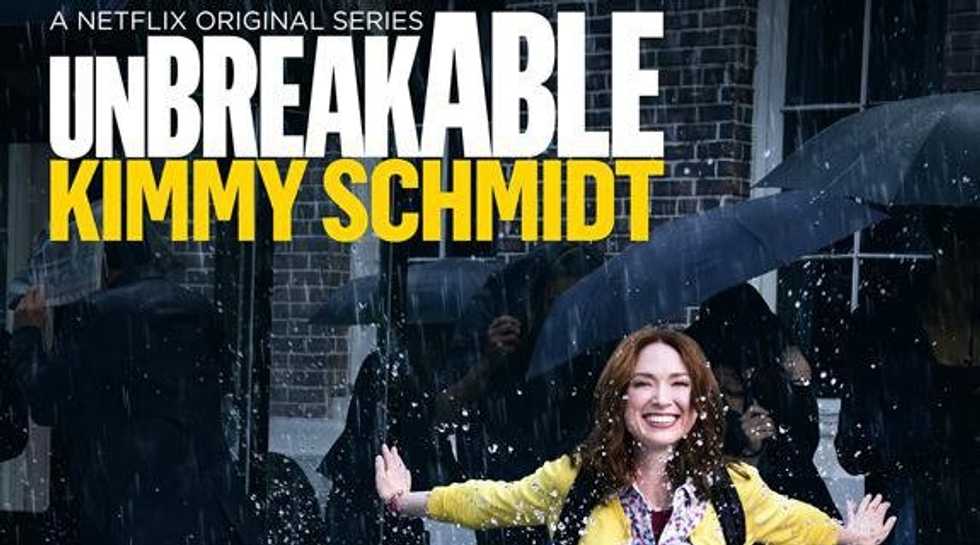
(Caution: Just like a car show, this article is full of spoilers.)
I may not have been held against my will in an underground bunker for 15 years, but regardless, I'm still a bit late to this Kimmy Schmidt party. I just finished season two on Friday... Netflix made it available months ago. In current time tables, I'm practically eligible for Social Security by this point.
I'll blame finals for my tardiness. But I'll also hold fast to the old adage, "Better late than never," because truly, I feel as if I have been made better for having watched season two of "Unbreakable Kimmy Schmidt."
Its writers remain unafraid to challenge stereotypes, give fresh faces to topics which have begun to wrinkle, and challenge what we think we know because of what other shows have told us.
In short, while Kimmy herself may be unbreakable, she proves to audiences that binaries aren't. Just a quick look at the main cast description solidifies this.
The show stars Kimmy Schmidt, an archetypical Midwestern girl brimming with charm and oozing optimism... who also happens to have been trapped in an underground bunker for 15 years and who therefore deals with anxiety, PTSD-like symptoms, and repression.
Joining her in her misadventures are Titus Andromedon, a gay black man from Mississippi; Lillian, a curmudgeonly old woman who fights tooth and nail the unstoppable force of gentrification; and Jacqueline White, a New York socialite who passes for white but who was born to Native American parents.
Every one of those characters breaks down a boundary.
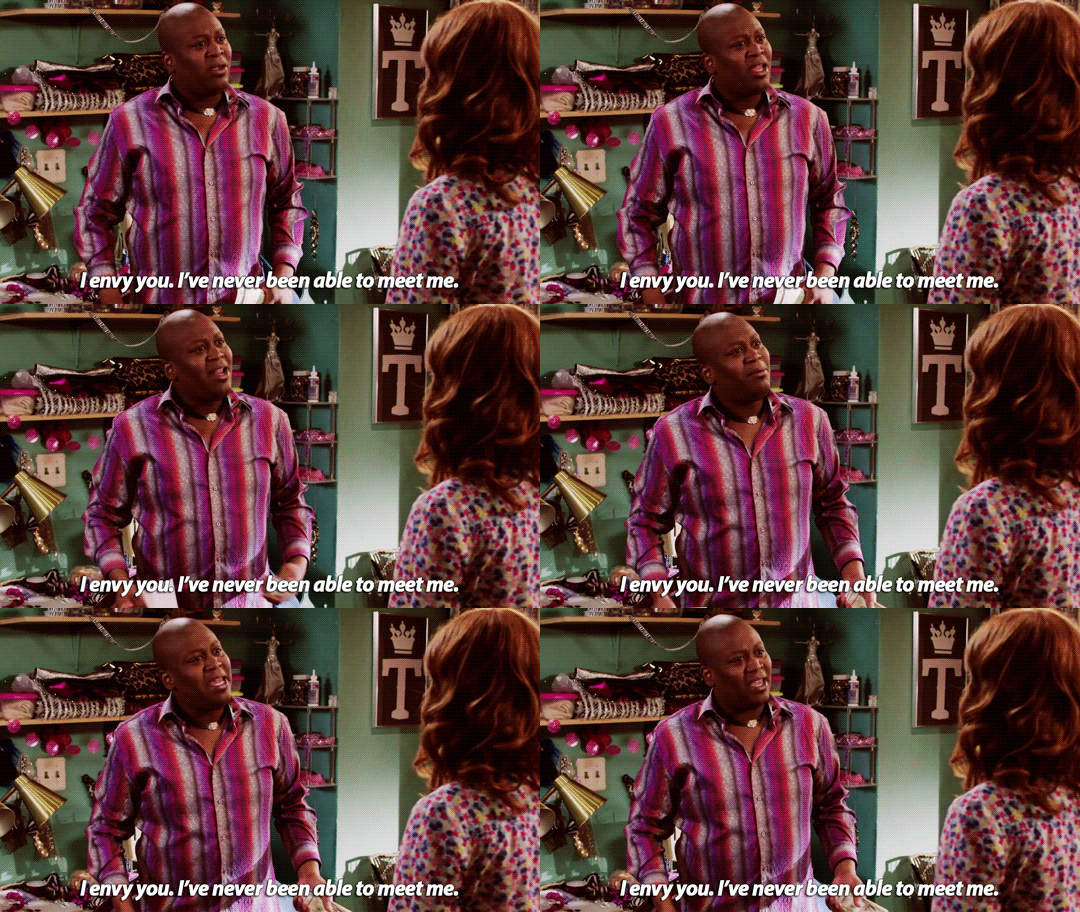
Titus reconciles two of America's sometimes most seemingly disparate minorities in one character, black people and LGBTQ folk. Thereby coating in color a TV token that is notoriously and almost exclusively white (see "Modern Family," "Will & Grace," "Glee," "Once Upon a Time," etc. etc.) Additionally, his genuine, relatively drama-free, iconoclastically un-fabulous relationship with a one-foot-out-of-the-closet construction worker named Mikey turns countless gay stereotypes on their heads. All the while proclaiming to American audiences that to be gay is, at its most basic level, simply to love someone of the same sex.

Kimmy nuances our perceptions, and hopefully our resulting discussions, of mental illness by maintaining a kind, optimistic, largely productive existence while simultaneously dealing with unimaginable issues rooted in 15 years of living under the ground. However, more oppressively, under the rule of a lunatic and abusive minister. She shows that those living with mental illnesses do not walk around with storm clouds or lightning bolts attacking their heads, but instead are regular people trying their best and functioning as normally as they can within their contentious cognitive contexts.

Lillian puts a face on an issue which has become a household name for what it does to them: gentrification. It's a word many know, but few know much about. The onslaught of millenials, Internet-havers, bougie bakeries, and hipsters in the show provides a realistic, if not a little absurd, look at this concept which currently faces many a city, from Nashville to New York. She, as a white woman, also challenges the notion that gentrification solely involves the displacement of black people by white people, instead suggesting the more complex reality that it affects all classes and races in different ways.

And Jacqueline's character serves as a vehicle through which the one of the most criminally underrepresented American minorities, Native Americans, can be normalized and dignified. Her parents are a little weird and slightly out of touch with pop culture, but warm and loving in ways both tough and tender. Just like, you know, most parents. Additionally, Jacqueline's outward white appearance, contrasted with her Sioux heritage, complicates our binary, black-and-white (pun intended) paradigms of race. Pointing to a fact anthropologists have for years trumpeted -- that race biologically does not exist.
And these are just the main characters. The show utilizes a slew of vibrant supporting members to populate its unbreakable universe, each with something to say, often hilariously.
The show advertises itself with exuberance and bright colors. But what really makes it shine is its audacity, intelligence, and bravery, all tied together in a comedic bow.
Truly, it should come as no surprise that a woman living underground would be the one to help break barriers and shatter ceilings -- and have a hell of a lot of fun while doing it.