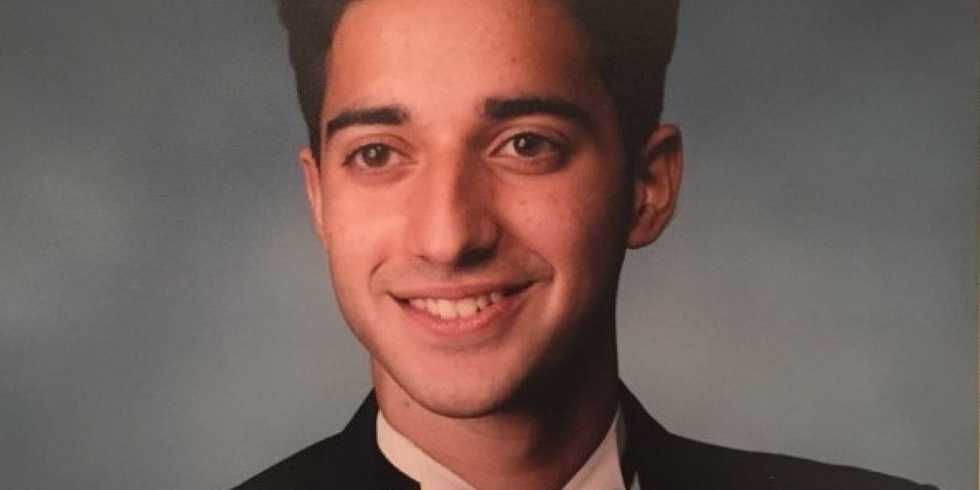
Adnan Syed’s case was brought to the view of the world at large by Sarah Koenig, an outstanding journalist and producer for "This American Life," in the fall of 2014. The Podcast, "Serial," lays out her investigation of Syed’s case on the premise that there had been a significant miscarriage of justice on the part of his original defense attorney, Christina Gutierrez. Syed was charged with, tried, and convicted of the murder of Hae Min Lee -- his ex-girlfriend -- which occurred in 1999. The details of the murder are far more complex than can be summarized in any reasonable number of written words, but "Serial" covers the facts of the case extensively. In short, Syed cannot, in any detail, account for his whereabouts on the afternoon of the murder. Syed's friend, Jay, claims that Syed committed the murder and enlisted him for help burying the body. Jay also claims that Syed hated Hae for taking Syed away from his faith, (he was a devout Muslim) and then leaving him for another guy. Jay confessed to aiding Syed in disposing of both Hae's car and body. He later directed the police to the car.
The case should be relatively open and shut. The state has a body, a car, a witness who claims to have seen Syed with Hae Min Lee’s body, and cell phone records which corroborate the locations which Syed must have been in order to have committed the murder -- mostly. There are, however, a few problems. Jay’s story is not exactly consistent, or particularly logical. Additionally, during both of Jay’s taped interviews about his involvement with the murder, there are several hours in which he had the opportunity to iron out (and perhaps alter) his statement with the detectives in charge of the case. His story involves a whole lot of driving in seemingly impossible or illogically long time periods, and changes over the course of the investigation and trial. The incriminating cell phone records may or may not have been legally allowable in court, and lastly, and perhaps most importantly for Syed now, there was an alibi witness, Asia McClain, whom Christina Gutierrez never contacted. Nevertheless, Syed was convicted for Hae Min Lee’s murder, and his former friend, Jay, walked.
The court system is weird. Once a judge and jury rule on the facts of a case, they are no longer in question. That is, you cannot appeal the facts of the case. What you can do, however, is appeal the law, both procedural and punitive. So Syed’s fight now is to prove that something wrong happened in his trial, not that he was innocent. The way I see it -- although I cannot tell you what Syed’s current attorney is thinking -- is that he has two possible routes to establish a violation or misapplication of the law. First, he can prove that the cell phone records which were used against him in court were not legally allowable, as is suggested by the documents which come with AT&T phone records, and that this would have affected the court’s opinion on the case. If he were able to prove this, it would be a clear violation of his right to a fair trial, and he would be granted a new trial in the state trial court of Maryland. Additionally, he could prove that Christina Gutierrez did not decide not to investigate Asia McClain out of strategy, but rather out of sheer incompetence, which seems likely to be the case. If he can prove this, it could show a violation of his right to counsel as enumerated in the Sixth Amendment. The logic behind this claim of violation is that an incompetent counsel is as good as no counsel whatsoever.
Do I think Adnan Syed killed Hae Min Lee? Honestly, I’m not sure. I think it’s more likely than not that he was involved, but I don’t know that the answer to that question particularly matters. I think that what matters here is that Syed was not given the representation he deserved. This is a clear miscarriage of justice on the part of the Maryland court system, and I that miscarriage needs to be rectified.
The cell phone records -- although this is yet to be determined in court -- should absolutely not have been allowed in the prosecution of Syed because, frankly, they’re just unreliable in determining an individual’s location. The fact that AT&T acknowledges that these records are not necessarily accurate should be enough to prove their unreliability. Additionally, Christina Gutierrez was, and I do not say this lightly, an incompetent attorney. Listening to her in the courtroom makes my ears bleed. She is rude, aggressive, argumentative and, frankly, unprofessional. She was a well-respected attorney, and I’m sure there was a time where that reputation was valid, but she did not adequately represent Adnan Syed, and that cost him 30 years of his life. An alibi witness in a murder trial is gold, and she flat out ignored that opportunity.
This case is riddled with reasonable doubt. There is not a single shred of physical evidence which places Syed with Hae at any point after school on the day of the murder, and the only evidence against him is the word of an individual whose testimony guaranteed his culpability.
Did Adnan Syed murder Hae Min Lee? Maybe, but that is not the question that the legal system asks. It asks whether there is a preponderance of evidence against Syed in this case. The legal system does not promise truth, it promises to maintain order, and order is violated when an individual is jailed without substantial proof that he committed a crime. We are not vigilantes. When we start jailing people on gut feelings of guilt, rather than assuming innocence, society begins to fail. We cannot allow this failure, and Syed’s case is a precedent-setting example.
To be curt, I don’t particularly care whether or not Adnan Syed murdered Hae Min Lee or not. What I care about is the maintenance and improvement of this country's justice system. Syed deserves his day in court, as is promised by the founding document of this nation, and he cannot be denied that right.
Syed is currently at the end of the line for his appeals process. He is in the midst of a petition for post-conviction relief - the hearing concluded earlier this month. Now all that is left for us is to speculate on what the judge will rule, and to do a whole lot of waiting. Hopefully, Syed’s petition for post-conviction relief will be granted by the court, and his conviction overturned. If not, Adnan Syed will sit in jail for more than another decade, without having seen a fair trial. This would not just be wrong, it would be illegal, and would allow the continued degradation of our court system. For the sake of justice, and of the maintenance of our nation, Adnan Syed deserves relief, regardless of the question of his guilt.