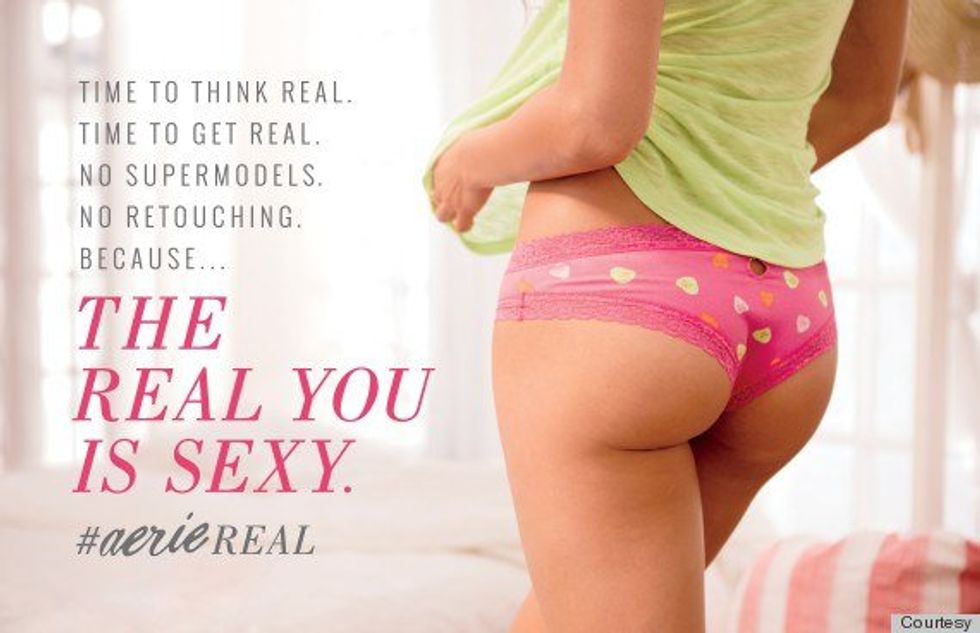
Last year, the commonly known American Eagle clothing store changed a few things in their advertising choices. Their intimate apparel line called Aerie decided to start a movement within their brand using hashtags to broadcast their #AerieReal campaign. This movement began when Aerie decided to stop retouching the photos of their models that represent their line to the world. The photos are said to include the various blemishes, cellulite and other imperfections that any of their models may have.
All of these courageous and impressive acts were highlighted on the ABC News, highlighting Aerie's achievement of being endorsed by the NEDA (National Eating Disorder Awareness group) for their actions toward better body image advertisements. The story even includes a testimony from one of the first unaltered models and her thoughts on her photos being unfiltered.
A model named Hana Mayeda was described to have ‘butterflies’ and also says “[She] had to travel to the place of, ‘Oh my god, there’s a huge billboard, and that’s my butt and it’s not retouched,” which is clearly a huge step for models and young women everywhere.
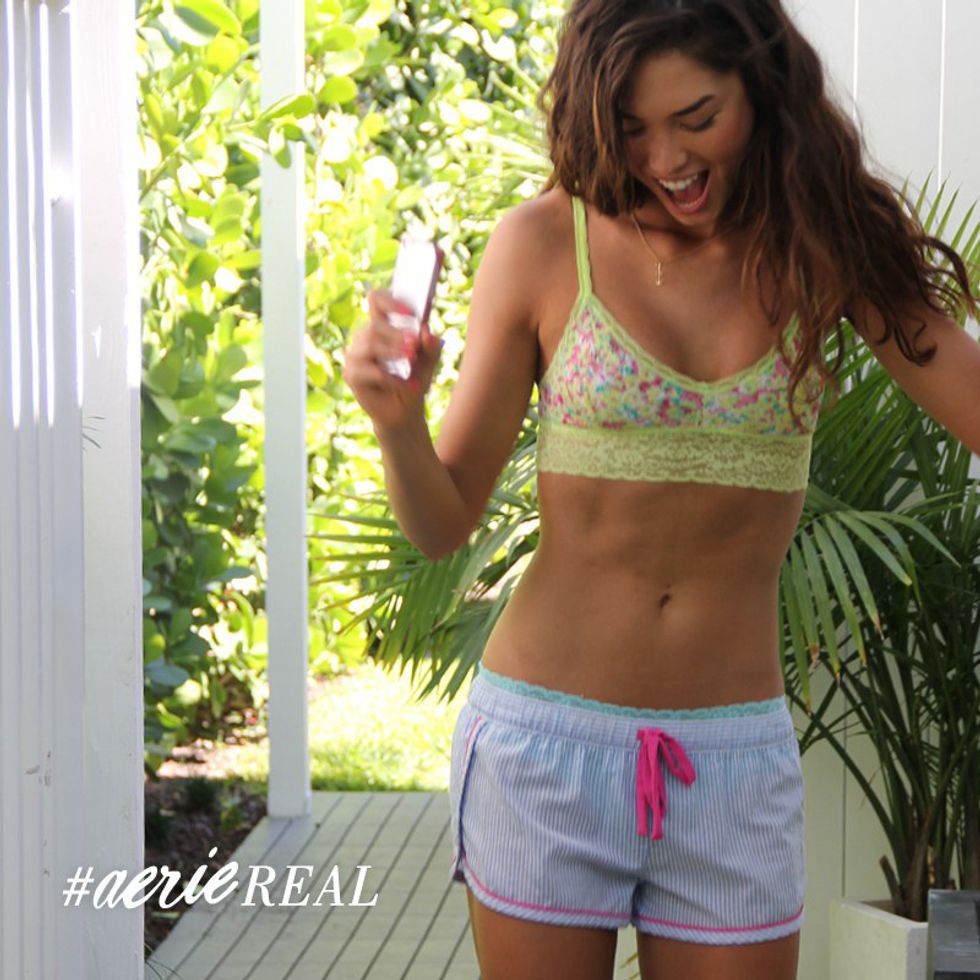
I decided to search beyond these words and found Hana’s picture; a gorgeous, tall, long-haired brunette who is thin as can be. If one looks hard enough, you can see the only so-called blemish or imperfection is a possible scar a little up and to the left of her belly button. This girl is gorgeous; she has no rolls, wrinkles, cellulite, stretch marks, or even freckles anywhere else as far as her poses show. If I had a butt like hers, I would be ecstatic to have it on a billboard un-retouched. It hurt me as a woman to think that any other woman could possibly think anything negative about a body like that.
On the webpage for the National Association of Anorexia Nervosa and Associated Disorders, there are a number of statistics for people who struggle with these disorders. Two of these facts stood out to me: one explains that “95% of those who have eating disorders are between the ages of 12 and 25,” similar to the target age that American Eagle caters to and creates their clothes for. The other statistic that crushed my spirit is that “the body type portrayed in advertising as the idea, is possessed naturally by only 5% of American females.” Although the statistic is according to retouched photos, models' unrealistic standards and body types cannot be far off from these percentages, according to the girls shown in recent Aerie pictures.
On the American Eagle website these models may have more exposed freckles or wrinkle lines that natural bodies would have, however these bodies have thigh gaps, no rolls, and flat bellies. Some of the hips are more realistic, but I was disappointed to not see the expected diversity with the models' shapes or weights that could be considered ‘real.’
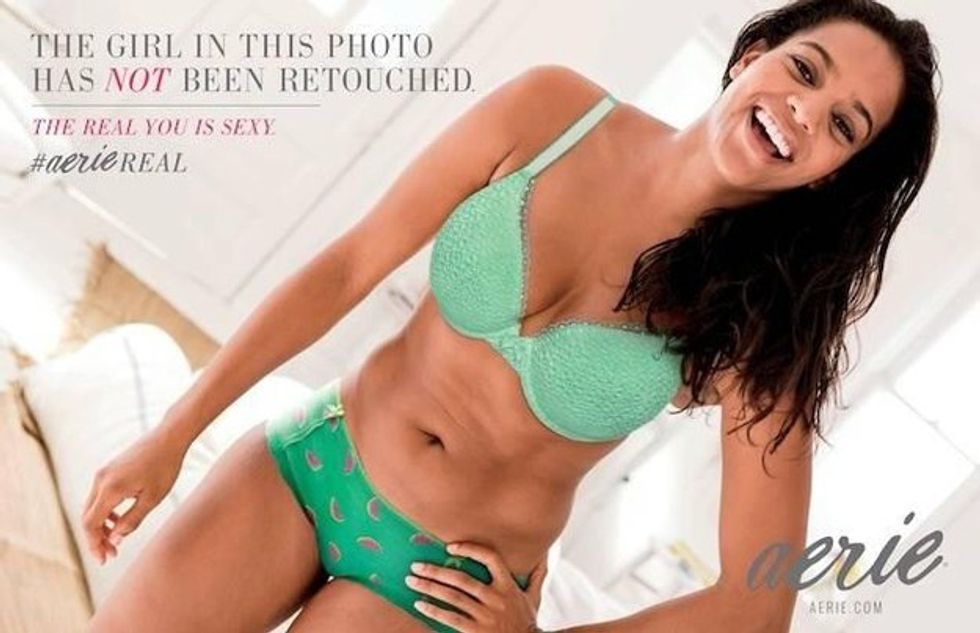
When searching the advertisements for Aerie Real, there are pictures of models that give hope for companies exhibiting more realistic standards for women. However, on their site it looks like they are just into one type of model. It is exciting to see companies take necessary steps to heighten awareness of these problems, but we need to highlight the importance of maintaining these values regardless of the competitive nature of advertising.
Congratulations to American Eagle. We are very excited about it.