Just how close are we to an overload? Let me start off by asking you a simple question: When was the last time you unplugged from all forms of social media for more then an hour? No, sleeping doesn't count. The world we live in today is much different than the world our parents grew up in. Social media offers us the ability to connect with anybody at any point, anywhere around the world. However, it comes with a cost that is quite often looked upon with a blind eye. In the very beginning, social media was great. We could control when and how we use it, but now it controls when and how it uses us. It is changing who we are and how we act. Have we become addicted? Have we started to enjoy living life through a screen rather than face to face interaction? Social media is where you can be who you aren't, and maybe that's why we don't unplug.
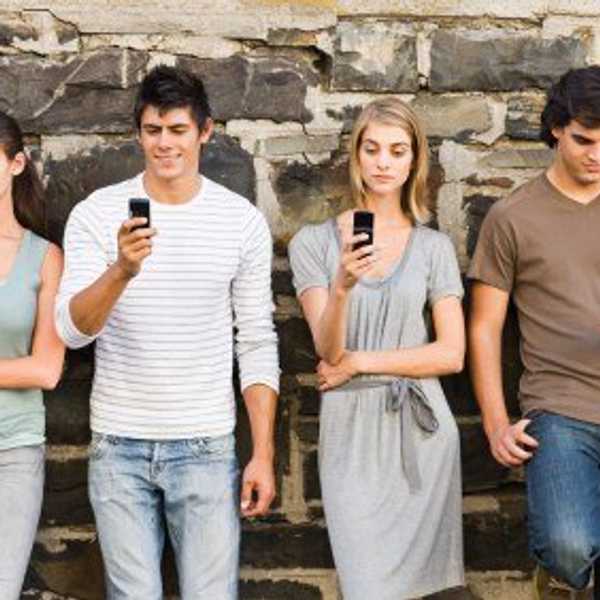
Too often I see people living vicariously through a Facebook account and completely forgetting to live in the real world. When did people stop making small talk? Around the same time you could escape awkward silences by checking Snapchat stories. No longer do people interact while waiting for a bus. They're too busy checking how many likes their last Instagram photo got. Too often I see people living life in a global village and not the tangible world. Life is changing every day right in front of our eyes but we are just too distracted by a touch screen to realize it. Society is forgetting how to socialize. Even when we gather together we are still hypnotized by the idea that we have not checked our virtual worlds in fifteen minutes. Kids no longer go outside to play. Before we know it, kids will be born with a Facebook account awaiting their interaction.
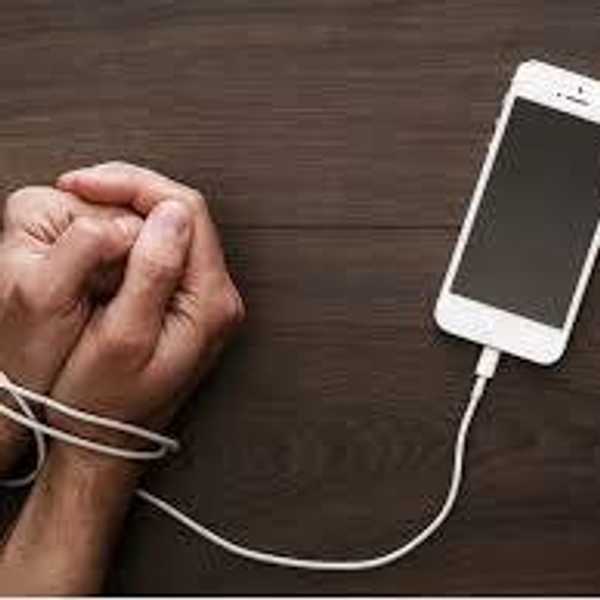
The whole idea of social media is to stay connected, but quite often it is doing the opposite. It is pulling us further and further away from being connected to what matters; it is pulling us away from humanity. The rate of depression has erupted because we measure our own self worth based on how many likes we get. The kid who gets bullied every day at school can no longer feel safe in his own home. He can never escape it because you know he has a phone, and you know he is plugged in just awaiting the cyber harassment. It isn't a matter of "if" it happens anymore, it has become matter of "when" it happens. It has become our newest addiction, our newest drug. We are forgetting to live outside of our cocoons that we call "social networks."
I see young kids who don't even know how to socialize beyond a screen. Socializing is a skill; something we learn through interaction. What if there is no tangible interaction? Will the skill of social interaction die off with this generation? We escape social interaction by simply glancing down and tuning out the world. The idea of having a conversation with a total stranger on an elevator is slowly becoming whispers of the past.Society has placed social media into their lives in a way like nothing ever before. Why? Because social media deconstructed to its basic roots is an electronic copy of ourselves. We are just duplicating ourselves to become whatever we want to be.
Society can no longer function without social media and media absorption. We say we can, but could we really? However, we live in a time where that question is honestly still a yes. Where is this taking us? This is taking us to a world where we can no longer respond "yes" to my previous question. What will happen when one day we rely on social media to give us answers that we can not find anywhere else? We are moving toward a world where what people think of you in your social media villages is more important than what people think of you in real life. Analyzing the negative is too often considered a pessimistic way to see society. It is not pessimistic at all; it is just analyzing the "what ifs" to find a potential problem and come up with many possible solutions.
Next time you are walking down the street, put your phone in your pocket and take a minute to appreciate life all around you. Next time you are waiting on line, stop glancing down and glance around. Start conversations with strangers; you never know, it could be the best conversation you almost never had.